

Fact Sheet FS1057
One of the most practical methods of teaching adults and youth about nutrition is using ChooseMyPlate.gov, which is developed by a collaboration of federal government departments. MyPlate is based in part on the current U.S. Dietary Guidelines for Americans and includes recommendations on food and physical activity for people through all life stages.
It is never too early or too late in a person's life to eat well, and meals and snacks are important contributors to a balanced diet at every stage of life. Incorporating healthy choices as the adult decision-maker in your household will guide younger family members for a lifetime of healthy habits. To find out how much of each food group an individual should eat, visit myplate.gov/life-stages.
The United States Department of Agriculture's MyPlate represents five different food groups and together those groups contribute to a healthy lifestyle. The MyPlate model can be used to plan meals and snacks that contribute to a diet rich in healthy nutrients and emphasize a variety of foods. The MyPlate template was designed to teach American's how to create healthy meals and snacks and when used every day leaves little room for foods that contain large amounts of calories, sugar, salt, or fat.
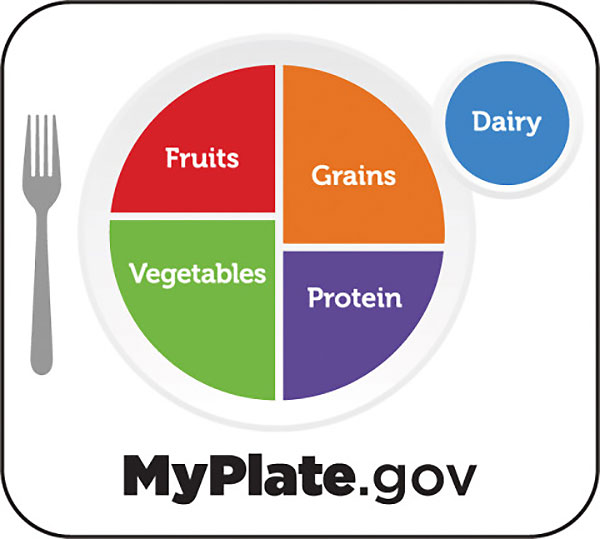
MyPlate.gov logo
Use the Five Food Groups to Build Healthy Meals and Snacks
The five food groups are important because each offers valuable nutrients to help our bodies function properly. Each of the groups are identified by color on ChooseMyPlate.gov. Make sure to include all five food groups daily and at every meal or incorporate them into snacks. Here are tips to include all five food groups as part of every meal and snack.
Grains
Each day, it is important to make half your Grains (orange food group) whole grains. At meals, add grains like brown rice or whole grain bread or pasta to meet dietary recommendations. Whole grain products have more fiber and nutrients than white bread or those made with bleached white flour. Fiber helps keep the digestive system regular. Grains are also sources of carbohydrates, or “carbs” and provide quick energy for the body.
Tips to Add Grains to Meals and Snacks
- Start the day with whole grains
Oatmeal is a good whole grain breakfast option. Top steel cut oatmeal with frozen mango, sliced almonds, milk, and a drizzle of honey for a hearty breakfast. If you are short on time in the morning, make overnight oats so they are ready to go in the morning without a lot of preparation time. - Make half your grains whole grains
Make whole grain swaps like brown rice and whole grain pasta at meals to get more whole grains in the day. Make sandwiches with whole grain wraps and bread. - Snack with grains
Popcorn is a whole grain and can be a healthy snack. Season popcorn with low fat, low sodium toppings like Cayenne pepper or sprinkle with parmesan cheese. - Mix up your grain
Choices like Quiona or Farro may be new to your family and can provide a new meal choice. Quiona has a nutty taste and is a whole grain that is easy to make. Both options can be mixed into salads, served as a side dish, used for a stir fry or added to soups. - Gluten free
Many whole grains such as brown rice and Quinoa are gluten free and provide a whole grain alternative for those who need to eat gluten free. - After-school or Mid-day work snack
Pack a slice of wholegrain bread topped with peanut butter and banana slices for a snack that will keep children (or adults) fueled for extracurricular activities right up to dinner.
Vegetables
Eating Vegetables (green food group) at every meal can be a challenge and adding veggies at snack time is a good way to make sure your family is meeting the recommendations for regular vegetables consumption. The amount of vegetables you need to eat depends on your age, sex, height, weight, and physical activity. It can also depend on whether you are pregnant or breastfeeding. Find the right amount for you by getting your MyPlate Plan.
At mealtime and snack time, vegetables may be raw or cooked, and can be fresh, frozen, canned, or dried. They can be whole, cut up, or puréed (mashed). Try to add a variety of vegetables and use them in creative ways for both meals and snacks.
Vegetables are organized into 5 subgroups based on their nutrients: dark green; red and orange; beans, peas, and lentils; starchy; and other vegetables. Half of your plate at every meal should be fruit and vegetables. Vegetables supply nutrients our body needs to function properly. Ninety percent of Americans do not eat the recommended amounts of vegetables, which means we are missing out on vitamins and minerals like vitamins A and C as well as fiber. Eating snacks and meals that include a variety of vegetables can reduce the risk of heart disease, stroke, diabetes, and some cancers. Eating a variety of colors within the vegetable group can reduce the risk of chronic disease even further. Here are five main categories of vegetables that include suggestions for daily intake. This list is an example of vegetables you may choose, and it is NOT a conclusive list.
Tips to Add Vegetables to Meals and Snacks
- Begin your day with vegetables
Add leftover cooked vegetables to your omelet or breakfast wrap or add spinach to a morning smoothie and enjoy a burst of flavor and nutrition. - Add variety to salads
Make your salad including green lettuce, radish slices, diced red onions and add seasonal vegetables for variety throughout the year. - Try a stir-fry
Stir-fry vegetables like carrots, shredded cabbage, greens, and mushrooms for a quick meal. Add some tofu and sprinkle with sesame or other seeds as a protein source. - Create a healthy sandwich
Add Romaine lettuce or spinach, a thin slice of tomato and sweet onion to your favorite wrap or sandwich. - Go for a healthy dip
Dip celery, jicama or carrot sticks into yogurt dip made with Ranch dressing or a protein-packed hummus made with garbanzo beans. - Bring along pre-cut or snack size
Carry a small container of cherry tomatoes, green pepper strips or sugar snap peas as an easy snack. Prepare vegetables so they are cut up and ready to take along for a quick grab and go snack to make enjoying veggies easier. - On the go
100% vegetable juice counts as part of the Vegetable Group.
Fruit
The Fruit Group (red food group) includes all fruits and 100% fruit juice. Fruits may be fresh, frozen, canned, or dried/dehydrated. Fruits can be eaten whole, cut up, puréed (mashed), or cooked. At least half of the recommended amount of fruit eaten should come from whole fruit, rather than 100% fruit juice. Some examples of foods from the fruit group are oranges, apples, bananas, strawberries, and melon. Fruits are important sources of vitamins and minerals that your family needs. Just like vegetables, Americans do not eat enough of this food group, and 80% fail to eat the recommended amounts. Try Ambrosia dessert, which features fresh fruit, yogurt, and coconut, with a dash of marshmallows for fun. No cooking is required.
Tips for Adding Fruits to Meals and Snacks
- Begin your day with fruit
Top breakfast classics like oatmeal, waffles, and yogurt with fruits like berries, bananas, or mangoes for flavor and to replace more sugary options like syrups and jellies. - Add variety to salads
Make your salad with a base of greens and add in seasonal fruit for taste and nutrients. Strawberries add color and flavor while pears and apples contribute crunch to salads. Dried fruit can be stored in the kitchen and pulled out to add to a salad to substitute for fresh fruits. Add fresh and dried fruit to chicken and tuna salads too. - Create a healthy sandwich
Add apples, bananas or berries to peanut butter sandwiches to replace jelly or use a wrap to make a peanut butter and banana wrap for a quick lunch or snack. - Go for a healthy dip
Dip larger fruit in yogurt or peanut butter or roll them in granola for a crunchy snack. For a fun snack to make with the children, roll a banana in yogurt and top with granola then freeze them. - Carry a small container
Cut-up fruit or grab fruit that is easy to bring along like oranges, grapes or bananas. - Serve fruit as a side
Just as you would serve vegetables at meals, serve a side of fruit. - Yummy Dessert Option
Enjoy fruit as a sweet dessert treat in place of high sugar and fat options.
Dairy
The Dairy (blue food group) group includes milk, cheeses, and yogurt. The Dairy Group does not include foods made from milk that have little calcium and a high fat content. Examples of this are cream cheese, sour cream, cream, and butter. Many families still classify ice cream as a dairy food – which it is – but it's not a healthy dairy food because of its high sugar and fat content. It is especially important that families get enough servings of the dairy group because calcium builds bone strength. Children under two should drink whole milk, and eat cheese and yogurt made from whole milk. For children over the age of two, choose 1% low-fat or fat-free milk products. If family members are lactose-intolerant, lactose-free products are available. Those who do not consume cow's milk for various reasons can have calcium-containing soy, fortified almond milk or tofu.
Tips to Add Dairy to Meals and Snacks
- Low-fat cheese
Precut low-fat cheese and put it into go bags or grab low-fat string cheese for a dairy- filled snack on the go. Pack fruit or nuts and whole grain crackers to fill hunger gaps between meals with low-fat cheese. - Yogurt parfaits
Have children help to make low-fat or fat-free Greek yogurt parfaits. Add fruit and granola to make a healthy breakfast or a bring-along snack.
Protein
The Protein group (purple food group) represents protein that comes from both animal and plant sources. Animal protein sources include meats such as poultry, beef, pork, eggs and fish. Be sure to choose lean cuts of meat. Plant-based protein sources include beans, peas, lentils, nuts, seeds and soy products. Individuals who are vegetarian or vegan should consume plant-based protein as part of a well-balanced diet. Protein helps build muscle in our bodies and is an important part of the MyPlate food plan.
Tips to Add Protein to Meals and Snacks
- Go a Little Nutty with Snacks
Nuts like almonds and walnuts are a good source of protein and can be a convenient way to bring a snack along to school, work or an outdoor activity. - Make Some Meals Meatless
Having a meatless meal can be both cost-effective and tasty. Try adding new meals to your weekly routine like a tofu stir fry to get the protein you need and save money. - Go Lean
Choose lean animal protein like chicken or seafood in meals more often than high-fat choices. - Consider Nut Butters
Nut butters are an easy protein addition to smoothies and make a great snack or breakfast.
Oils and Fats
Oils and fats are not a food group; however, our body does require healthy fats like canola and olive oil to improve blood cholesterol levels. Choose fat and oils that are from plant-based sources such as avocados, nuts (almonds, pecans) and seeds or oils such as olive, peanut and canola, which are monounsaturated fats. Sunflower, corn, soybean, walnuts, and flax seeds are good choices for plant-based oils and fats, and are called polyunsaturated fats. Avoid saturated fats that come from animals or eat lean forms of saturated fats.
Tips for Healthy Families
- Have meals together as often as possible. Eat together as a family to help your children learn healthy eating habits. Meal planning, food shopping, and preparation should be a team effort. Try a family breakfast if dinner is too hard to get everyone together. If time is limited, make healthy ready-to-eat food meals and snacks ahead.
- Start the day with breakfast. Studies show that children learn better if they eat breakfast. Start the night before and get food ready and set the table. Encourage family members to leave enough time to eat in the morning or offer them quick, easy foods they like, such as low-fat, low-sugar granola, fruit, and yogurt.
- Make healthy foods available at home. If you stock your home with nutritious foods, your family’s meals will be healthier. Limit sugary sodas and soft drinks. Try to have a serving of fruit or vegetables with every meal and at snack time. Keep a bowl of fruit on your kitchen table or counter for snacks. Canned and frozen vegetables are often less expensive and have a longer shelf-life. Serve lean meats (like chicken and turkey) and other good sources of protein (like eggs, soy and fish). Choose whole-grain breads and cereals. For children over age two, choose 1% or fat-free milk rather than whole or 2% milk.
- Keep portion sizes small and do not over-feed your family. Never force children to eat if they are not hungry and make sure they eat healthy foods BEFORE they eat sweets or snack foods. There’s no need to ban the chips and candy forever—just make these “once-in-a-while” foods. Help your family have healthy attitudes about food.
- Make sure water is the beverage of choice for adults and children so all family members stay hydrated throughout the day.
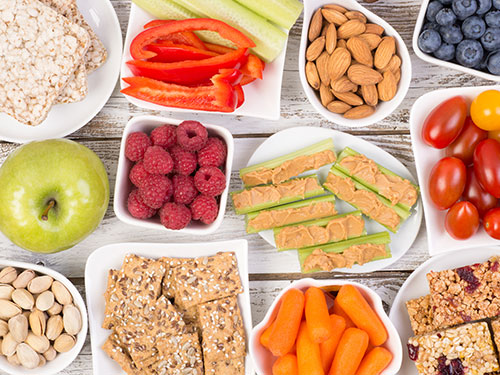
- Think food groups for snacks too. If you are having a hard time getting all the food groups in at every meal, add them in at snack time to encourage healthy snacking and increase fruit and vegetable consumption for the whole family.
References
- MyPlate Plan. (n.d.). Retrieved May 8, 2024.
- U.S. Department of Agriculture and U.S. Department of Health and Human Services. Dietary Guidelines for Americans, 2020-2025. 9th Edition. December 2020.
February 2025
Copyright © Rutgers, The State University of New Jersey. All rights reserved.
For more information: extension.rutgers.edu.
Cooperating Agencies: Rutgers, The State University of New Jersey, U.S. Department of Agriculture, and Boards of County Commissioners. Rutgers Cooperative Extension, a unit of the Rutgers New Jersey Agricultural Experiment Station, is an equal opportunity program provider and employer.