



Cooperative Extension Fact Sheet FS1092
Making Meals a Family Affair
For the average family, getting together for a meal is not always easy. Busy schedules, long commutes, evening activities and sports events, homework, and other commitments have nibbled away at family mealtime. With a soccer practice at 6 p.m. and a cheerleading competition at 7 p.m., it can leave little to no time to prepare a meal, not to mention sit down to eat together. So, what is a family to do?
The common answer is to eat separately and eat a quick meal on the run. But considering the portion size and lack of nutritional value of most restaurant menu options and the important benefits of family meals, this should be an occasional option, not a regular practice.
The benefits of family meals are abundant. Families are more likely to eat a nutritious meal when most or all of the family eats together. Families who eat at home have control of portion sizes and ingredient choices. Children who eat with their families are likely to consume more fruits, vegetables, and whole grains. They are also less likely to smoke, drink, and use illegal drugs during their teen years. Enjoying meals together enhances family communication and improves manners, too. And, of course, there is a lifetime of positive memories that sharing meals together creates.
How can you preserve family mealtime despite a busy schedule? Here are a few simple tips to whip up nutritious and delicious family fare in a flash. With a little creativity and planning ahead it is easy to make a healthy dinner in fewer than 30 minutes.
Make Healthy Eating Happen
Step 1: Get Ready
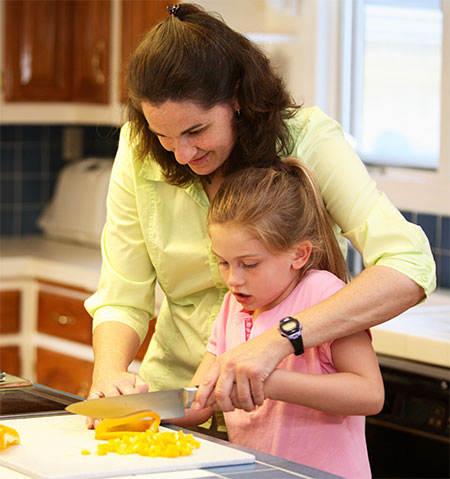
Involve all family members in menu planning. Give each person the chance to talk about their food likes and dislikes, favorite recipes and what they’d like to see on the family menu. Give family members tasks, such as helping out with food shopping, unpacking groceries, setting the table, or cooking. Brainstorm a list of meal ideas and write them down so you can use them over and over. Involving children in the cooking process gives them the skills and knowledge to prepare a meal themselves.
Step 2: Plan Main Courses
Start with the “main attraction.” Decide on the main course for each meal over the coming week. Think about foods your family enjoys, your budget, the time you have to prepare the food, and nutrition. Look for chances to use leftovers from one meal to another, later in the week. Once you come up with a main course for each meal, add on side dishes (vegetables, fruit, and whole-grain side dishes such as brown rice or whole wheat pasta) and a healthy beverage like low-fat milk or water.
Step 3: Stock the Kitchen with Staples
Stocking the pantry, refrigerator, and freezer is a good habit to get into. Keep a few essential ingredients on hand to make it easy to prepare a quick and tasty meal. Check out these sites for tips on stocking up and storing staple foods:
- E340, Home Storage of Foods: Refrigerator and Freezer Storage
- FS274, Home Storage of Foods: Shelf Storage
Step 4: Cooking Made Easy
Try these strategies to spend less time preparing and more time enjoying a family meal:
- Save prep time with packaged, ready-to-eat fresh vegetables, such as baby carrots; salad mixes; and chopped, riced, or shredded broccoli and cauliflower.
- When possible, broil, stir-fry, grill, or microwave your food. It will take less time than baking and roasting.
- Make larger quantities of meals and freeze the excess for another meal.
- Use frozen vegetables to make a stir-fry. Add skinless chicken. Serve on top of quick brown rice, whole wheat pasta, or quinoa.
- Cook vegetables on the grill. Drizzle them with olive oil and seasoning and wrap in aluminum foil, or place in a foil tray to cut down on clean-up time.
- Soups are easy to make and can be nutritious, especially if you add vegetables or beans. You may use low-sodium canned or packet soup as a base and add your own herbs and spices, too.
- Try making fried rice or risotto, or mix cooked rice with leftover vegetables and meat. Use quick-cook rice to decrease the cooking time.
- Canned chicken and fish (like tuna), packed in water, are great cupboard stand-bys. Tuna noodle casserole is a healthy one-dish meal if prepared with fat-free, low-sodium cream of mushroom soup and reduced-fat parmesan cheese; add vegetables on the side to make it complete.
- Mix kidney or refried beans, taco seasoning, and a bit of salad in a taco shell or roll-up in a whole-wheat wrap for a quick, nutritious meal.
- Use a crock pot or slow cooker for quick and convenient casseroles. Turkey breast in a crock pot makes a healthy, easy meal. Just place the turkey in the crock pot, top ¾ with fat-free turkey gravy, cover, and cook on low for seven hours. Before serving, drain gravy from crock pot. Complete the meal with sides of mashed potatoes, steamed broccoli, and freshly-heated gravy.
For More Information
The family meal does not have to be a formal dinner. A family meal can be breakfast or even lunch. In fact, nutrition experts say that family meals don’t even have to be enjoyed around a table. The important factor is to eat together. If your schedule won’t accommodate a family meal around the kitchen table, opt for something different. In warm months, plan a picnic lunch before or after a game; have lunch at the park; plan a meal with grandparents or friends; or have family cook-outs.
Regardless of what you serve or when you sit down together, the benefits of family meals are tremendous. Visit these websites for more ideas on making family meals part of your daily routine:
- USDA ChooseMyPlate Recipes: The USDA’s resource list for tasty recipes and helpful tips to incorporate more fruits and vegetables into meals.
- Get Moving–Get Healthy New Jersey: Family and Community Health Sciences (FCHS) Get Moving–Get Healthy New Jersey website outlines and encourages a healthy lifestyle, especially healthy eating and physical activity, thorough educational programs.
Family and Community Health Sciences works with families, schools, and communities to promote healthy eating and active lifestyles. Visit njaes.rutgers.edu/fchs for information on all of our programs, and learn how to bring them to your school, worksite, or community organization.
Photo credits: istockphoto.com.
October 2017
Copyright © Rutgers, The State University of New Jersey. All rights reserved.
For more information: extension.rutgers.edu.
Cooperating Agencies: Rutgers, The State University of New Jersey, U.S. Department of Agriculture, and Boards of County Commissioners. Rutgers Cooperative Extension, a unit of the Rutgers New Jersey Agricultural Experiment Station, is an equal opportunity program provider and employer.