
Fact Sheet FS1319
Marketing and selling products online can increase a farm’s customer base and contribute to greater profitability. In times of social distancing, online sales provide an especially savvy method for agricultural businesses to continue operations. The recommendations to maximize social distancing to reduce the spread of the novel coronavirus SARS-CoV-2 (COVID-19) have led to restrictions on events throughout New Jersey that would normally provide essential farm income. Even in instances where farmstands and markets remain open as essential businesses, customer flow may be reduced as local residents follow guidance to stay home as much as possible. However, the sales of locally sourced produce, seeds, planting stock, and other agricultural products remain essential to local food security, nutrition, and health, as well as to the economic stability of the agricultural sector. Online sales management tools can benefit farms by providing opportunities to maximize sales while minimizing face-to-face contact.
Meeting Farmers’ Needs
Many farms interested in establishing online sales will share the overarching goals of providing their customers with local food and other farm products while both earning a profit and minimizing in-person contact according to social distancing requirements. Some growers can do this by listing products on their farm website and requesting that customers email or call the farm to place their order. Inventory and sales can be managed using a basic spreadsheet or accounting software system. However, online sales platforms designed for virtual shopping and ordering can streamline the experience for farmers and customers. Online sales platforms that offer a straightforward user interface for smooth customer shopping experience, accepting online payments, tracking inventory, and the ability to coordinate delivery and/or pickup logistics for product distribution will be important for all farms. Additionally, online tools that offer the capacity to manage field production and crop harvests, develop and distribute newsletters and/or other regular communications (recipes, etc.) to customers, and maintain appropriate farm records (including those required to meet organic certification requirements) may be of interest to agricultural businesses of all sizes.
Types of Software and Sales Management Tools
Two primary categories of online sales management tools exist. Customizable options for each type of sales tool vary; the best fit for each farm will depend on the farms’ unique needs:
- Build-your-own independent site option, which is available through website design programs such as Wix, Weebly, and Wordpress that offer e-Commerce solutions (see Table 1).
- e-Commerce subscription service options that offer access to a pre-developed sales platform where users can create a customized page to sell their products (see agriculture-focused examples in Table 2).
Build-Your-Own Web Store
The creation of a unique website that remains independently operated by a farm will likely give the greatest level of flexibility in terms of structure, functionality, development, and design. The level of experience needed to develop such a site will depend on the web design and hosting program used. For example, Wix, Weebly, and Wordpress are all designed to be usable for individuals with little to no web programming expertise. Square is a credit card processing program that allows both the creation of an online store as well as credit card processing hardware for integration with a smartphone or tablet, enabling in-person credit card processing in addition to online sales. Website development, domain registration, and online store hosting fees vary by site and the optional features enabled by the user. Fees are generally assessed monthly but can be paid on an annual basis, currently starting at approximately $12 per month. Transaction fees may also apply for online payments made by customers using credit cards. Web hosting and design platforms also exist that specifically cater to farmers/agricultural producers, providing a service through which producers can essentially create their own unique independent sales site using the service software.
E-Commerce Subscription Services
Agriculture-focused subscription services are widely available and provide services across the U.S. These platforms offer farmers the capacity to market their products and conduct online sales by creating a customizable farm/business page. Many such services allow direct-market farmers to create their own sales page within the larger subscription site (e.g. Harvie™). This is often easy to do, but does not allow full brand identity independence for farmers (i.e. their page appears as part of another site). Other agriculture-focused subscription services provide web hosting and design services that allow farmers to create independent, stand-alone sales sites (e.g. Local Food Marketplace). Additionally, sites exist that offer buyers (wholesale or retail) the opportunity to make a single purchase from multiple farm vendors in an “online farmers market” style model (e.g. Farm Fresh RI: Market Mobile). Costs and specific features offered vary by program and subscription level, and services available vary by region. In Table 2., we present a selection of agriculture-focused platforms that are available. The National Young Farmers Coalition has also recently published a Farmer’s Guide to Direct Sales Software Platforms that reviews additional platforms of interest (see Resources below).
| Platform | Cost for Online Store* | Features | Learn More |
|---|---|---|---|
| Ecwid | Free setup; upgrade plan options for $12.50–$99 per month; no transaction charges from Ecwid, but associated credit card processor transaction charges may apply | Web store hosting, design, online payments; integrates with credit card processing systems and maintains PCI compliance for payment security; build your site from scratch or integrate store with an existing web site | ecwid.com and ecwid.com/pricing |
| Square | Free setup; upgraded plans for $12 to $72/month; 2.9% plus $0.30 transaction charge | Web store hosting, design, online payments; PCI compliance for credit card payment security; can also accommodate in-person payments with Square reader | squareup.com/us/en/online-store |
| Wix | Plans range from $23–$500 per month; 2.9% + $0.30 transaction charge | Web site hosting, design, online payments; customizable templates for easy setup; maintains online payment SSL and PCI security certificate | wix.com/ecommerce/website and wix.com/upgrade/website |
* at time of publication; please see platform website for available options and current pricing.
| Platform | Cost to Farm | Features | Learn More |
|---|---|---|---|
| Farm Fresh RI: Market Mobile | 18% fee charged on produce sold through the platform | Virtual farmers market/food hub site through which buyers can purchase local food from multiple vendors | farmfreshri.org/programs/market-mobile |
| Farmers Web | $75 monthly fee; no annual contract required | Primarily sales management platform with capacity to enable online sales and farm/crop management tools | farmersweb.com |
| Farmigo™ | 2% of deliveries; $150/month minimum | Provides online directory listing of farms; Software for CSA and food hub management includes online sales, customizable ordering, inventory and delivery tracking | farmigo.com |
| Harvie™ | $500 setup fee; 7% transaction fee; 2.9% + $0.30 credit card transaction fee | Weekly and seasonal CSA share purchases; customizable orders; customizable pages for farm promotion and orders | harvie.farm |
| Local Food Marketplace | Starter: $499 setup fee, $79 monthly fee; Standard: $1999 setup fee; $149 monthly fee | Supports sales by individual farms or food hubs (multiple producers); offers site design, sales page, inventory, delivery routes, reports | home.localfoodmarketplace.com |
| LocalHarvest.org | Account required to determine cost | Directory listing of local farms/markets; customizable pages for farm promotion, orders, and online sales by farmers | localharvest.org |
| LocalLine | $14.99–$99.49 per month (varies with billing plan), though negotiated partner rates may be available through local organizations (e.g. Edible Jersey in New Jersey) | Options for individual farm sales and/or collective farmers market sales efforts; partnerships with local organizations to increase promotion and consumer traffic to farm sales sites | site.localline.ca |
| LocallyGrown.net | 3% to 7% of sales value, depending on payment method used for sales | Provides online sales site templates for individual farmers/producers and/or virtual farmers markets | locallygrown.net |
*at time of publication; please see platform website for available options and current pricing.
Best Practices for Online Sales and Product Pickups during Social Distancing
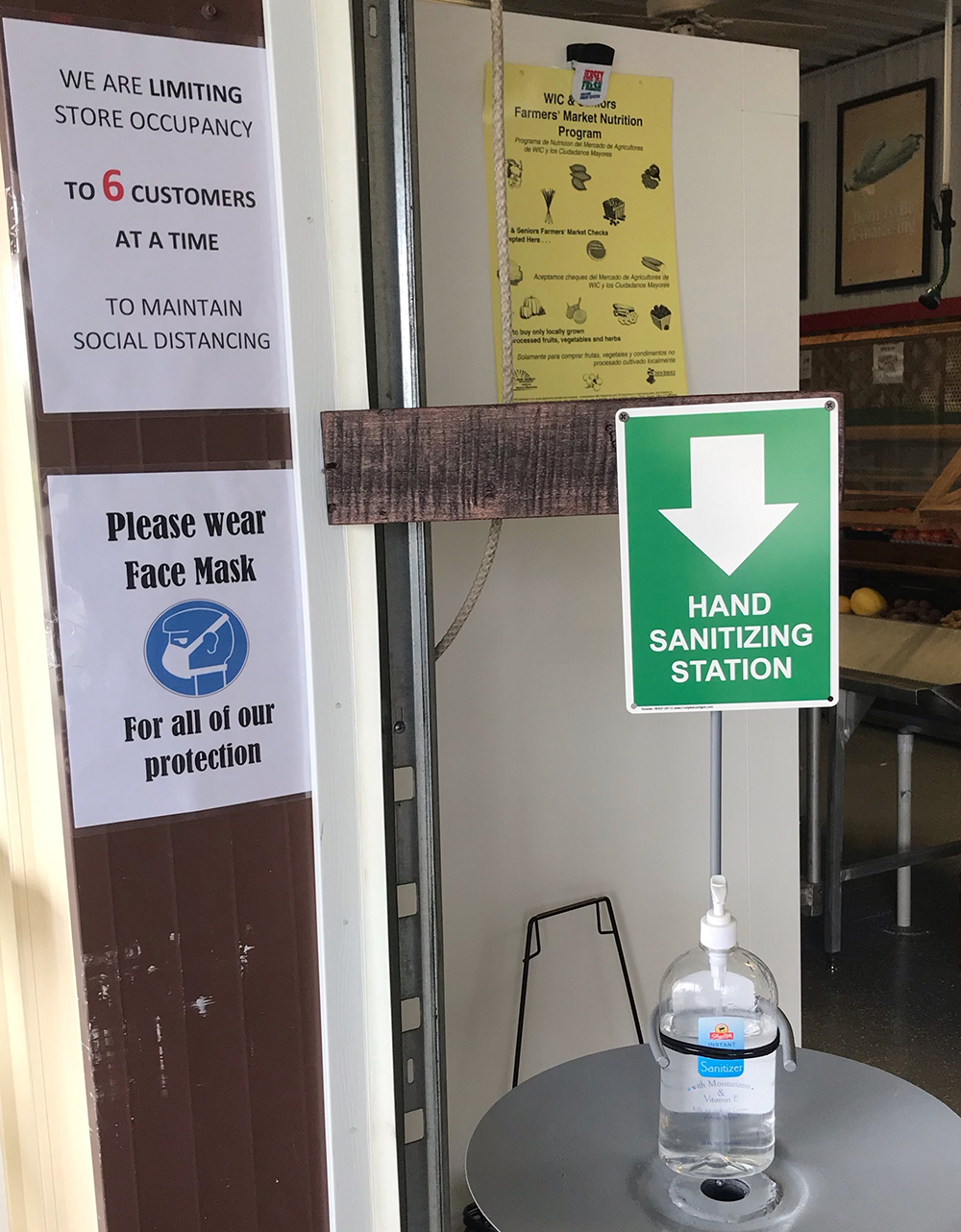
Figure 1. Setting up handwashing or sanitizing stations at the entrance to your farm pickup site makes it easy for customers to comply.
Rutgers Cooperative Extension has developed best practices for farms selling in person directly to consumers (e.g. at farmers markets) to employ during times of social distancing (see Resources below). For local farmers developing a distribution plan for products purchased by customers via online platforms, the following recommendations for best practices during times necessitating social distancing can help to promote the health and safety of both customers and farm employees.
Payments
- Prioritize the acceptance of pre-payments online via credit card, PayPal, or other virtual mechanisms to reduce handling credit cards or cash on site.
- If payments are to be accepted on site:
- Assign one person to handle cash/payments and another person to handle produce, plants, etc. being given to customers during pickups.
- Implement frequent sanitizing of high-touch surfaces, including electronic payment devices.
- Provide paperless receipts (e.g. via email) to customers requesting a receipt.
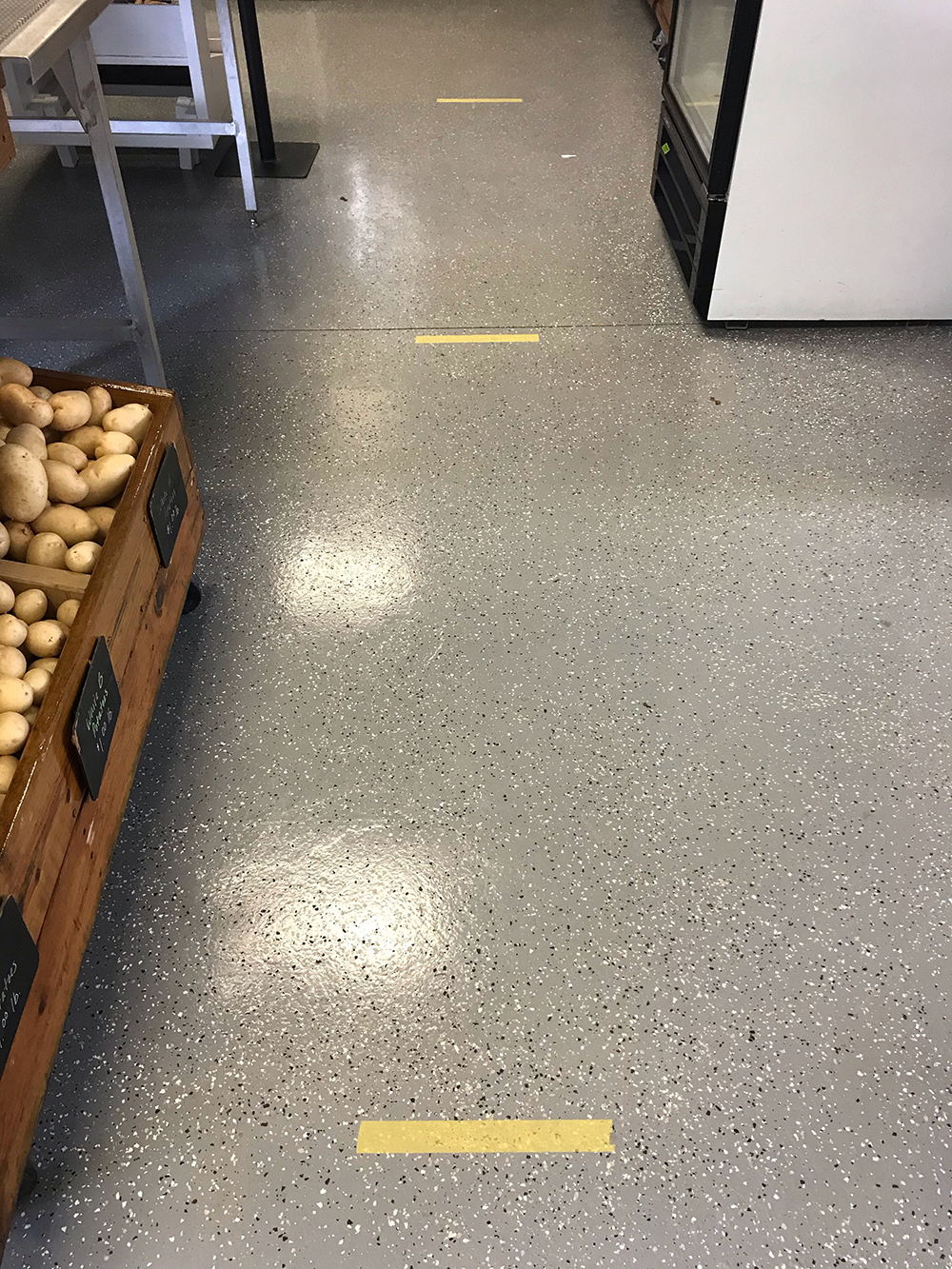
Figure 2. Clearly marking six foot spacing will help customers follow social distancing guidelines while on the farm.
Order Pickup
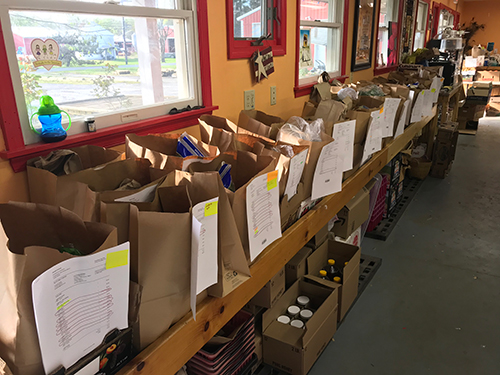
- Pre-pack the items that customers order online into pickup-ready bags or boxes to minimize time spent by customers on site.
- Post clear signage visible to customers upon their arrival to communicate specific pickup procedures and safety protocols (e.g. maintaining six-foot distancing, handwashing, use of face coverings, etc.).
- Consider using scheduling software to stagger customer pickup times, minimizing interaction by limiting the number of customers who can pick up products during specific time slots. Online ordering systems may have customizable options for order shipping/pickup on the checkout page to allow customers to self-select a pickup time from a list of available options. Alternatively, farms can respond to each online order with a confirmation email that indicates an assigned pickup window (e.g. 10am–11am) for each customer.
- If farm site logistics allow, create a “drive-through” pickup option in which staff place pre-packed online orders directly into customers’ vehicles while customers remain in their cars.
- If drive-through pickup options are not possible on the farm/at the farmers market:
- Use rope, cones, or other low-cost mechanisms to form lines and delineate appropriate spacing between customers when both in and out of their vehicles.
- Direct customers to use the handwashing stations upon their arrival for pickups.
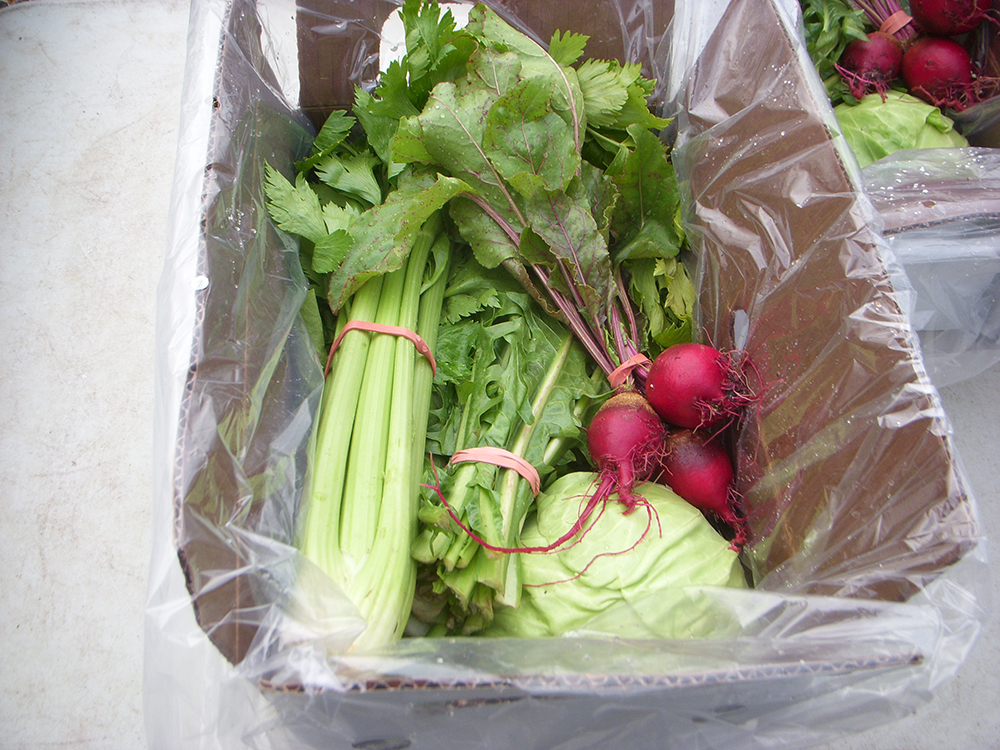
Figure 3. Pre-packaging produce orders will reduce the amount of time customers spend on site during pickups.
General Safety Guidance
- Have handwashing stations and/or hand sanitizer on site at all times during pickups. Designate a staff member who will monitor and re-stock handwashing supplies as needed throughout the pickups.
- Ensure that workers and customers follow guidance to wear face coverings in accordance with current New Jersey COVID-19 guidelines. Disposable face coverings should be discarded after use, replaced at least daily or more frequently if dirty. Re-usable cloth face coverings should be laundered daily.
- Ensure that single-use gloves are available for workers, and that workers are trained on how to properly use gloves as follows:
- Wash hands prior to putting on gloves.
- Remove gloves prior to taking a break, eating, using the restroom, or any other time they may become damaged or potentially contaminated. For example, single-use gloves should be used and discarded after each instance of in-person contact.
- Wash hands and replace with a new set of gloves.
- Lead by example: farm owners and supervisors should follow all guidance regarding handwashing, use of gloves, and use of face coverings that is required of workers.
- For the most up-to-date general safety information for farms, farmstands, and markets, please see: NJAES Guidance for Farm Markets (PDF)
Resources for More Information
- CDC Guidelines for Grocery and Food Retail Workers
- CDC Guidelines for Face Coverings
- National Young Farmers Coalition Farmer’s Guide to Direct Sales Software Platforms (PDF)
- New Jersey Guidelines for Businesses Continuing to Operate during the COVID-19 Pandemic
- New Jersey Agricultural Experiment Station Farm and Food Safety Resources:
Photo credits: Photos across top (l-r): William Hlubik, Lauren Errickson, William Hlubik. Rita Muzzarelli (Figures 1–2), Matthew Bruckler III (Figure 3)
Mention or display of a trademark, proprietary product, or firm in text or figures does not constitute an endorsement by Rutgers Cooperative Extension and does not imply approval to the exclusion of other suitable products or firms.
May 2020
Copyright © Rutgers, The State University of New Jersey. All rights reserved.
For more information: extension.rutgers.edu.
Cooperating Agencies: Rutgers, The State University of New Jersey, U.S. Department of Agriculture, and Boards of County Commissioners. Rutgers Cooperative Extension, a unit of the Rutgers New Jersey Agricultural Experiment Station, is an equal opportunity program provider and employer.