
Fact Sheet FS1355
Black bears may be attracted to field crops, beehives, and livestock such as chickens, rabbits, goats, and sheep in search of food resulting in unacceptable levels of damage and livelihood impacts to farmers. If you live in a black bear area there are steps you can take to reduce unwanted bear damage on your farm. Options include reducing cover and attractants, harassment techniques, permits to remove problem bears, and electric fencing. The following management information is provided to help reduce bear damage to farm operations.
Identifying Damage
Indications of black bear damage to apiaries include tracks, hair, and scat as well as scattered and destroyed hives with claw and tooth marks. Once damage begins, bears will often return to the site nightly. In orchards, black bears will break trees and branches to reach the fruit and return regularly once damage begins. For field crops such as corn, bears will break down stalks by rolling (bear roll) and eat the entire cob. Damage can be present throughout the field and resemble crop circles. Bear damage can be distinguished from other animals, such as deer that often feed on rows near the edge of the field, destroy part of the cob, and eat stacks down to waist-high or lower.
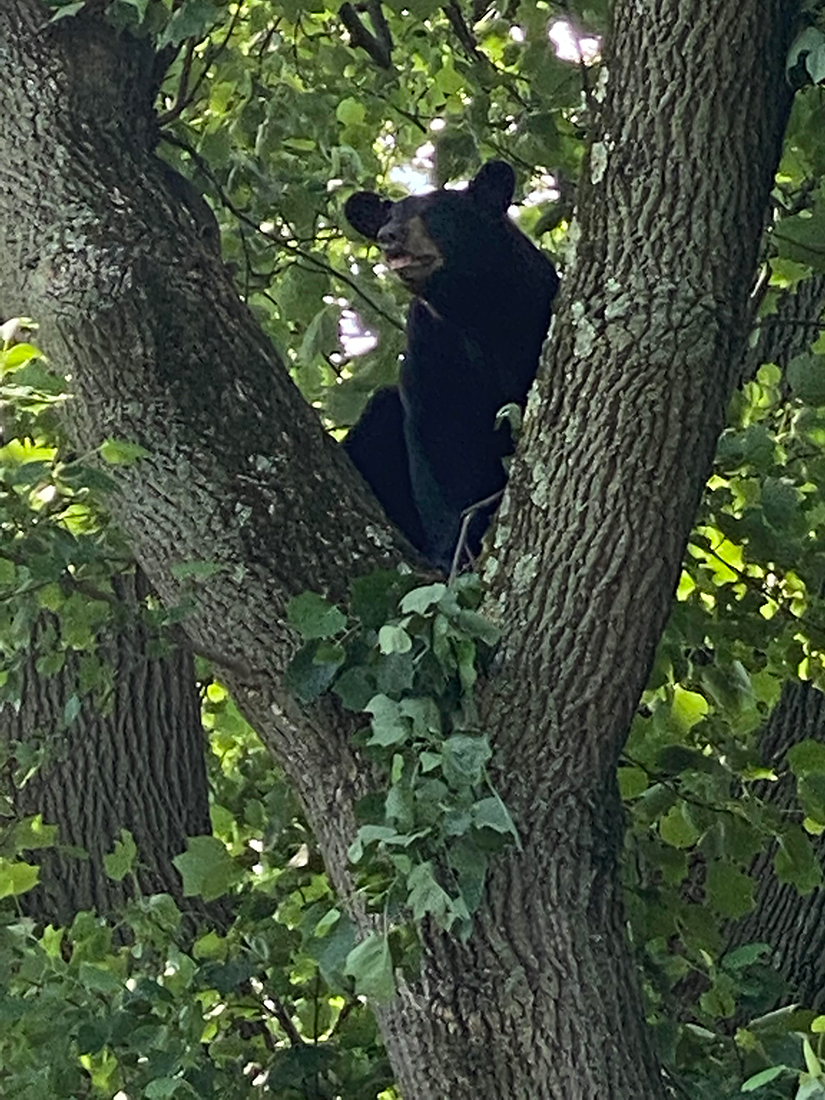
Figure 1. Black bear in a tree at Rutgers University, Cook Campus. Photo credit: Joseph Paulin.
Steps to Avoid Bear Damage
Reducing Cover and Attractants: Livestock, Orchards, Vegetable Gardens, and Compost Piles
Locate livestock pens, beehives, orchards, vegetable gardens, and compost piles at least 50 yards from forest tree lines, wetlands, or other cover for bears. Reduce cover for bears by keeping surrounding areas well mowed. Store livestock feed and fruit that has fallen from trees in a secure area or certified bear-resistant container, as they will attract bears. Harvest vegetable gardens immediately and avoid placing meat, dairy, or sweet foods in compost piles. Adding lime to compost piles can aid in decomposition and reduce odors. For more information on waste management and bear-resistant containers, visit the New Jersey Department of Environmental Protection (NJDEP) Fish and Wildlife's tips for garbage management.
Harassment Techniques
Utilize aversive conditioning/harassment techniques to discourage black bears from returning to the same location. Examples include mechanical devices such as noise-making pyrotechnics, electronic sirens, strobe lights, and noise generators.
Depredation and Special Farmer Black Bear Hunting Permits
Farmers experiencing significant crop damage or livestock depredation may be eligible for a special permit through the NJDEP Fish and Wildlife to remove problem black bears. For additional information, call 1-877-WARN DEP (1-877-927-6337). In years with a black bear hunting season, qualified farm owners or lessees can apply for a NJDEP Fish and Wildlife special black bear hunting permit for the farm where they reside. For questions on the application process, call 609-292-1473.
Electric Fencing
Properly installed electric fencing is the most effective method to reduce black bear damage to small structures and areas such as beehives, chicken coops, rabbit hutches, animal feed, fruit trees, vineyards, gardens, compost piles, sheds, grills, garbage cans, etc. The NJDEP Fish and Wildlife, Wildlife Control Unit can provide advice over the telephone on fence construction techniques. For examples of fencing suppliers, see Bear Facts for Agriculturists on the NJDEP Fish and Wildlife website.
Location of Electric Fencing
- Place electric fencing 4–5 feet away from any structures you wish to protect and away from any trees that the bear could climb and drop into the area.
- Keep in mind that dry rocky soils do not conduct electricity well.
Construction Guidelines for Electric Fencing
- The fence needs to be at least 4 feet high, and wires should be placed close enough that bear cubs can't get through.
- Install fence posts every 8 feet. Use treated, and reinforced, wooden posts for the corner construction. Posts should be driven at least 1 foot into the ground. There should be an insulator for each strand of wire on all posts.
- Starting with the gate post, install the insulators on the fence posts to secure the hot wires. Wires must be connected to the insulators and not the posts to prevent a short circuit.
- For an "all-hot fence," all of the wires are electrified and can shock the bear. Use at least 5 strands of high-tensile galvanized wire. The bottom wire of the fence needs to be close enough to the ground so bears cannot get under the fence. Wires should be placed at 4, 16, 26, 36, and 48 inches above the ground.
- For a "hot/ground fence," wires should be placed 6 inches apart, hot wires should be no more than 12 – 15 inches apart, and both the top and bottom wires must be electrified. Connect one wire directly to the positive end of the energizer. All wires should be connected to each other in series. Connect the negative terminal on the energizer directly to the grounding rod.
Permanent Fences
Solid wood posts are recommended for permanent fences. Wires can be 12–14 gauge galvanized steel (most effective), or aluminum. Galvanized smooth steel wire is strong and durable, but can be challenging to tighten. Aluminum wire is easier to use but is lightweight and can break with repeated bending. Wire strainers can be used to reduce sagging.
Temporary Fences
For temporary fences, you can use wooden corner posts with metal line posts and polyethylene wire (polywire) with 9+ strands. Polywire is made of strands of braided wire. It is strong and flexible and can usually be rolled and unrolled several times without breaking. However, polywire will weaken and break over time from exposure to the sun. Polytape is less effective and not recommended for bear fences. Temporary fences usually require more maintenance.
Gates
For maximum effectiveness, gates should be electrified to keep bears from gaining access to the fence. Gates can be thought of as a smaller section of the fence. Wires can be placed in the same manner as the rest of the fence, however, don't place them too close to the gate handle.
Power Sources and Energizers
If possible, use a plug-in energizer rather than a battery or solar-powered energizer. However, solar and battery-powered energizers are available for more remote locations. If using a battery, they should be placed inside the fence and be at least 12 volt and a 70-amp hour deep cycle battery. Marine batteries are preferred. Energizers should have a rating of at least 0.7 joules. Place solar-powered stations in an area that gets a lot of direct sunlight to ensure proper charging. Use a voltmeter to ensure each wire is electrified and you have a proper charge of at least 6000 volts.
Grounding
Follow the manufacturer's instructions for properly grounding the fence to ensure the bear receives an adequate shock. This will typically involve inserting a ½ inch, 6–8 foot grounding rod made of galvanized steel into the soil near the energizer and connecting it to the fence. Grounding rod clamps should be used to connect the rod to the charging station.
Safety
Hang electric fence warning signs on each side of the fence.
Baiting the Fence
Black bears in New Jersey have a thick hide and can be as large as 600–700 pounds. Baiting the fence is important. You want to direct the electric shock to the bear's snout, where it will be most effective. Bait all sides of the fence at 3 feet high by wrapping a piece of bacon around the wires or with some peanut butter on a piece of tin foil.
Maintenance
- Maintenance is important to make sure the fence is functioning properly.
- Ensure all wires remain tight.
- Check all wires regularly with a voltage meter to make sure they are electrified and will deliver an effective shock.
- Always keep the fence baited so it remains effective.
- Make sure nothing is touching the bottom wire and create a buffer by removing vegetation within 18 inches from the fence. Do not create a buffer of more than 18 inches or bears will be better grounded while standing on grass.
- Maintain cleared buffer areas with herbicides, mulch, wood chips, or landscape fabric.
Contact your local Rutgers Cooperative Extension County Office for additional information. For black bear resources for farmers and information on electric fencing, visit the NJDEP Fish and Wildlife's "Bear Facts for Agriculturalists," and "Electric Fencing (PDF)" guide.
Acknowledgments: Thank you to the NJDEP Fish and Wildlife, Bureau of Information and Education, and Bureau of Wildlife Management for providing photos and expert review.
To report black bear nuisance or aggressive behavior, contact your local police department of the New Jersey Department of Environmental Protection Fish and Wildlife at 1-877-WARNDEP (1-877-927-6337).
References
- Annis, K. (2022). Deterring Bears with Electrified Fencing: A Beginner’s Guide (PDF). Montana Fish, Wildlife and Parks.
- Martin, M.L. and J.M. Tomeček. 2019. Deterring Bears with Electrified Fencing: A Beginner’s Guide. EWF-106. Texas A&M AgriLife Extension and Texas Parks and Wildlife.
- Massachusetts Division of Fisheries and Wildlife. 2017. Electric Fencing Guide to Protect Bee Hives, Chicken Coops, and Livestock from Black Bear Damage.
- NJDEP Fish and Wildlife. 2023. Bear Facts for Agriculturalists.
- NJDEP Fish and Wildlife. 2023. Beehives / Crops / Livestock.
- NJDEP Fish and Wildlife. 2023. Garbage Management and Bear-Resistant Trash Container Manufacturers.
- North Central Regional IPM Center’s Agriculture and Wildlife Coexistence Working Group and Michigan State University Extension. 2017. Black Bears: Wildlife Management Series for Midwestern Farmers. MSUE Bulletin #3428.
- Post, K.K. and J. Cameron. 2021. Building Bear Fences for Your Apiary. ENY-2060. University of Florida IFAS Extension.
- Taylor, J.D. and J.P. Phillips. 2020. Black Bear: Wildlife Damage Management Technical Series. United States Department of Agriculture, Animal Plant and Health Inspection Services, Wildlife Services.
Photo captions and credits top row l - r:
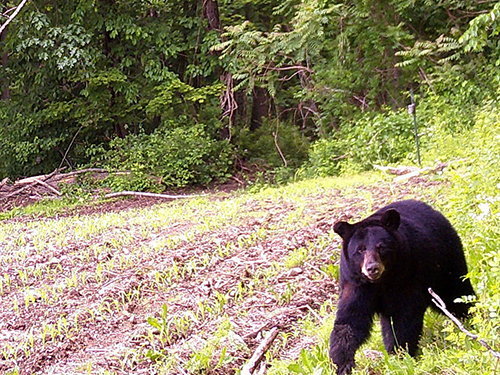
Black bear walking on the edge of a cornfield in Sussex County, NJ. Photo credit: Stephen Komar
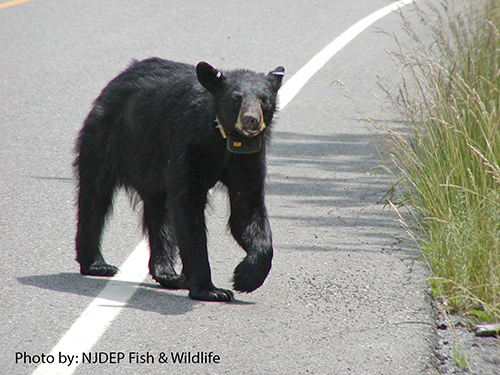
Black bear that was ear tagged and collared for tracking during New Jersey Department of Environmental Protection, Fish and Wildlife field research. Photo credit NJDEP Fish and Wildlife.
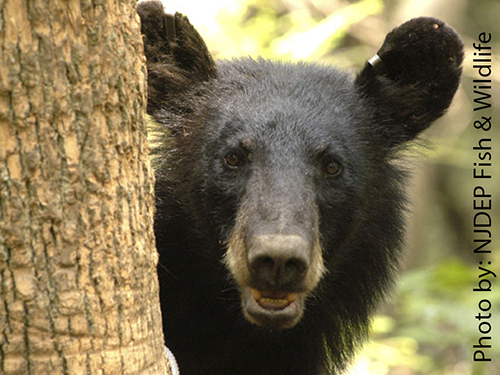
Black bear that was ear tagged during New Jersey Department of Environmental Protection, Fish and Wildlife field research. Photo credit: NJDEP Fish and Wildlife.
December 2023
Copyright © Rutgers, The State University of New Jersey. All rights reserved.
For more information: extension.rutgers.edu.
Cooperating Agencies: Rutgers, The State University of New Jersey, U.S. Department of Agriculture, and Boards of County Commissioners. Rutgers Cooperative Extension, a unit of the Rutgers New Jersey Agricultural Experiment Station, is an equal opportunity program provider and employer.