
Fact Sheet FS1377
Why Produce Safety Matters
Fresh fruits and vegetables are often consumed raw, without the "kill step" of cooking that destroys harmful pathogens. Because of this, foodborne illness outbreaks have repeatedly been linked to fresh produce. Contaminated water, soil, animals, and human handling are just a few of the pathways by which dangerous microorganisms reach the food supply.
Even very small amounts of contamination can make people sick. Some pathogens, like certain strains of E. coli, require as few as ten cells to cause illness. Under the right conditions, bacteria can multiply rapidly, doubling every 20 minutes. In only eight hours, a single bacterium can become more than 16 million. This exponential growth highlights the importance of preventing contamination before it occurs.
Microorganisms of Concern
Three main groups of microorganisms pose the greatest risks in fresh produce:
Pathogens of Concern in Produce Safety
- Bacteria
Salmonella, E. coli O157:H7, Shigella, Listeria monocytogenes
➝ Frequent culprits in produce-related outbreaks. - Viruses
Norovirus, Hepatitis A
➝ Highly contagious and easily spread through contaminated food or water. - Parasites
Giardia lamblia, Cryptosporidium parvum, Cyclospora cayetanensis, Toxoplasma gondii
➝ Can survive in soil or water and infect humans through produce consumption.
Each group poses unique challenges for prevention and control. We are focusing on bacteria for this factsheet because it has the highest likelihood of increasing risk of foodborne illness on your farm.
Conditions for Bacterial Growth
Pathogens require certain conditions to thrive. They need a food source, moisture, the right temperature, time to multiply, suitable acidity (pH), and, in most cases, oxygen. Farms often provide many of these conditions naturally—moist soils, warm temperatures, and nutrient-rich environments—making prevention strategies especially critical.
Assessing Farm-Level Risks
Effective produce safety begins with a risk assessment. Farmers should first identify potential hazards unique to their operation—whether it is irrigation water drawn from surface sources, the use of raw manure, or the presence of livestock near crops. Once hazards are identified, producers must evaluate the likelihood of contamination, rank risks, and then develop responses. Responses may range from staff training and signage to new policies, recordkeeping systems, or investments in infrastructure. The key is to adopt both immediate corrective actions and long-term preventive measures.
Key Issue Areas in Produce Safety
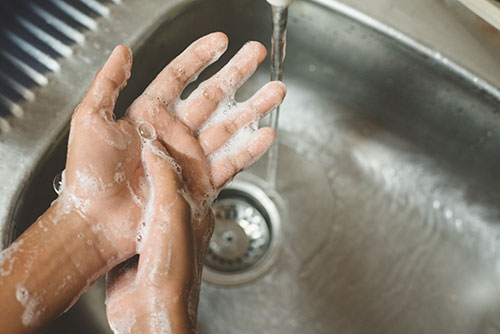
Handwashing is critical to reducing risk.
Handwashing
Hand hygiene is one of the simplest yet most effective barriers against contamination. Workers should wash their hands with soap and water (never sanitizer alone), lathering for at least 20 seconds, rinsing thoroughly, and drying with a paper towel used also to turn off the faucet. Proper timing is equally important: before starting work, after using the toilet, before eating or smoking, before putting on gloves, after handling animals or anytime hands may become contaminated. Reinforcing these practices through training and supervision creates a strong line of defense against microbial hazards.
Water Quality
Water represents one of the most significant risk factors for contamination, since it may directly contact the harvestable portion of crops. For both preharvest and postharvest, you should be testing for generic E.coli.
Preharvest Water: Testing depends on the source. Municipal water requires only an annual report from the municipality, while groundwater should be tested at least once a year. Surface water, however, is more variable and should be tested three times during the growing season—at the beginning, middle, and close to harvest.
Postharvest Water: Used for washing produce, equipment, and workers' hands, postharvest water must be consistently free of detectable generic E. coli. Surface water cannot be used unless it has been treated with a validated method.
If water tests reveal contamination, farmers must immediately stop using the source, determine the cause, correct the issue (e.g., repair cracked well casings or prevent pooling), and retest before resuming use.
Cleaning and Sanitizing
A structured cleaning and sanitizing plan is essential. Food contact surfaces should be cleaned and sanitized routinely, with schedules, procedures, and corrective action plans documented. Tools, supplies, and staff training support the process, ensuring that sanitation is both consistent and effective.
Soil Amendments
Soil amendments of animal origin, such as manure and compost, are beneficial for fertility but carry microbial risks. The timing of application is crucial:
- Raw manure must be incorporated into the soil at least 120 days before harvesting crops that contact soil (e.g., lettuce) and at least 90 days before harvesting crops that do not (e.g., staked tomatoes).
- Composting processes can reduce risk if properly validated—static compost must reach 131°F for at least three days, while turned compost must reach the same temperature for 15 days with at least five turnings. Without validated treatment, products must be managed like raw manure.
Animals on the Farm
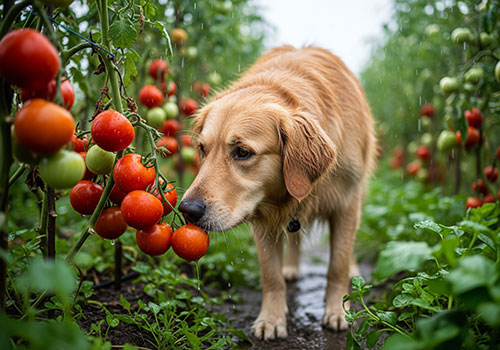
Pets should NOT be in the production area.
Wildlife, livestock, working animals, and pets all pose potential hazards. Pathogens can move across farms through manure, stormwater, vehicles, footwear, or equipment. To minimize risks, farms should keep pets out of production and packing areas, monitor animal intrusion in fields, and manage manure movement across the property.
What Not To Do: (Practices that increase contamination risk)
- 🚫 Do not harvest produce that has fallen to the ground
- 🚫 Do not harvest crops visibly contaminated with feces
- 🚫 Do not allow uncontrolled pets into production fields
- 🚫 Do not apply sanitizers without cleaning first
(dirt and organic matter reduce sanitizer effectiveness)
Conclusion
Produce safety depends on a proactive approach. By understanding the conditions that allow pathogens to thrive and by applying science-based management practices—such as proper handwashing, safe water use, controlled soil amendment applications, and animal management—farmers can significantly reduce the risk of contamination. Developing a comprehensive food safety plan, supported by staff training and recordkeeping, ensures these practices are consistently followed.
Food safety is not just a regulatory requirement; it is a public health responsibility that protects both consumers and the integrity of farm operations. For more information on all these topics or to sign up for a training, visit our website at onfarmfoodsafety.rutgers.edu.
November 2025
Copyright © Rutgers, The State University of New Jersey. All rights reserved.
For more information: extension.rutgers.edu.
Cooperating Agencies: Rutgers, The State University of New Jersey, U.S. Department of Agriculture, and Boards of County Commissioners. Rutgers Cooperative Extension, a unit of the Rutgers New Jersey Agricultural Experiment Station, is an equal opportunity program provider and employer.