
Fact Sheet FS1399
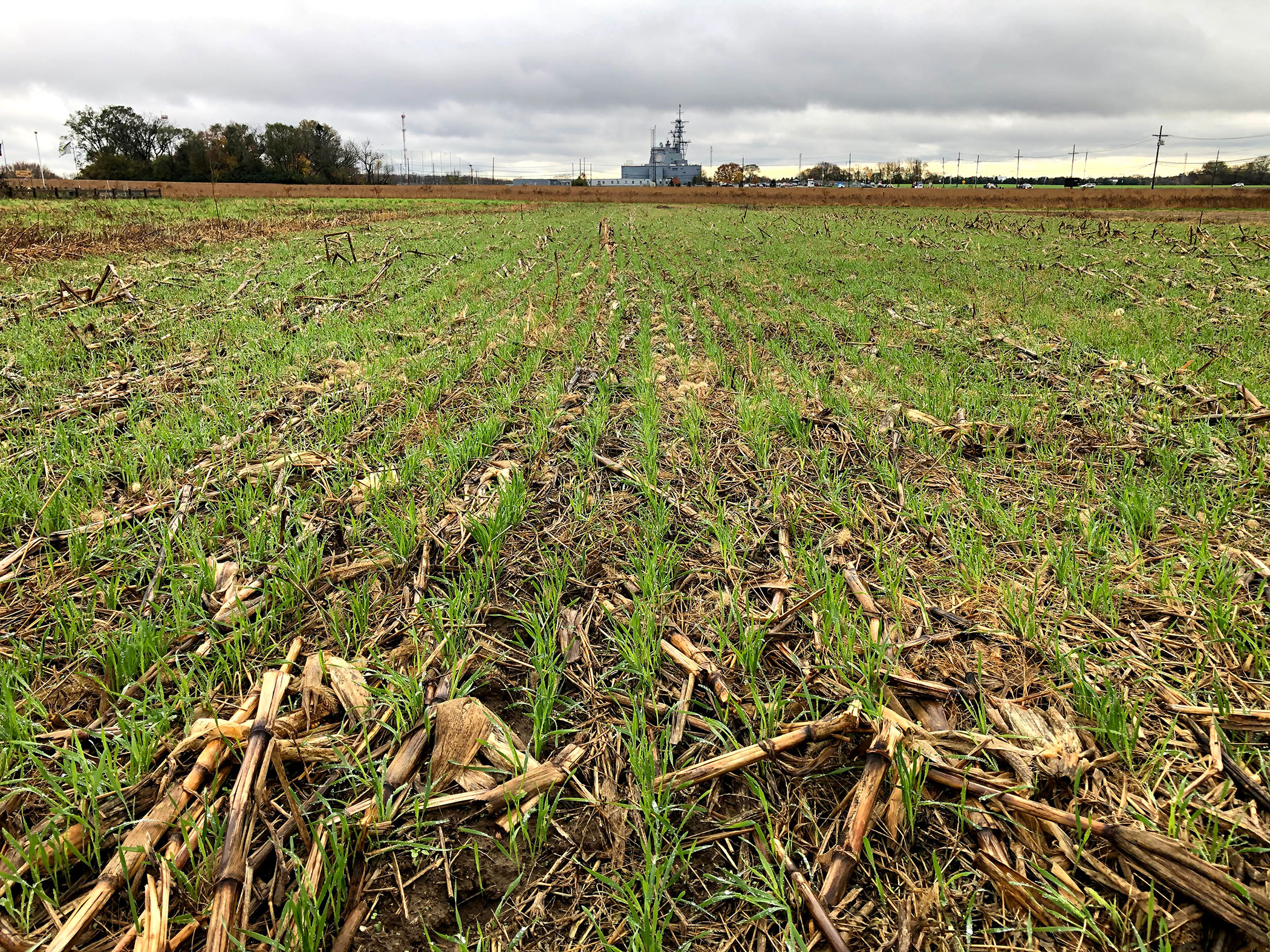
Figure 1. A cereal rye cover crop that was no-till planted into corn stubble after grain harvest.
Cover crop adoption is increasing as farmers seek to promote soil health, diversify pest management, and reduce non-point source pollution. Support from a growing number of cost-share opportunities has been an important aid in cover crop adoption. However, farmers interested in cover crops must make informed decisions about cover crop selection and management to mitigate negative impacts on their cash crops. Site-specific optimization of cover crop use comes with experience, but this fact sheet answers many of the frequently asked questions about cover crops to help farmers get started.
What Are Cover Crops?
Cover crops are plants that are cultivated, in addition to a cash crop, for the primary purpose of preserving and improving soil health. As an improved fallow practice, cover crops are grown between cash crops to protect and restore the soil during periods when the land would otherwise be bare (Figure 1). Other benefits of cover cropping include weed control, soil erosion control, improved water quality, nutrient cycling, and increased biodiversity. Cover crops can also be grown alongside cash crops to provide similar in-season benefits.
Are Cover Crops the Same as a Green Manure Crop?
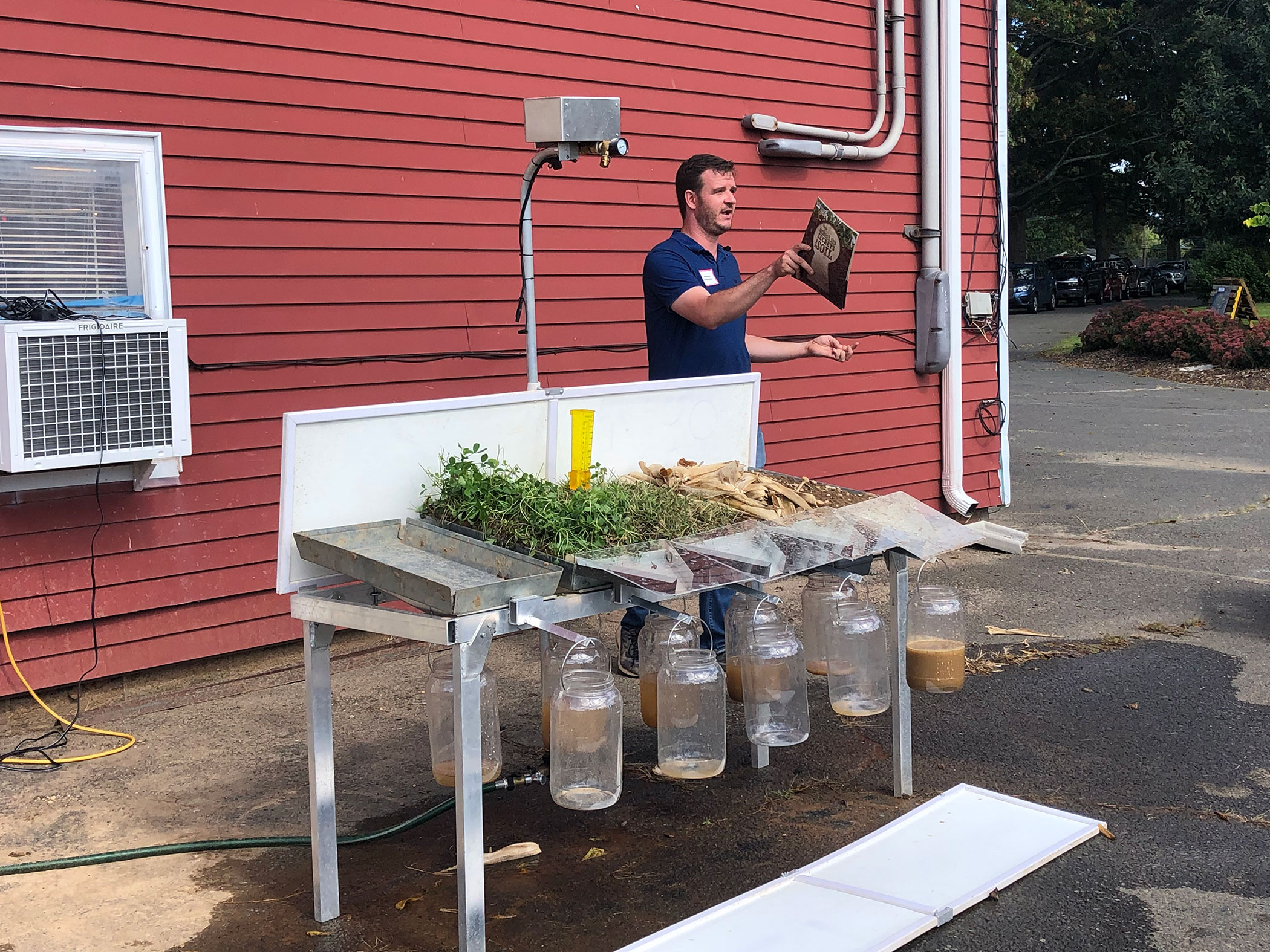
Figure 2. Rainfall simulator demonstration illustrates the role of living soil covers in improving water infiltration (water collected in back row of buckets) and reducing runoff and sedimentation (water collected in front row of buckets) compared to bare soil.
"Green manure" refers to a specific cover crop management practice. Green manures are cover crops incorporated directly into the soil while still green, often after mowing. Managing cover crops as a green manure is beneficial because green vegetation has a lower carbon to nitrogen (C:N) ratio than cover crops that are desiccated by herbicide or frost. Chopping the biomass also increases its surface area, further speeding decomposition. However, repeated tillage may be necessary to effectively terminate cover crops using this method. The biofumigant properties of Brassica cover crops depend on the crop being managed as a green manure, with fresh biomass chopped and quickly incorporated into moist soil to maximize the release of bioactive compounds.
What Are the Benefits of Planting Cover Crops?
Cover cropping can improve physical, chemical, and biological aspects of soil health. Biomass from cover crops adds organic matter to the soil, improving soil water holding capacity, water infiltration, and soil aggregation. These factors, along with cover crops blanketing and physically holding the soil in place, also reduce soil erosion and sedimentation (Figure 2). Cover crop roots can break up compacted soil and support the soil microbiome with root exudates. Through nutrient scavenging, redistribution of nutrients in the soil profile, and nitrogen fixation, cover crops can significantly improve nutrient retention and availability for crop growth. As a result, cover crops provide environmental benefits through reduced potential for nutrient leaching and non-point source pollution.
Suppression of weeds, diseases, and nematodes is a secondary benefit of cover crops. Weed suppression is the result of direct competition and, sometimes, allelopathy—release of biochemicals by certain cover crops that inhibit the growth of other organisms. Cover crops can also increase habitat and nectar for beneficial insects (Figure 3), which aids pest control. Cover crop residue left on the soil surface can reduce the incidence of soilborne disease through reduced soil splashing. Plant-damaging nematode populations can also be suppressed by cover cropping because of allelopathy and increased biodiversity in the soil microbiome.
Are There Any Challenges or Disadvantages to Growing Cover Crops?
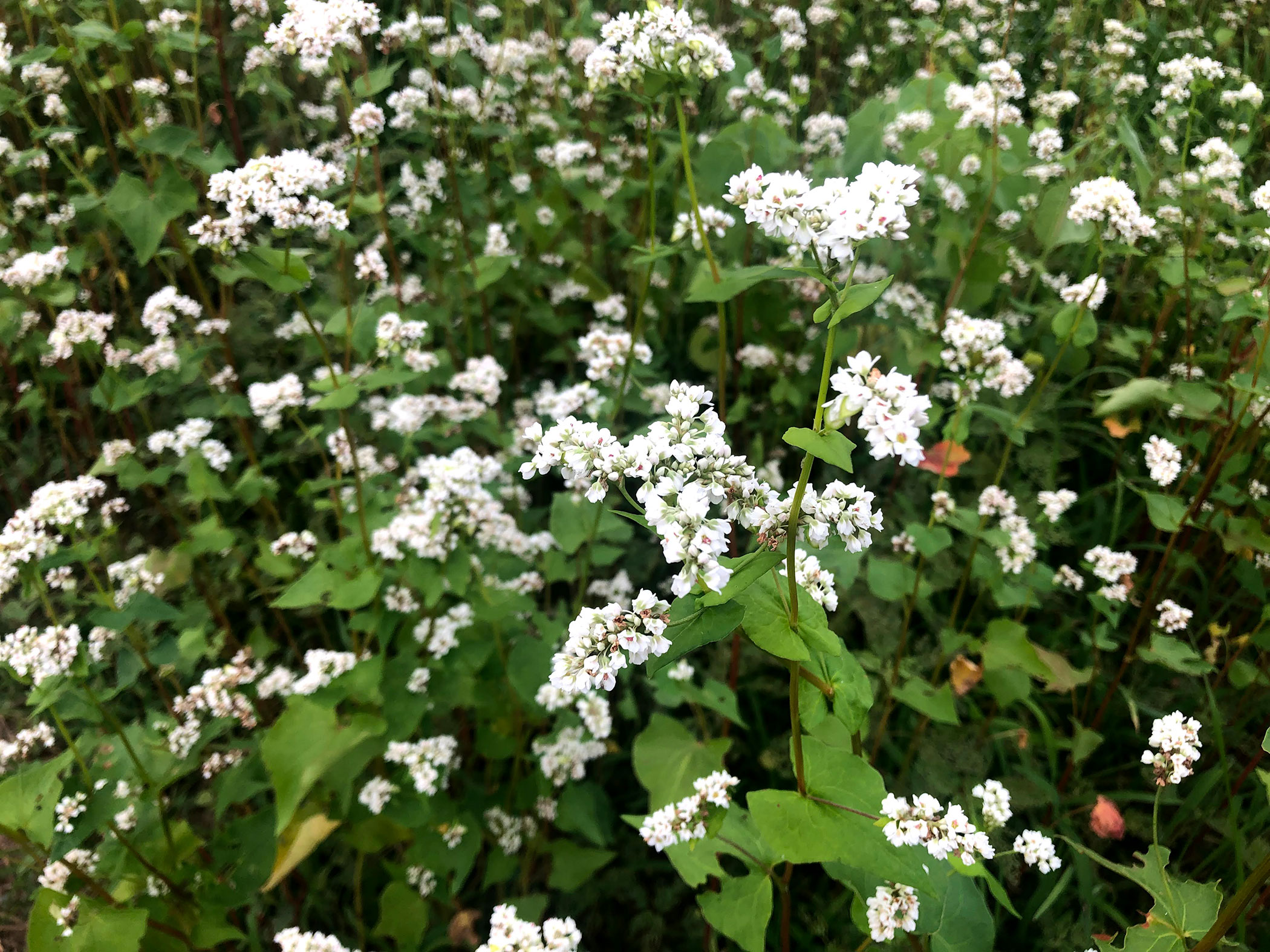
Figure 3. Buckwheat cover crop in bloom provides nectar for pollinators and beneficial insects.
Challenges with cover crops are typically associated with termination, as effective and timely cover crop termination are essential to productivity of the subsequent crop. In years with excessively dry or wet weather, poor soil conditions for planting may be exacerbated by cover crops. Failure to completely terminate a cover crop, or termination that follows cover crop seed set, can enable cover crops to become weeds. Even effectively terminated cover crops can inhibit crop establishment through allelopathy or nitrogen immobilization without sufficient time to decompose.
With interplanted cover crops, competition with the cash crop may occur without adequate separation by time (i.e., establishing the cover crop after the critical weed-free period of the cash crop) or by distance. Some cover crops can serve as alternate hosts for crop pests and diseases, so careful attention to species selection is needed. Cover crops have associated expenses, such as seed and new or modified equipment (e.g., a roller crimper, stalk chopper, no-till planter, or specific closing wheels) for those seeking to plant directly through cover crop biomass (Figure 4). Lastly, the opportunity cost of planting cover crops instead of cash crops is a key disadvantage.
How Do I Select the Best Cover Crop Species for My Farm?
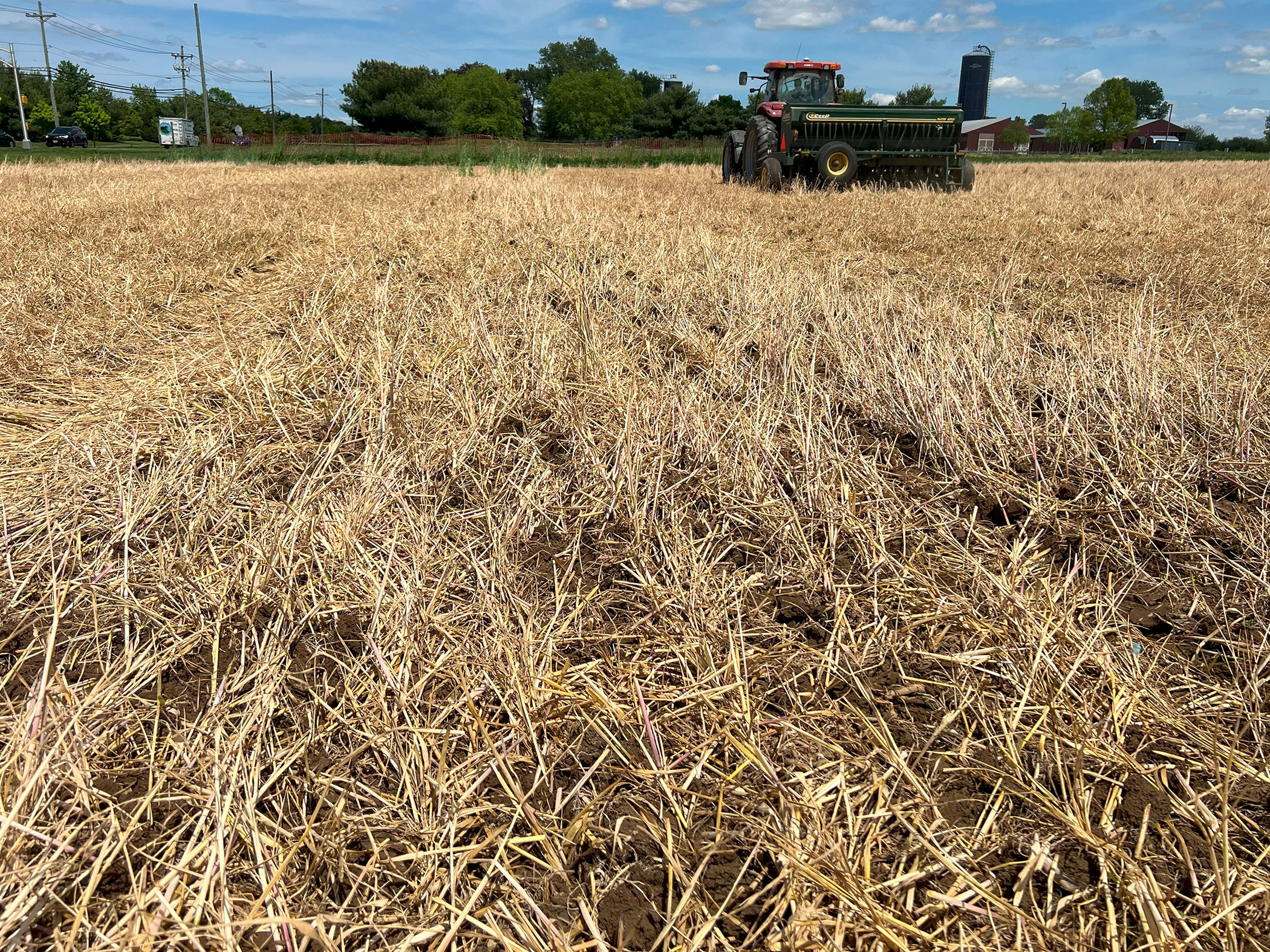
Figure 4. A no-till drill plants soybeans directly through cereal rye that was terminated two weeks earlier with a herbicide application.
There are many cover crop species to choose from, and a list of species commonly grown in New Jersey is provided in Table 1. To further narrow the options, there are several important considerations that a farmer must address:
- What are my site conditions, including plant hardiness zone, soil type, and drainage?
- What do I intend to achieve by cover cropping? Goals may include biomass production, nitrogen fixation, weed suppression, forage for beneficial insects, lasting residue, etc.
- What is my cover crop growing window?
- What equipment is available for me to establish, manage, and terminate cover crops?
- Which cover crop species will not introduce any pest or disease concerns to the succeeding crop?
Resources to aid cover crop species selection include Managing Cover Crops Profitably (SARE, 2012) and the Cover Crop Species Selector Tool developed by the Northeast Cover Crops Council.
An independent, on-farm evaluation will always be the best way to determine which cover crop species are best suited for your farm. Consider planting appropriately sized test strips to compare two or more species, mixes, or varieties. Important observations to record include ease of establishment and termination, as well as competitiveness, costs, and impacts on the subsequent crop.
Should I Grow One Species of Cover Crop or a Mixture?
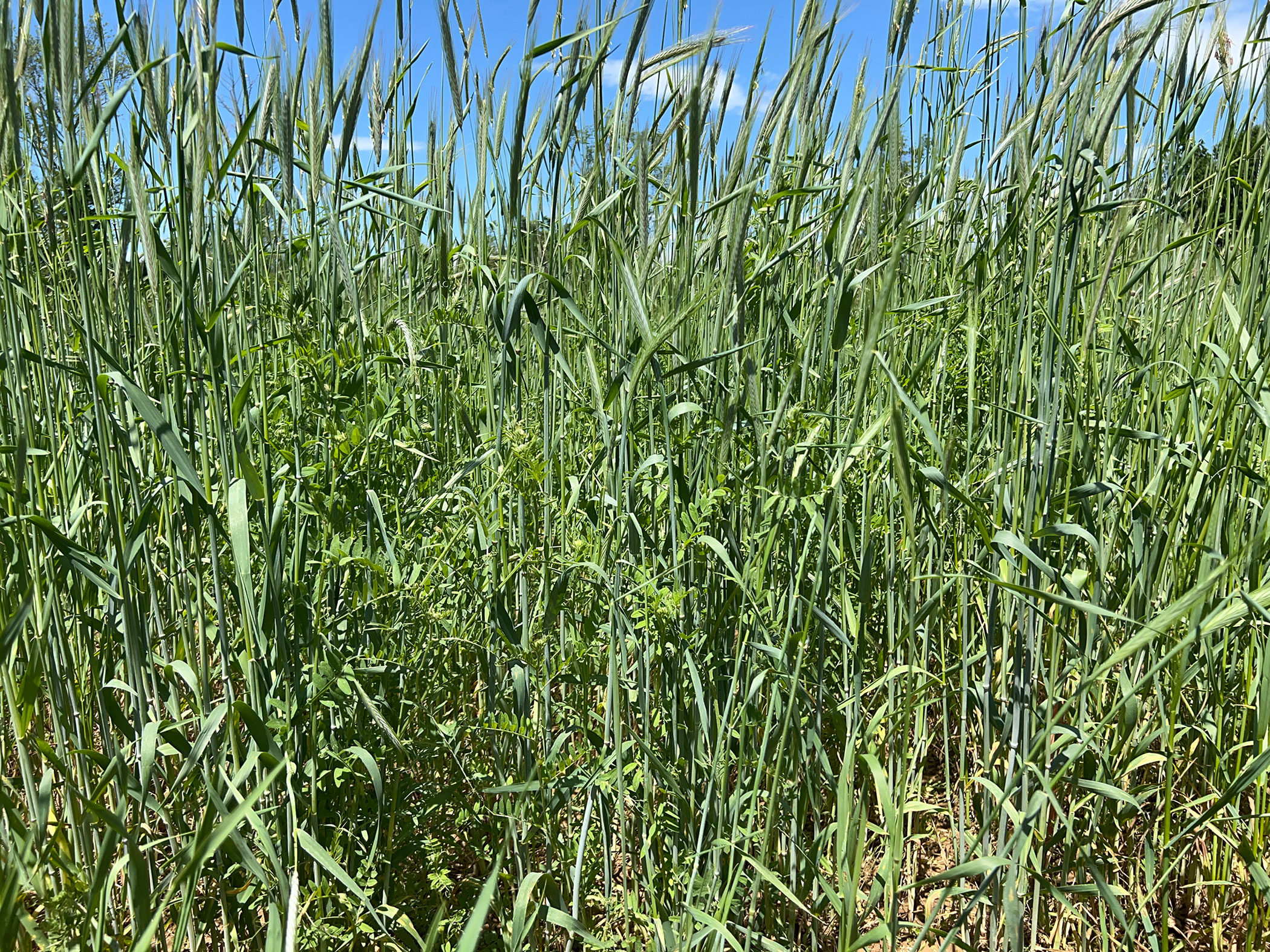
Figure 5. Hairy vetch climbs cereal rye as the stems elongate in spring.
Farmers new to cover crops often plant a single species (i.e., monoculture) because management is more straightforward compared to a mixture of species. There may be other limitations such as seed price, timing, and equipment that restrict a farmer to planting a single-species cover crop.
Planting a mixture of species can benefit the species themselves as well as the soil. For example, cereal rye is commonly paired with hairy vetch (Figure 5). Cereal rye promotes hairy vetch biomass production by serving as a trellis, and leguminous hairy vetch reduces the C:N ratio of the cover crop biomass, reducing time needed for decomposition. A mixture of cover crops with various growth habits can also improve soil coverage and provide more diverse benefits to the soil condition. For example, mixtures that incorporate a grass species, a legume species, and a Brassica species are commonly recommended. The grass produces significant biomass; the legume fixes nitrogen for the succeeding crop and reduces the C:N ratio of the cover crop biomass; and the Brassica may alleviate soil compaction (e.g., tillage radish) or serve as a biofumigant (e.g., mustards). Cover crop biodiversity may also support greater biodiversity of soil-dwelling organisms.
Seed companies offer an array of cover crop seed mixtures. If you opt to develop your own mixture, reduce the seeding rate of each species in the mixture by the total number of species. For example, in a two-species mixture such as cereal rye/hairy vetch, divide the base seeding rate of each species by two. Additional adjustments may be needed to achieve the desired balance based on species vigor, functional groups, farmer goals, and on-farm experience. More information on seeding rate calculations for cover crop mixtures can be found in Barrett and McGhee (2019) (PDF).
What Are the Recommended Production Practices for Cover Crops?
Establishment and Management
Seed-to-soil contact and the correct seeding depth are keys to cover crop seed germination. Using a standard or no-till drill or planter to sow cover crops is ideal; however, successful establishment via broadcast, aerial, or drone seeding is possible for many cover crop species. Cover crops generally prefer a soil pH between 6.0 and 7.0, although some species such as cereal rye and sorghum-sudangrass can tolerate more acidic conditions.
Increase the base seeding rate by 10–20% for broadcast seeding, and 20–50% for cover crops that will be interseeded, aerially seeded, or seeded under less-than-ideal conditions (e.g., at the tail end of the optimal planting window). Seeding rates are based on pure live seed so increase seeding rate based on the germination rate on the seed tag label. If this information is lacking—typically for seed that has been home-grown or purchased from a neighbor—the NJ Department of Agriculture offers germination testing.
Cover crops scavenge for nutrients; therefore, fertilizer is only needed in certain cases. An application of 15–30 pounds per acre of nitrogen can benefit grass cover crop species at planting on low fertility sites and, for summer annuals, after mowing. Nitrogen promotes tillering in grasses, an important aspect of soil coverage and biomass production. Brassica species may benefit from nitrogen on low-fertility sites and from boron where levels are low. Inoculated legumes do not benefit from nitrogen applications but may benefit from a starter application of potassium (K), 30–50 pounds per acre, on sandy soils or following heavy K-feeding crops like tomato, potato, and cabbage.
Cover crops are low maintenance, as they are usually grown without irrigation, and only a few species tolerate mowing (e.g., sorghum-sudangrass).
Termination
Timing is essential for successful cover crop termination and for avoiding consequences for the succeeding crop. Additionally, growers participating in cost-share programs for cover crops may need to comply with termination timing requirements specific to those programs. Physical termination through mowing or roller crimping is most successful when the cover crop is flowering, while cover crops in the vegetative stage are most successfully terminated with herbicides or tillage. A rule of thumb is to terminate the cover crop at least two weeks before planting another crop to allow time for decomposition. An exception to this rule is "planting green," a method of planting corn, soybean, or other large-seeded crops directly into a green cover crop, where the cover crop is terminated using a roller crimper and/or herbicide at or soon after planting.
Are There Financial Assistance Programs for Growing Cover Crops?
Yes, there are many organizations that support cover cropping through financial assistance or grants, including the USDA Natural Resources Conservation Service (NRCS), North Jersey Resource Conservation and Development (RC&D), New Jersey Audubon, Northeast Sustainable Agriculture Research and Education (SARE), and others. Be aware that each program may have specific requirements for cover crop species selection and management. Check regularly for availability of funds, as funding opportunities may come and go.
Where Can I Learn More?
Managing Cover Crops Profitably (SARE Outreach, 2007) and the Cover Crop Explorer Tool developed by the Northeast Cover Crops Council are excellent resources to learn more about cover crops.
References
Barrett R. and McGhee N. 2019. Considerations for Building Cover Crop Mixtures (PDF). USDA-Natural Resources Conservation Service.
Clark, A. (Ed.). 2007. Managing Cover Crops Profitably (3rd ed.). Sustainable Agriculture Research and Education (SARE) Program.
Cover Crop Selector. Precision Sustainable Agriculture.
Kluchinski, D. 1996. Cover crops and green manure crops: Benefits, selection, and use. Rutgers Cooperative Extension Fact Sheet.
Planting. 2023. Midwest Cover Crops Council.
Smaranda N., Ketterings Q., Czymmek K., Bjorkman T., Degni J., Lawrence J., and Stanyard M. 2016. Cover Crops for Field Crop Systems (PDF). Cornell University Cooperative Extension Fact Sheet 93.
| Common Name | Latin Name | Ideal Planting Window(s) in Zone 7 | Primary Use/Benefits/Notes |
|---|---|---|---|
| Barley | Hordeum vulgare | Mid-September to October March | Winter annual small grain, high biomass production, earliest maturing small grain |
| Buckwheat | Fagopyrum esculentum | May to Mid-August | Summer annual broadleaf, quick growth, smothers weeds and conditions soil in short windows, breaks down quickly, nectar for pollinators and beneficial insects, timely termination needed to prevent weediness |
| Clover, Crimson | Trifolium incarnatum | Mid-August to Mid-September April to Mid-May | Winter annual legume, good for grazing, more fall growth and earlier spring maturity compared to hairy vetch |
| Clover, Red | Trifolium pratense | Mid-to-late August Mid-February to Mid-March (frostseeded) April to Mid-May | Annual or short-lived perennial legume, taproot can break up soil compaction, good for grazing |
| Clover, White | Trifolium repens | Mid-to-late August Mid-February to Mid-March (frostseeded) April to Mid-May | Perennial, good for living mulch and grazing, termination can be difficult with tillage alone |
| Cowpea | Vigna unguiculata | June to Mid-July | Summer annual legume, smothers weeds, heat tolerant |
| Field Pea | Pisum sativum | Mid-August through September Mid-February through April | Winter annual legume, breaks down and releases nitrogen quickly |
| Forage Radish | Raphanus sativus | August through September | Winter annual Brassica, relieves soil compaction, scavenges nitrogen, smothers weeds |
| Hairy Vetch | Vicia villosa | August through September | Winter annual legume, high biomass production, mix with small grains, timely termination needed to prevent weediness |
| Mustards | Brassica spp. | March through August | Annual Brassica, various species, allelopathic, suppress nematodes and weeds, quick growth |
| Oats | Avena sativa | August through September March to Mid-April | Annual small grain, fast growth, commonly used as a nurse crop for legumes, winterkills |
| Rye, Cereal (Winter) | Secale cereale | Mid-August through November | Winter annual small grain, quick growth in fall, most tolerant of late fall planting, higher biomass production and earlier maturing than wheat, scavenges nitrogen, tolerates low fertility, allelopathic, timely termination needed to prevent weediness |
| Ryegrass, Annual | Lolium multiflorum | Mid-August through September April through May | Annual grass, loosens topsoil, fast growth smothers weeds, timely termination needed to prevent weediness |
| Sorghum-sudangrass | Sorghum bicolor x S. bicolor var. Sudanese | Mid-May through July | Summer annual grass, allelopathic, quick growth, mow or graze to 6-inch height whenever it reaches 3-4 ft. tall, scavenges nitrogen, heat and drought tolerant |
| Sunn Hemp | Crotalaria juncea | Mid-May through July | Summer annual legume, grows tall, stems become woody when frost-killed, slow to breakdown |
| Wheat, Winter | Triticum aestivum | Mid-August through October | Winter annual small grain, high biomass production, scavenges nutrients, later maturing than rye and barley |
October 2026
Copyright © Rutgers, The State University of New Jersey. All rights reserved.
For more information: extension.rutgers.edu.
Cooperating Agencies: Rutgers, The State University of New Jersey, U.S. Department of Agriculture, and Boards of County Commissioners. Rutgers Cooperative Extension, a unit of the Rutgers New Jersey Agricultural Experiment Station, is an equal opportunity program provider and employer.