
Fact Sheet FS1341
Yellow nutsedge (Cyperus esculentus) is a persistent weed commonly found in irrigated production fields, landscapes, and turf. Its sturdy leaves and angled stems are strong enough to puncture plastic and woven mulches. Reproduction through rhizomes and nutlet tubers allows for rapid reproduction and spread throughout fields. Understanding the life cycle and biology of nutsedge are key to figuring out the best options for control in your fields.
Growth Habit
Nutsedge is a grass-like perennial that has three-angled stems, long grass-like leaves, and is yellowish-green in color. Characteristics include:
- Produces 1–2 cm (.4–.8") tubers (sometimes called nutlets) at the end of rhizomes once the daylength starts to shorten in the fall.
- Flowers July through September and is wind-pollinated, but seeds rarely produce plants.
- Primarily spreads by rhizomes and tubers that are found mostly in the top 6" of soil.
- Is more problematic in irrigated fields than dry field crop areas.
- Tubers overwinter in the soil, sprouting in the spring once the soil warms.
- Populations often start in low-lying areas since nutlets are easily spread by moving water.
- Introduction to fields can be from purchased topsoil, nursery stock, borrowed equipment, and transported by equipment throughout the farm.
- Nutlets do not die during the composting process and do not have significant disease and insect pests.
- Nutlets can survive dormant in the soil for several years.
- Sprouts from nutlets can puncture the outside skin of tuberous vegetables.
- Nutsedge can serve as an alternate host for Sclerotinia minor, alfalfa mosaic virus, and southern root knot nematode.
Zoom in 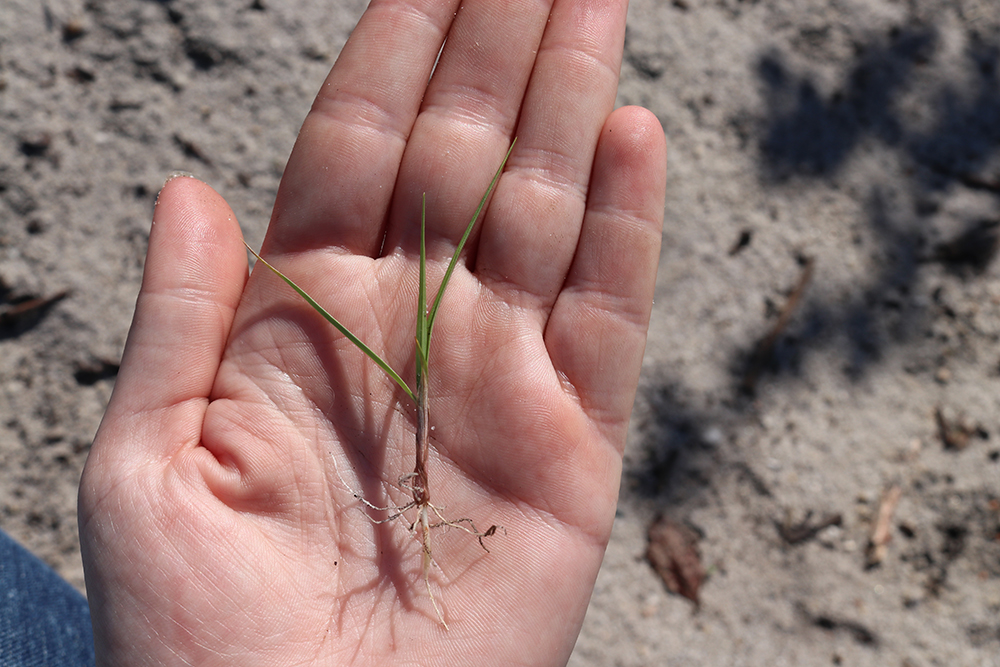 Fig. 1: Young nutsedge plant.
Zoom in 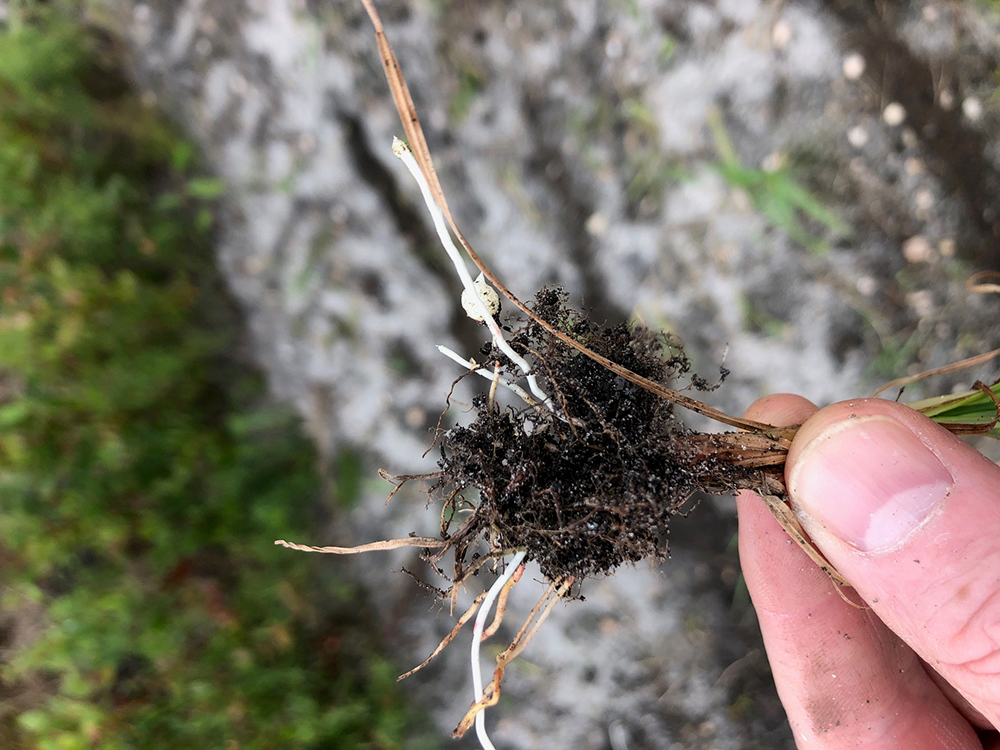 Fig. 2: Yellow nutsedge nut formation.
Zoom in 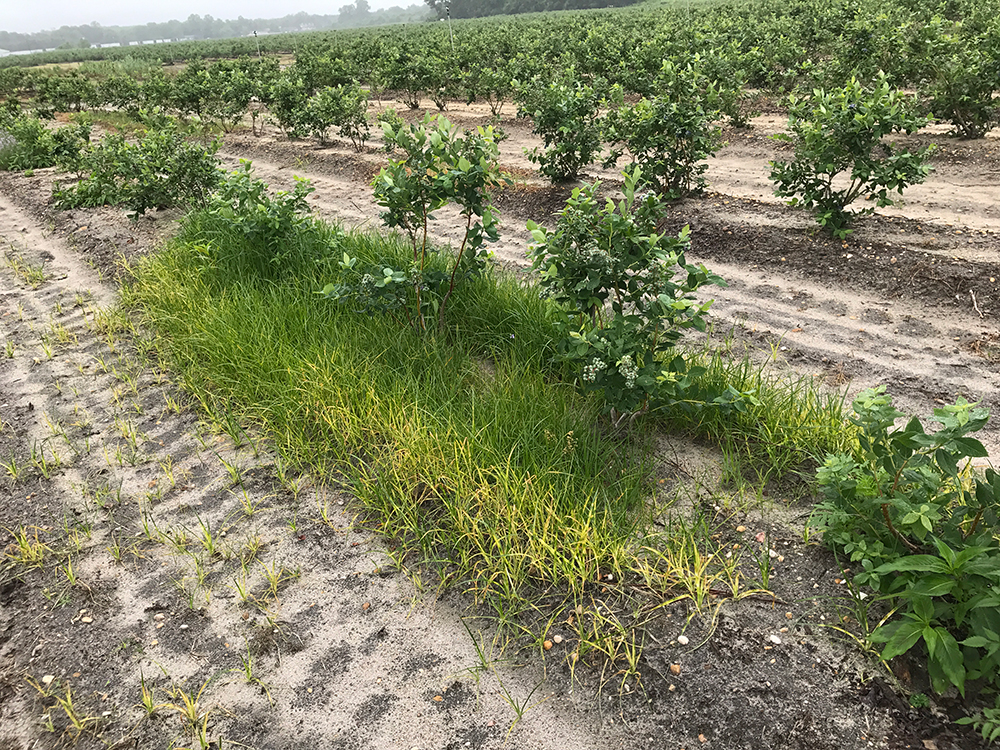 Fig. 3: Nutsedge infestation in blueberry crop.
Management Strategies
Control of nutsedge in production areas can be a multi-year process that involves several strategies for control. Once nutsedge is found on the farm, control measures should be identified and implemented. Organic and no-spray farming operations will need to rely on well-timed cultivation and strategic planting to compete with the weed infestation.
A. Cultivation
- Cultivate during dry weather spells to allow nutlet tubers to dry out at the soil surface.
- Repeated cultivation passes are needed to expose the nutlets to the sun and dry air.
- Late spring cultivation of at least a 6" depth.
- Before using equipment in other areas or off the farm, properly clean to remove nutlets.
- Newly formed plants that have just a few leaves are more susceptible to tillage.
- If your crop rotation schedule allows, consider tillage between the final harvest of early spring crops and the planting of summer crops.
- Tillage can also be effective after harvesting summer crops.
- Deep tillage in June can be used for persistent or widespread nutsedge populations to expose nutlets that may be at a greater depth than 6".
B. Competition
- A dense crop or cover crop with a canopy of 18" or taller will shade nutsedge, minimizing its growth and reproduction ability.
- Cover cropping with rye and the use of straw mulch have some impact on the growth of nutsedge through allelopathic properties.
- Nutsedge is not responsive to nitrogen, so proper fertility for crops will improve the competitiveness of your crops over the nutsedge.
Farm Decision Tool
Yellow nutsedge management is a long-term process for farms not relying on herbicides or fumigants. Identification of existing nutsedge populations on the farm and reflection on your activities and how they impact these populations is the first step to developing a management plan. Use the charts below to identify your nutsedge populations, your current management methods, and to develop a plan of action to eradicate nutsedge from production areas.
| Nutsedge Field Locations | |||
|---|---|---|---|
| Field | Size of Population | Suspected Introduction | Future Prevention Plan |
| Example: Field 4 | Patchy throughout | Equipment borrowed | |
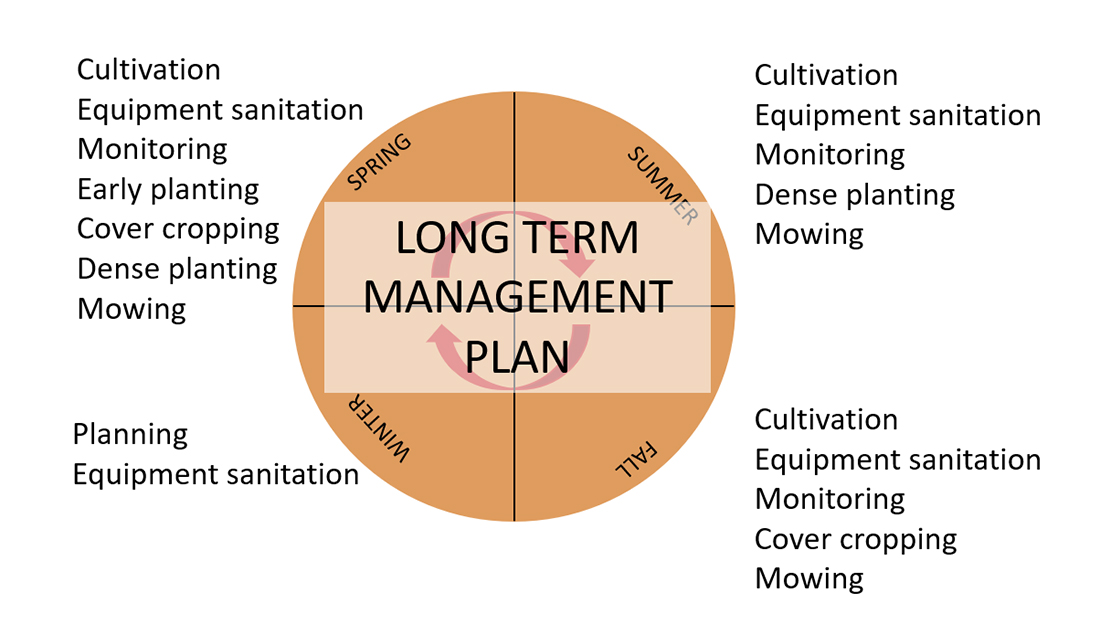
Figure 4.
| Field | Current Strategies | Timeframe |
|---|---|---|
| Field 4 | Example: hand weeding | spring |
| Field | Potential Future Strategies | Timeframe |
|---|---|---|
| Field 4 | Clean equipment between fields | Throughout 2022 |
References
- Uva, R., Neal, J., DiTomasso, J. (1997). Weeds of the Northeast. Cornell University Press.
- Mohler, C., Teasdale, J., DeTommaso, A. (2021). Manage Weeds on Your Farm A Guide to Ecological Strategies. USDA Sustainable Agriculture.
- Mohler, C., Johnson, S. (2009). Crop Rotation on Organic Farms. USDA Sustainable Agriculture Research and Education.
May 2022
Copyright © Rutgers, The State University of New Jersey. All rights reserved.
For more information: extension.rutgers.edu.
Cooperating Agencies: Rutgers, The State University of New Jersey, U.S. Department of Agriculture, and Boards of County Commissioners. Rutgers Cooperative Extension, a unit of the Rutgers New Jersey Agricultural Experiment Station, is an equal opportunity program provider and employer.