
Fact Sheet FS1353
Native Plant Names: Is It a Weed or Not?
Native plants are those that occur historically in an ecosystem and have thrived without help from humans. Native plant names can be confusing. Sometimes the common name may include the term "weed" in it. For example, "Joe-Pye Weed" or "Butterfly Weed." Even though they have "weed" in their name, they are still essential for providing habitat and food for migratory birds, butterflies, pollinators, and other wildlife. New Jersey has more than 2,000 native plants that are a beautiful addition to any landscape.
*Note that some historically used common names may be considered culturally insensitive. Where possible, we have listed alternative names or, in some cases, eliminated references to a country of origin. The part of the name that refers to the country of origin has been replaced with the term "Invasive."
Summary
Many of the familiar plants we see in our woodlands, along roadsides, and in fields are not native to New Jersey and cause ecological harm. These "invasive species" grow out of control because they have no diseases or predators controlling their spread, and deer generally don't eat them. It's tempting to think that all green plants are good, but that would be a mistake when it comes to invasive plants. We can all help stop the spread of invasive plants by not planting them in our landscapes and by replacing existing invasives with native plant species. This fact sheet focuses on invasive plants that cause ecological harm to New Jersey's natural areas and native alternatives for landscaping and gardening. Tables 1–4 include lists of invasive plant species and suggested native alternatives.
What Are Invasive Plants and Why Are They a Problem?
Invasive species are defined as species that are non-native to an ecosystem and whose introduction causes or is likely to cause economic or environmental harm, or harm to human health. Invasive species can be plants, insects, animals, fungi, pathogens, or diseases. Some invasive plant species remain commonly available in the nursery and landscaping trade. Due to browsing by an overabundant deer herd and habitat fragmentation, these invasives are outcompeting native plant populations, and are spreading quickly throughout New Jersey.
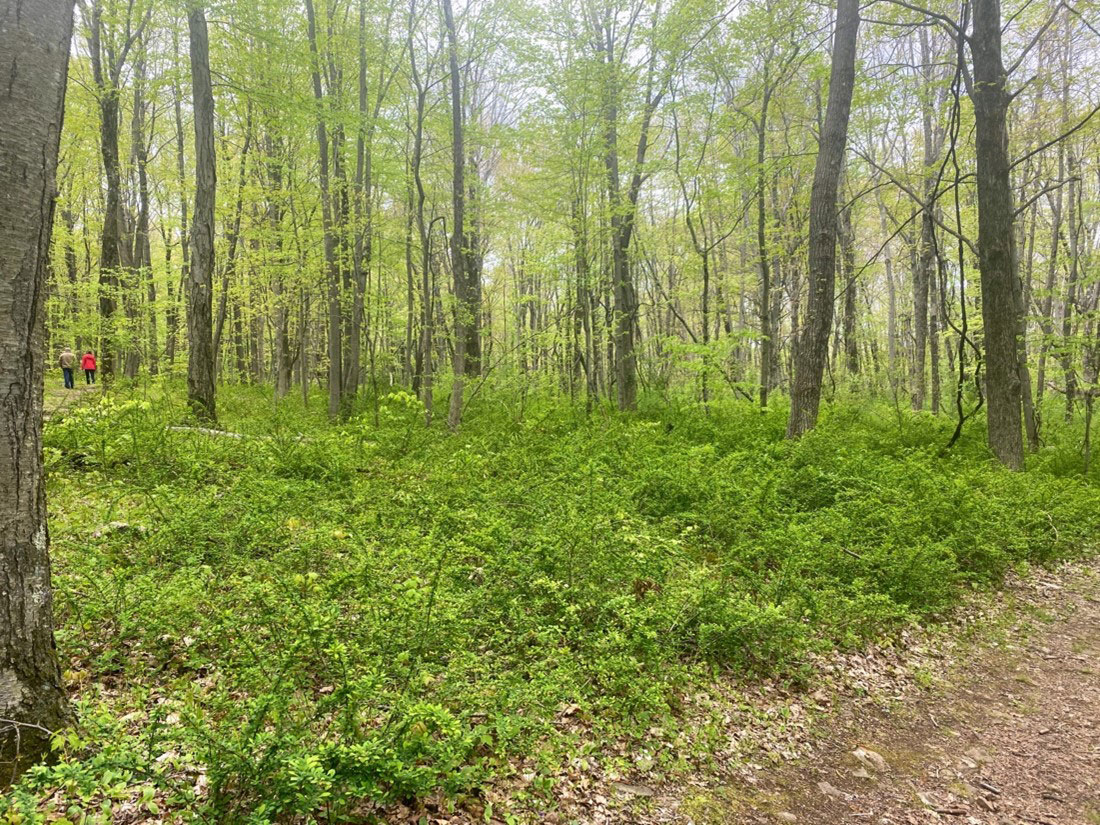
Figure 1: A New Jersey forest where the understory is dominated by Berberis thunbergii (*Invasive barberry) a popular ornamental shrub often favored because deer do not eat them.
Unchecked invasive plants rapidly invade natural areas, often forming monocultures (communities of just one plant), and outcompete diverse, native plant communities. For example, an upland Oak-Hickory forest of northern New Jersey with an intact native plant community can support dozens of species, including herbaceous plants (i.e., Mayapple, Wood anemone), understory shrubs (i.e., Viburnums, Spicebush), and trees (i.e., Red oak, Black cherry, Red maple, Pignut hickory). These forests offer flowers, fruit, and seeds from different species throughout the year, which in turn provide food and habitat for wildlife, including pollinators, songbirds, and small mammals. When that community is invaded by an invasive plant, for example, Burning bush (Euonymus alatus, a widespread invasive shrub), native plants are pushed out and biodiversity decreases. As there are no natural biological controls (insects or diseases) to keep the invasive population in check, one species dominates, leading to limited food and habitat for wildlife. The result is a 'broken food web.' In other words, plants form the basis of the food web, and populations of native insects and birds decline when invasive plants dominate the landscape.
In addition to the impacts to wildlife, homeowners have to spend time and money removing invasive plants. Staff time and money are diverted to managing invasive plants in parks and public lands. Scenic vistas change as invasive vines smother natural features and girdle trees. Forest succession is impacted as young tree saplings are smothered by invasive shrubs and vines. Lakes and ponds are clogged with aquatic invasives, changing water chemistry and impacting boating and fishing.
What Causes Invasive Plants to Spread?
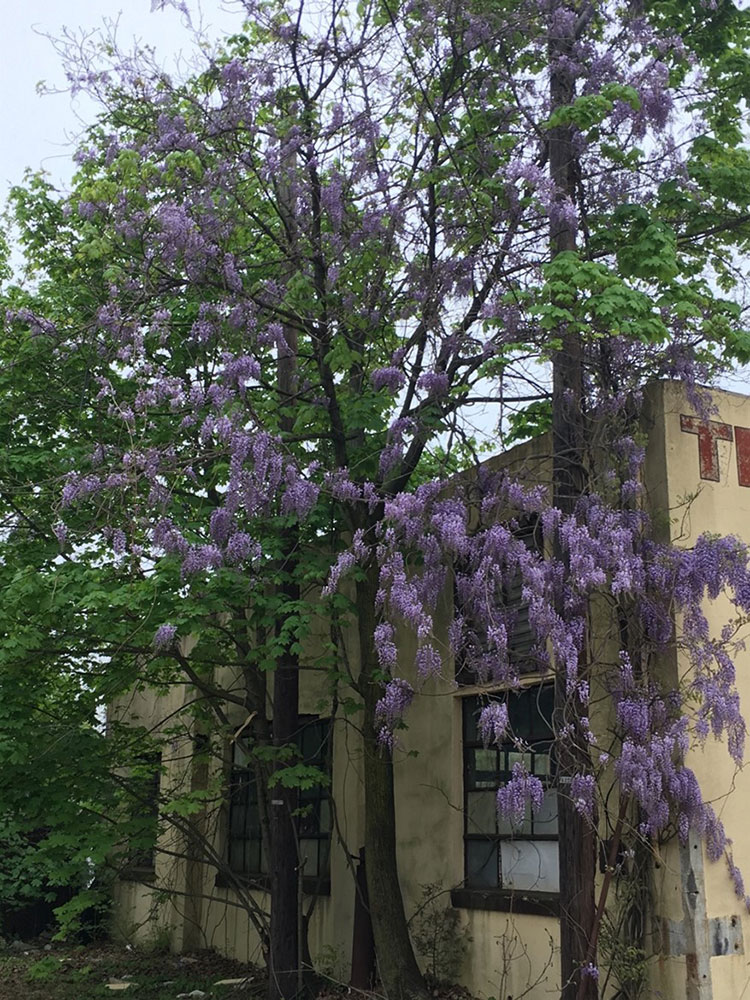
Figure 2: Wisteria floribunda (*Invasive wisteria), a widespread invasive vine, overtaking a tree.
Habitat fragmentation and disturbance are part of the reason for the invasive plant problem. Another major cause is the increase in white-tailed deer populations, which have skyrocketed in New Jersey from a normal average of 10-20 per square mile to more than 100 per square mile, in some cases (NJDEP, 2019). Deer rarely eat invasive plants, which leads to heavy browse pressure on their natural diet of native plants. Under historic deer abundance or within deer exclosures (areas fenced off from deer), native plants compete well with invasives for space and light. However, few native plants can grow to maturity when they are continually browsed, giving invasives an added advantage.
Invasive plants are not a new problem impacting our natural resources. The first notable invasions occurred in the 1950s but began to rapidly increase over the last 50 years, coinciding with the rapid increase in deer abundance starting around 1970. But from nature's perspective, 50 years is just a blink of the eye. More common invasives, such as Berberis thunbergii (*Invasive barberry), Rosa multiflora (Multiflora rose), Wisteria sinensis, and Wisteria floribunda (two invasive Wisteria species) have been present for decades. These species are considered widespread and can only be controlled locally, on a site-by-site basis.
Non-native species that are showing signs of spreading but have yet to become widespread are called emerging species of concern. An effective approach to prevent new, emerging species from becoming widespread is known as "early detection/rapid response" (ED/RR). This approach is supported by the invasion curve (Figure 3), which indicates that eradication is only feasible at the earliest stages of invasion.
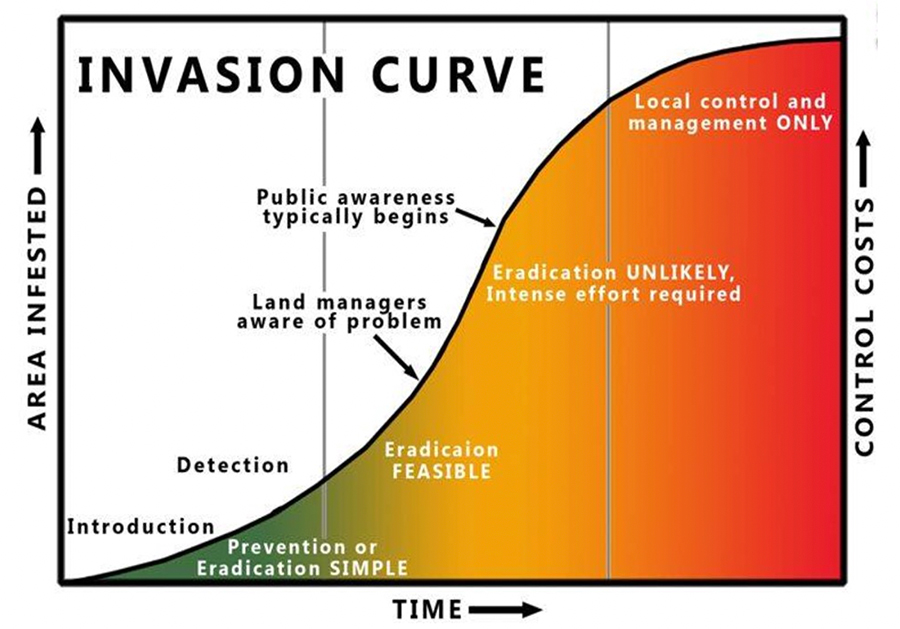
Figure 3: This invasion curve demonstrates that infestation and control costs are minimal the earlier a species is detected. Source: www.mipn.org/edrr.
How Can You Avoid Invasive Plants in Yards and Landscapes?
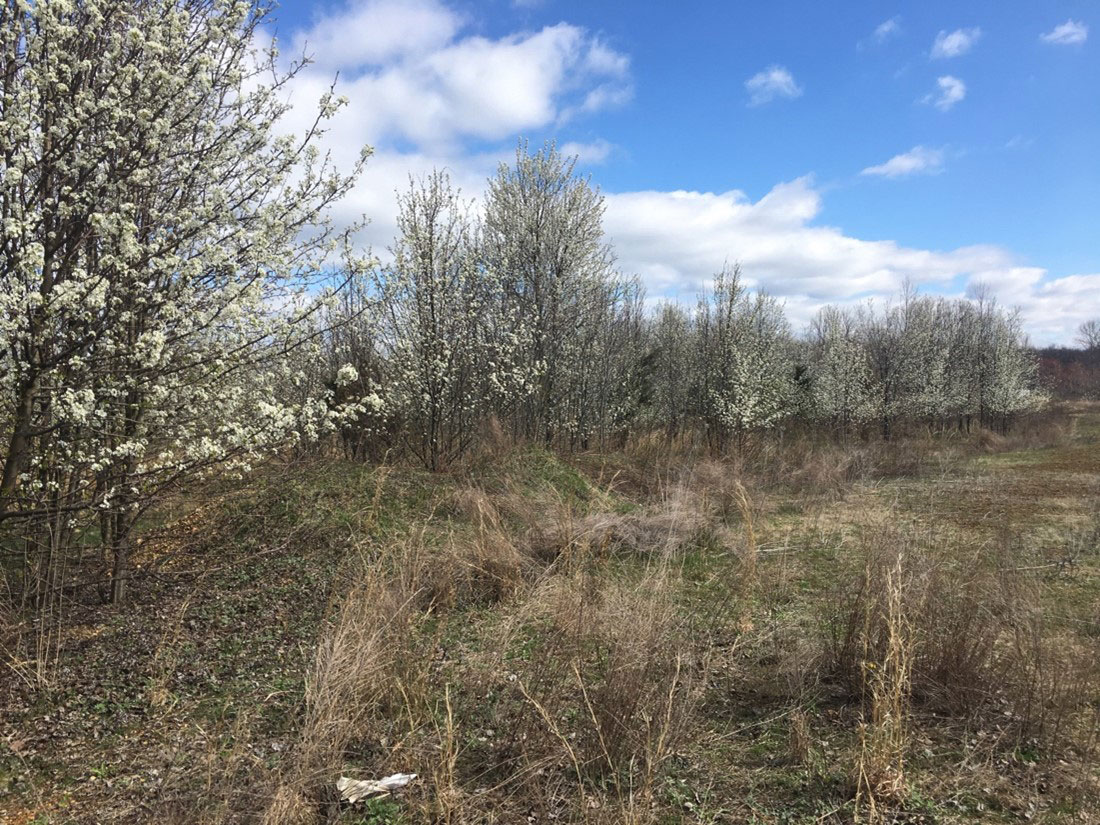
Figure 4: An old field dominated by Pyrus calleryana (Callery or Bradford pear), a popular ornamental tree.
Many of the attributes the public looks for in commercially available garden plants might also make them candidates to become invasive species. These attributes include adapting to many different site conditions, tolerance of poor soils, abundant flowers and fruit, fast growing, and insect and deer resistance. Many states, including New York, Pennsylvania, Connecticut, Massachusetts, New Hampshire, and Delaware, have banned the cultivation and sale of certain invasive plants. These include more widespread species, such as *Invasive barberry (Berberis thunbergii) and Burning bush (Euonymus alatus).
Landscapers, property managers, and residents can have an impact on the spread of invasive plants by choosing native plants that support habitat and replacing known invasives. A few of New Jersey’s invasive species of concern and native plant alternatives are listed in the Tables 1–4. In addition to this list, native plant nurseries carry a wide selection of native plants and can provide recommendations on alternatives to invasive species.
How Can You Start Removing and Replacing Invasive Plants?
If the decision is made to remove invasive plants in a yard, it is important to plan for species replacements.
- Start by making an inventory of the current species and research which are invasive (see below for resources). Determine best removal methods and best timing for species removal. Removal and replacements can happen in stages.
- Manual or mechanical removal is recommended for small populations when the entire plant, including the root, can be removed, or when an area can be repeatedly cut/mowed to remove re-sprouts and deplete the plant’s resources.
- If using herbicides to remove invasives, make sure to follow the directions on the label to determine if it is appropriate for the target plant. An excellent method for treating woody invasive plants (vines, shrubs, or trees) is to cut the plant at the base and then treat the remaining stump to prevent re-sprouts. A paintbrush can be used to apply the herbicide directly to the stump. This "cut-stump" method minimizes the use of herbicides and directly targets the invasive plant.
- Since many invasive plants are prolific seed producers, it will be necessary to monitor the area and remove seedlings until the seed bank is exhausted.
When choosing plant replacements, remember to select the right plant for the right place. Choose native species that are appropriate for your local site, including light conditions and soil type. Tables 1–4 provide some of this information.
How Can I Learn More about This Issue?
How can an individual make decisions about invasive plants? Knowing whether the plant is invasive in the region is the first step. In addition to contacting your local Extension office, a few reliable resources are below:
Plant Invaders of the Mid-Atlantic Natural Areas is a field guide for both novice and expert. It is available online and provides information on 92 aquatic and terrestrial invasive species, control methods, effects of climate change, explanations and maps of ecoregions and physiographic provinces, and suggestions for native plant alternatives.
EDDMapS (Early Detection Distribution Map System) is a web-based mapping system for documenting invasive species and pest distribution. It includes species information and distribution maps, and was developed by the Center for Invasive Species and Ecosystem Health at the University of Georgia. An app is available for mobile phones.
USDA PLANTS Database provides standardized information about the vascular plants, mosses, liverworts, hornworts, and lichens of the U.S. and its territories. It includes names, plant symbols, checklists, distributional data, and species abstracts, and identifies those states that list any species included on their invasive species list or law.
The New Jersey Invasive Species Strike Team monitors emerging species and works cooperatively with state agencies and local environmental groups to list invasive species in the state as well as control recommendations.
The New Jersey Native Plant Society is a statewide non-profit dedicated to the appreciation, protection, and study of the native flora of New Jersey. Its website has valuable information about native species and where they can be purchased.
iNaturalist is one of the world's most popular nature apps that can be used on a mobile device or computer. It is a tool anyone can use for identifying, recording, and sharing information about plants and other species around the world.
Invasive Ornamental Plants and Suggested Native Replacements
The following lists include both emerging species of concern and widespread invasive plants. The lists were generated based on local state bans, the USDA 2018 report: "New Invaders of the Northeast and Northcentral United States," the Mt. Cuba Center 2017 report: "Native and Invasive Plants Sold by the Mid-Atlantic Nursery Industry," and data gathered by the New Jersey Invasive Species Strike Team (NJISST). Suggested native replacements were determined based on similar characteristics and habitat preferences.
Unless noted, these species invade open, upland habitat such as old fields, roadsides, and forest edges:
| |||||
| Native Species Alternatives | Bloom Time | Preferred Soil Type | Preferred Light Conditions | Height | Comments |
Chestnut oak (Quercus montana) | Spring | Dry to average | Full sun to part shade | 60–70 ft. | Drought tolerant. Wildlife friendly. Good shade tree and street tree. |
Common Serviceberry or Shadbush (Amelanchier arborea) | Spring | Dry to moist | Full sun to part shade | 20–25 ft. | Large shrub or small tree. Good as specimen tree or hedge. Deer resistant. |
Ironwood or American hornbeam (Carpinus caroliniana) | Spring | Dry to moist | Part shade to shade | 20–30 feet | Good small specimen tree. Deer resistant. |
Red Chokeberry (Photinia pyrifolia, formerly Aronia arbutifolia) | Spring | Dry to moist | Full sun to part shade | 6–8 ft. | Large shrub. White/ pink blooms. Red fall color. Deer resistant. |
Red maple (Acer rubrum) | Spring | Dry to moist | Full sun to part shade | 40–70 ft. | Good specimen tree. Small red flowers. Orange-red fall foliage. |
Sassafras (Sassafras albidum) | Spring | Dry to average | Full sun to part shade | 30–60 ft. | Orange to red brilliant fall foliage. Deer resistant. |
Swamp white oak (Quercus bicolor) | Spring | Moist to wet | Full sun to part shade | 50–60 ft. | Very adaptable. Tolerates wet soil but also drought tolerant. Wildlife friendly. Good for urban environments. |
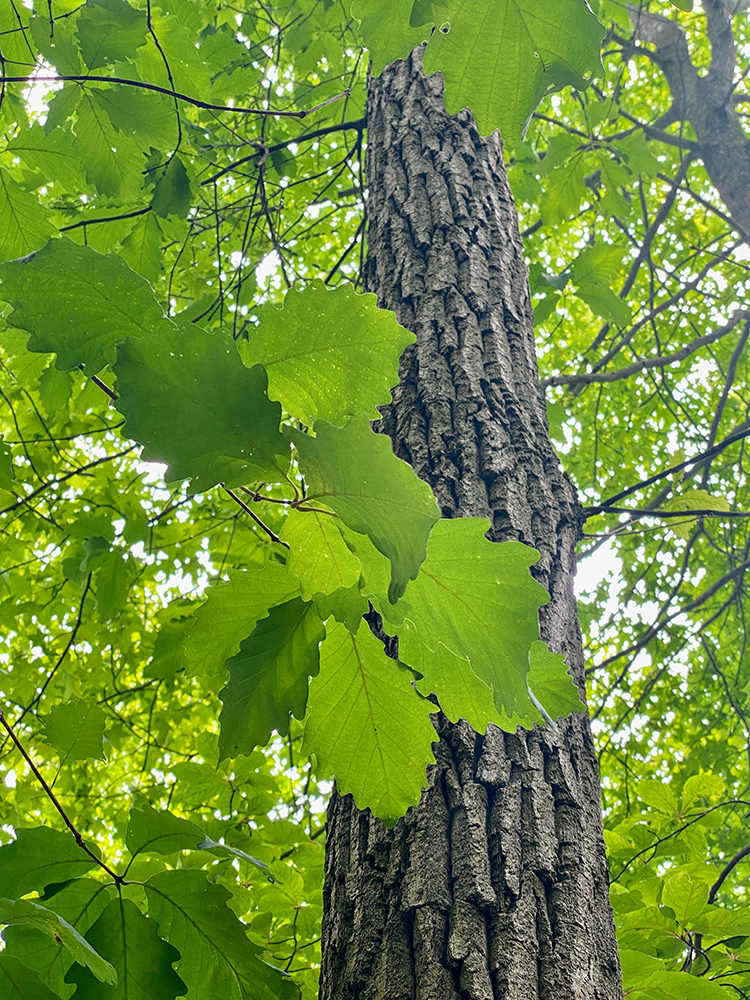


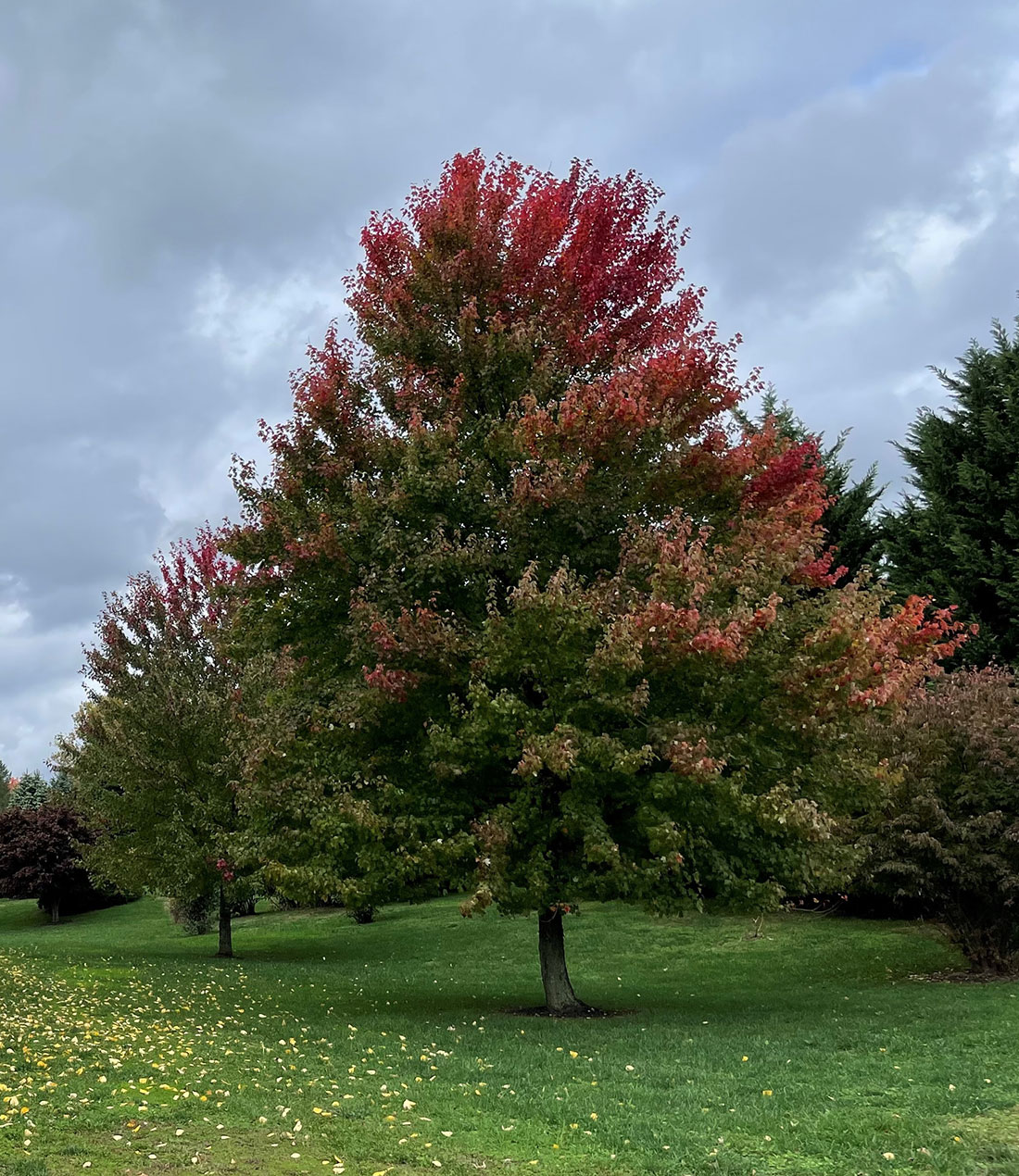
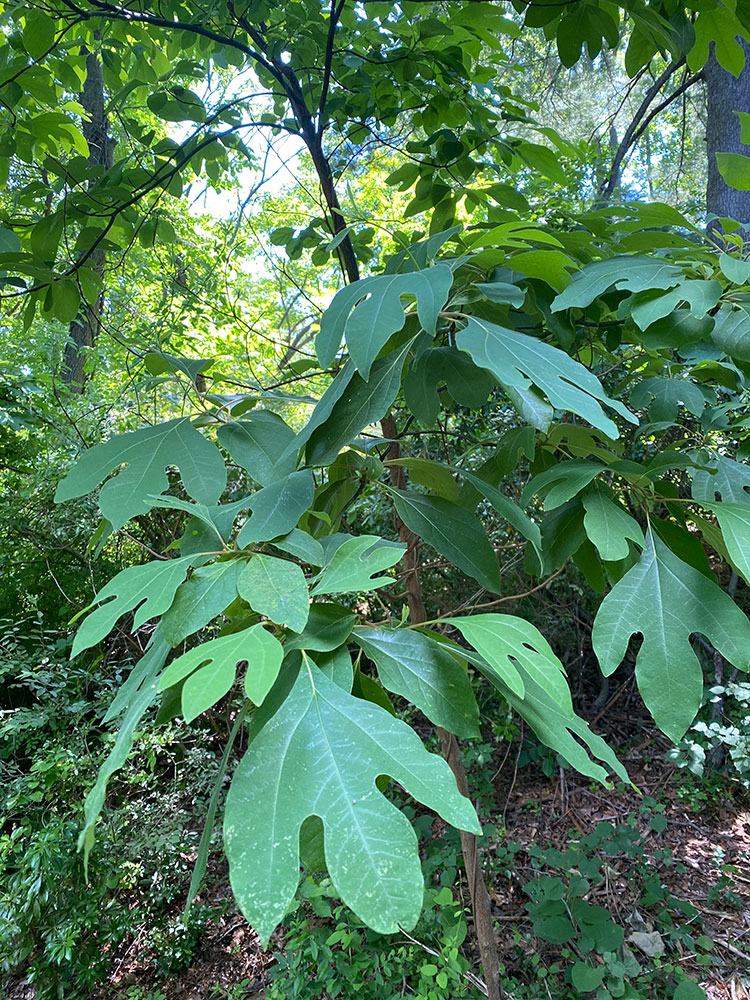

Invades open upland habitats:
| |||||
| Native Species Alternatives | Bloom Time | Preferred Soil Type | Preferred Light Conditions | Height | Comments |
Butterfly weed (Asclepias tuberosa) | Summer | Dry | Full sun | 2–3 ft. | Orange flowers. Host to monarch caterpillars. Deer resistant. |
Buttonbush (Cephalanthus occidentalis) | Summer | Wet to average | Full sun to part shade | 6–10 ft. | Round white blooms. Good by downspouts or in rain gardens. |
Purple Joe-Pye Weed (Eutrochium purpureum) | Summer | Moist to average | Full sun to part shade | 5–7 ft. | Large pink flowers. Deer resistant. |
Summersweet or Sweet pepperbush (Clethra alnifolia) | Summer | Dry to moist | Full sun to shade | 4–8 ft. | Fragrant summer flowers. Blooms in shade. Good for pollinators and wildlife. |
These species invade forests and other habitats as they tolerate both deep shade and sun:
| |||||
| Native Species Alternatives | Bloom Time | Preferred Soil Type | Preferred Light Conditions | Height | Comments |
Blackhaw viburnum (Viburnum prunifolium) | Spring | Dry | Full sun to part shade | 12–15 ft. | Large white blooms. Good for hedges. |
Highbush blueberry (Vaccinium corymbosum) | Spring | Acid, dry | Full sun to part shade | 6–12 ft. | Red fall color. Edible fruit. |
Inkberry holly (Ilex glabra) | Spring | Acid, moist to average | Full sun to part shade | 4–8 ft. | Evergreen. Good for foundations and hedges. Deer resistant. |
Northern bayberry (Morella pensylvanica, formerly Myrica pensylvanica) | Spring | Dry | Full sun to part shade | 5–8 ft. | Semi-evergreen. Good for hedges. Salt tolerant. Deer resistant. |
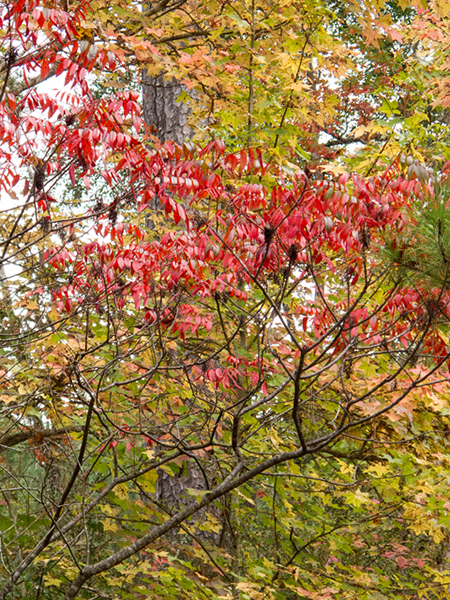
Shining sumac (Rhus copallinum) | Summer | Dry | Full sun | 10–15 ft. | Red fall color. Small tree. |
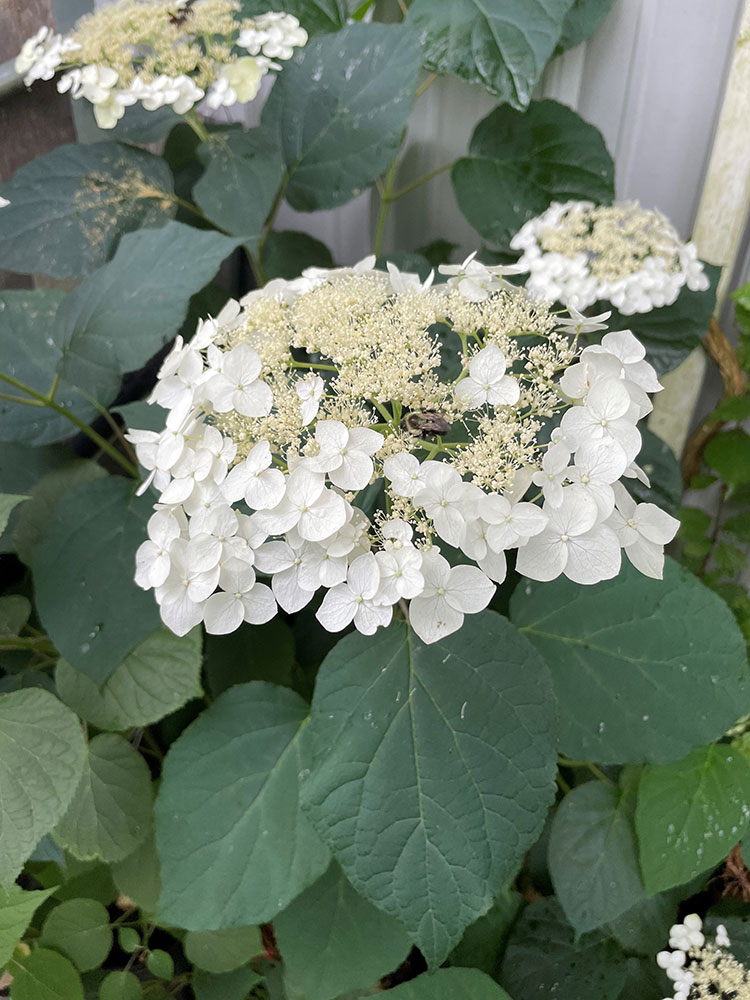
Smooth Hydrangea (Hydrangea arborescens) | Spring, early summer | Dry to average | Part shade to shade | 3–6 ft. | Large white blooms on new wood. |
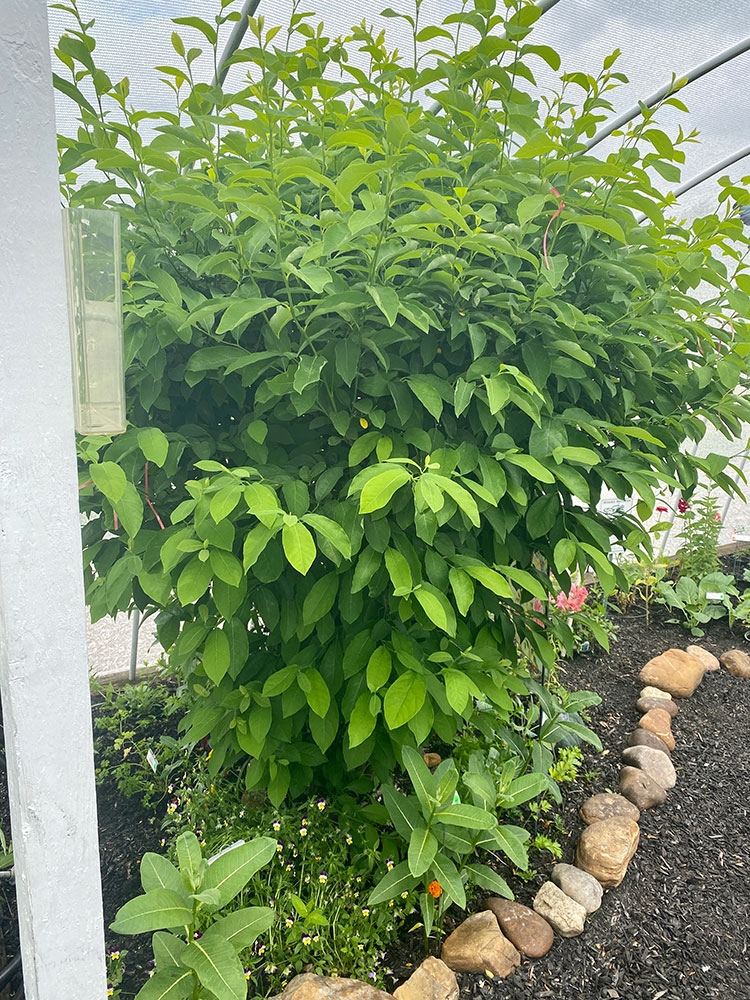
Spicebush (Lindera benzoin) | Spring | Moist to average | Full sun to part shade | 8–12 ft. | Yellow fall color. Leaves have lemony scent when crushed. |
Virginia sweetspire (Itea virginica) | Spring, early summer | Moist to average | Full sun to part shade | 3–6 ft. | Long lasting red fall color. Deer resistant. |
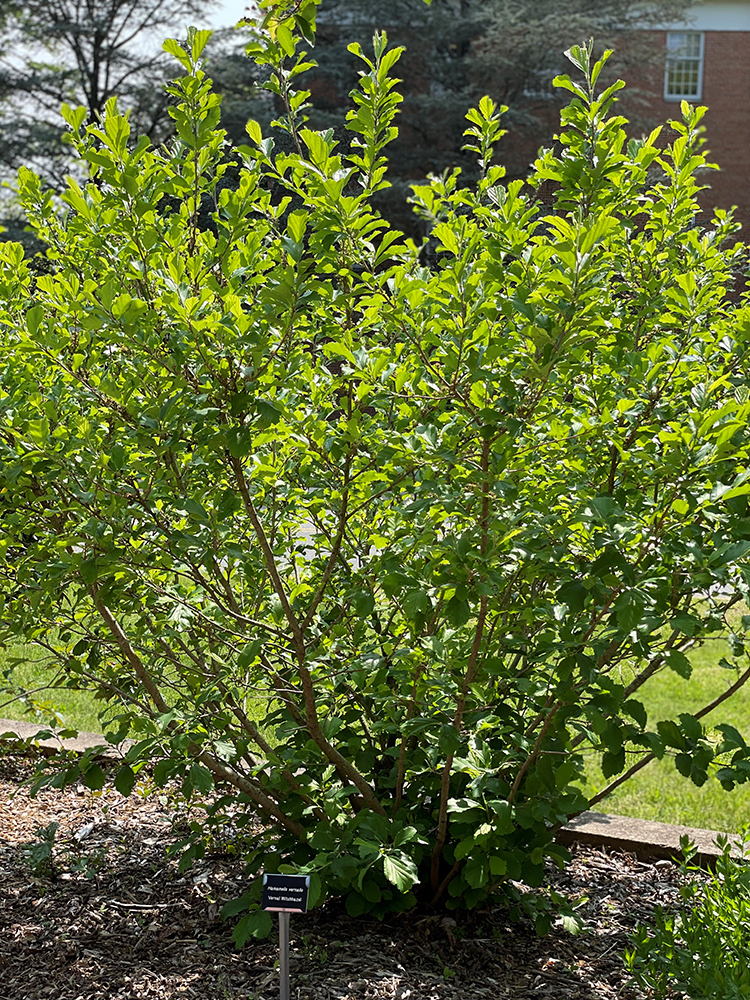
Witch hazel (Hamamelis virginiana) | Fall | Dry | Part sun to shade | 15–20 ft. | Yellow flowers. Gold fall color. Deer resistant. |
Winterberry holly (Ilex verticillata) | Summer | Acid, moist to average | Full sun to part shade | 6–10 ft. | Red berries in the fall and winter but need male & female. |

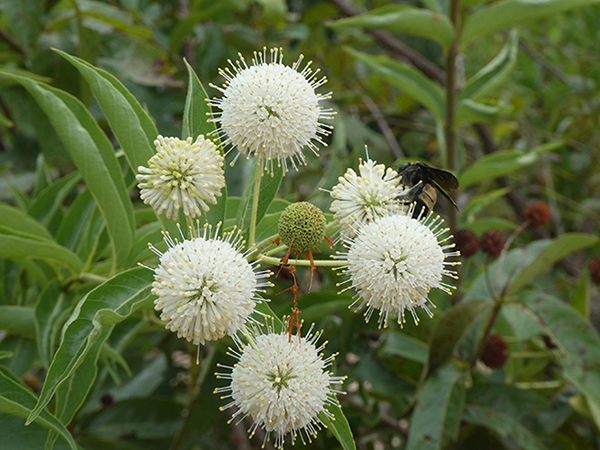

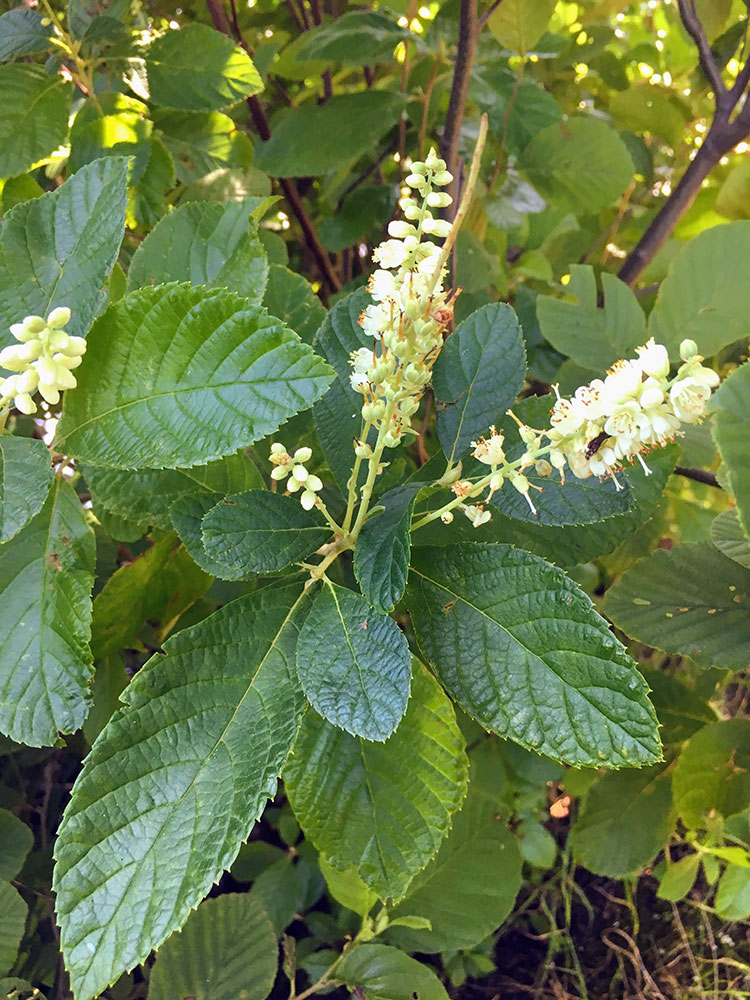




These species invade open upland habitat such as roadsides, and forest edges:
| |||||
| Native Species Alternatives | Bloom Time | Preferred Soil Type | Preferred Light Conditions | Height | Comments |
Big bluestem (Andropogon gerardii) | Summer | Dry to average | Full sun to part shade | 4–8 ft. | Drought tolerant. Good for erosion control. Deer resistant. |
Little bluestem (Schizachyrium scoparium) | Summer | Dry to moist | Full sun | 2–3 ft. | Drought tolerant. Good for erosion control. Deer resistant. |
Purple lovegrass (Eragrostis spectablis) | Summer | Dry to average | Full sun | 1–2 ft. | Drought tolerant. Purple blooms. Good lawn alternative. Deer resistant. |
Switchgrass (Panicum virgatum) | Late summer to fall | Dry to moist | Full sun | 2–5 ft. | Salt and drought tolerant. Good as a screen. Deer resistant. |
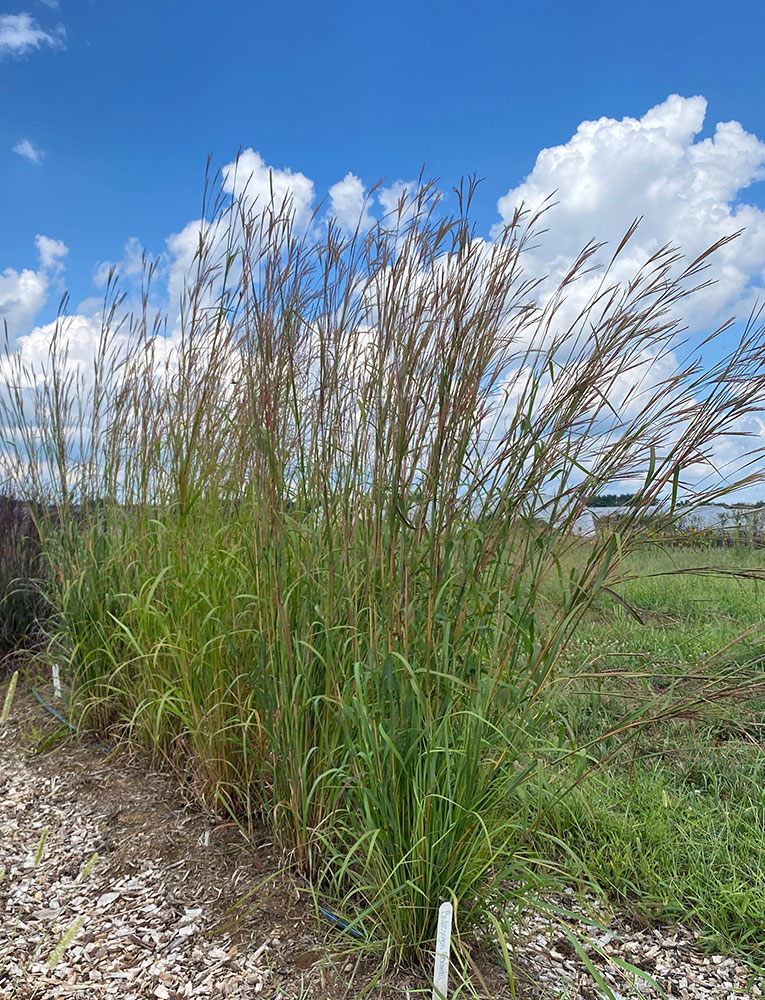


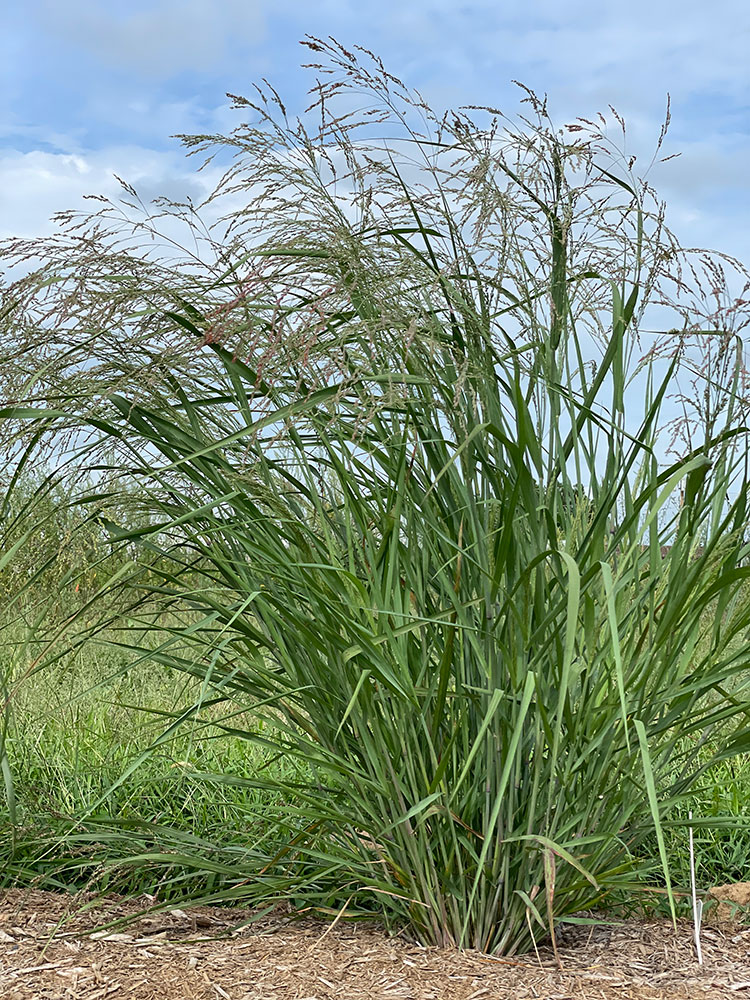
These species invade forested habitats strangling and smothering shrubs and trees:
| |||||
| Native Species Alternatives | Bloom Time | Preferred Soil Type | Preferred Light Conditions | Height | Comments |
American wisteria (Wisteria frutescens) | Spring to Summer | Dry | Full sun | 10–30 ft. | Note that this species is native south of Maryland. Large purple blooms. Good for arbors or fences. |
Trumpet or Coral honeysuckle (Lonicera sempervirens) | Spring to Summer | Dry | Full sun to part shade | 10–15 ft. | Good for arbors or a fence. |
| GROUNDCOVERS | |||||
Bearberry (Arctostaphylos uva-ursi) | Spring to Summer | Dry | Full sun to part shade | 0.5–1 ft. | Evergreen. Red berries. Deer resistant. |
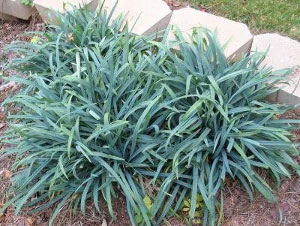
Creeping sedge (Carex laxiculmis) | Spring | Average to moist | Part sun to shade | 0.5–1 ft. | Clumping and compact. Good groundcover and lawn alternative. Deer resistant. |
Golden ragwort (Packera aurea) | Spring | Dry to average | Full sun to shade | 0.5–2 ft. | Evergreen. Yellow blooms. Deer resistant. |
Pennsylvania sedge (Carex pensylvanica) | Summer | Dry | Full sun to shade | 0.5–1 ft. | Clump forming, grass-like sedge. Good groundcover and lawn alternative. Deer resistant. |
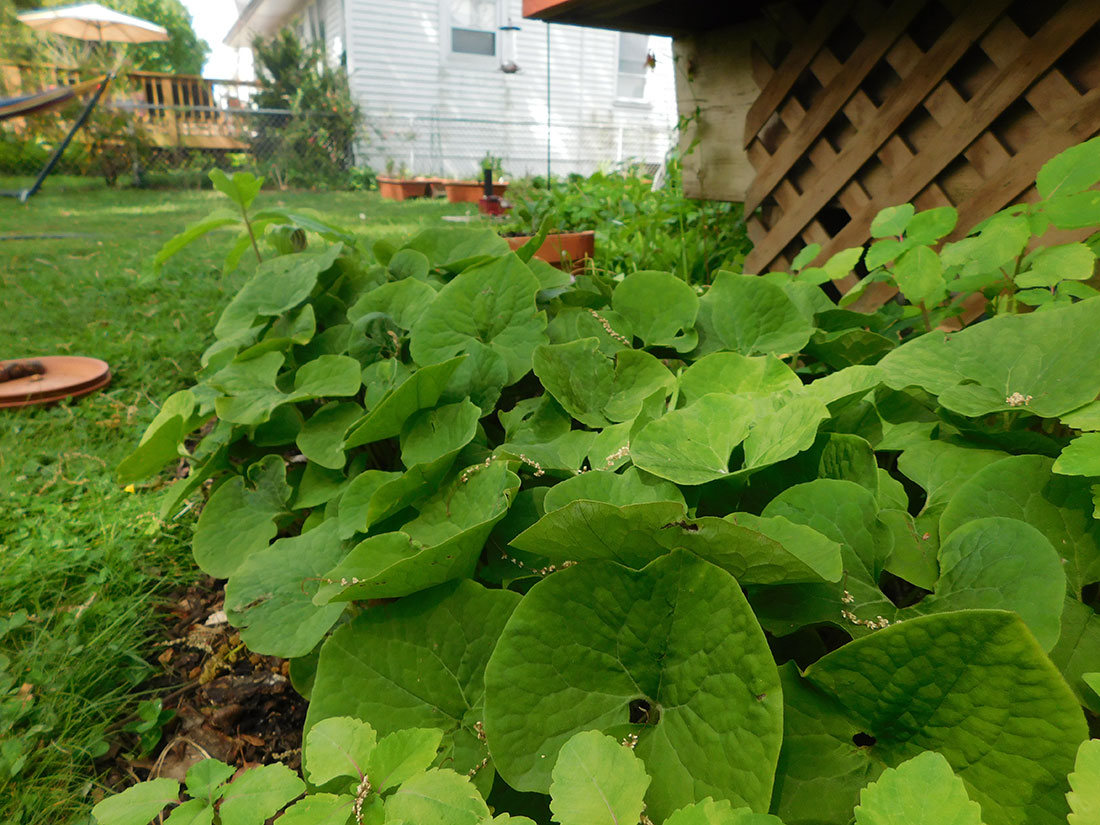
Wild ginger (Asarum canadense) | Spring | Dry to average | Part sun to shade | 0.5–1 ft. | Brown/purple blooms hidden under leaves. Spreads by rhizomes. |




References
- Coombs, G., Gilchrist D. Watson, P. 2017. Native and Invasive Plants Sold by the Mid-Atlantic Nursery Industry (PDF). Mt. Cuba Center. Updated 2018.
- Executive Order 13112 of Feb 3, 1999. Invasive Species. Executive Office of the President. Document number 99-3184, citation 64 FR 6183. Pgs.6183-6186.
- Jersey Friendly Yards. 2015. "Jersey Friendly Yards Plant Database" Accessed December 20, 2022.
- Lower, El and Sturtevant Rochelle 2022. Alien Language: What's In A (Species) Name? Michigan Sea Grant; Michigan State University Extension.
- Leopold, Donald. 2005. Native Plants of the Northeast: A Guide for Gardening and Conservation. Timber Press, Inc.
- New Jersey Department of Environmental Protection, Division of Science and Research. 2019. Wildlife Populations: White-tailed Deer, Page 3, Environmental Trends Report.
- Rawlins, K.A., R.L. Winston, C.T. Bargeron, D.J. Moorhead, and R. Carroll. 2018. New Invaders of the Northeast and Northcentral United States (PDF). USDA Forest Service, Forest Health Assessment and Applied Sciences Team, Morgantown, West Virginia. FHTET-2017-04.
- Snyder, David and Kaufman, Sylvan R. 2004. An overview of nonindigenous plant species in New Jersey. New Jersey Department of Environmental Protection, Division of Parks and Forestry, Office of Natural Lands Management, Natural Heritage Program, Trenton, NJ. 107 pages.
- Swearingen, J.M. and J.P. Fulton. 2022. Plant Invaders of Mid-Atlantic Natural Areas, Field Guide. Passiflora Press. 200 pp.
- USDA, NRCS. 2023. The PLANTS Database ( 01/03/2023). National Plant Data Team, Greensboro, NC, USA.
- Pinto, D. and Melendez, M. 2010. FS1140 Incorporating Native Plants in Your Residential Landscape. Rutgers Cooperative Extension Fact Sheet FS1140.
The authors would like to thank Michael Van Clef, Bruce Crawford, and Nicholas Polanin for their peer-review of this publication.
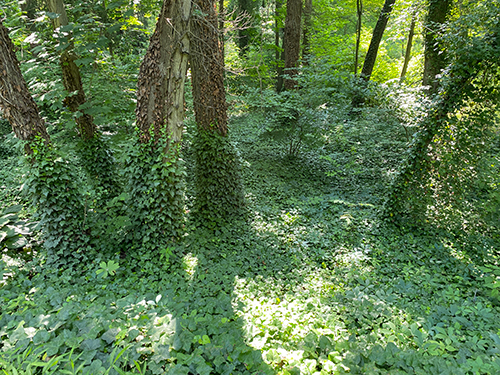
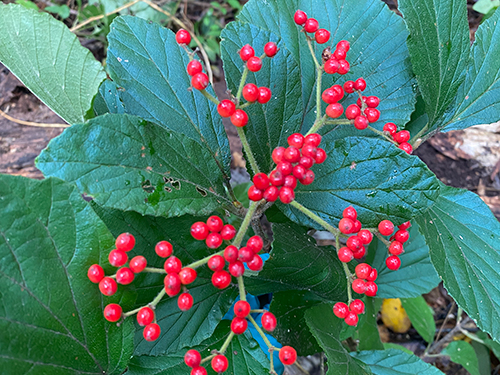
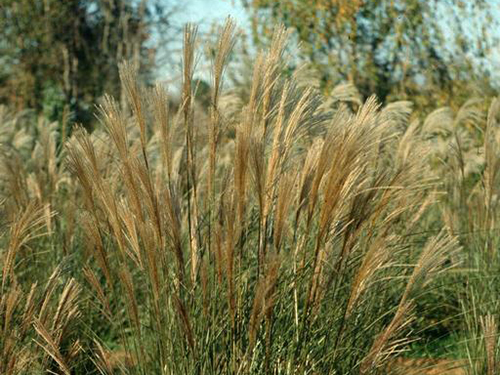
Captions for photos across top (l-r): English Ivy (Hedera helix), Linden viburnum (Viburnum dilatatum), Chinese silvergrass (Miscanthus sinensis).
Photo credits: Photos across top, right: Miscanthus sinensis Anderss: John Ruter, University of Georgia, Bugwood.org;
Photos in tables: Stephanie Brundage, Lady Bird Johnson Wildflower Center: Rhus copallinum; Lee Page, Lady Bird Johnson Wildflower Center: Cephalanthus occidentalis; Terry Glase, Lady Bird Johnson Wildflower Center: Arctostaphylos uva-ursi; Erin Quinn: Eragrostis spectablis and Andropogon gerardii.
August 2023
Copyright © Rutgers, The State University of New Jersey. All rights reserved.
For more information: extension.rutgers.edu.
Cooperating Agencies: Rutgers, The State University of New Jersey, U.S. Department of Agriculture, and Boards of County Commissioners. Rutgers Cooperative Extension, a unit of the Rutgers New Jersey Agricultural Experiment Station, is an equal opportunity program provider and employer.