
Fact Sheet FS138
Saving money when food shopping can be difficult due to the different weights and sizes of packages, cans, and containers. Sometimes it's cheaper to buy two smaller-sized packages of cereal and sometimes it is not. To help take the mystery out of these decisions, unit pricing was developed and became a New Jersey law in 1975. Shoppers looking to get the most for their money can use the unit price to compare packages of different sizes and determine which offer the best value.
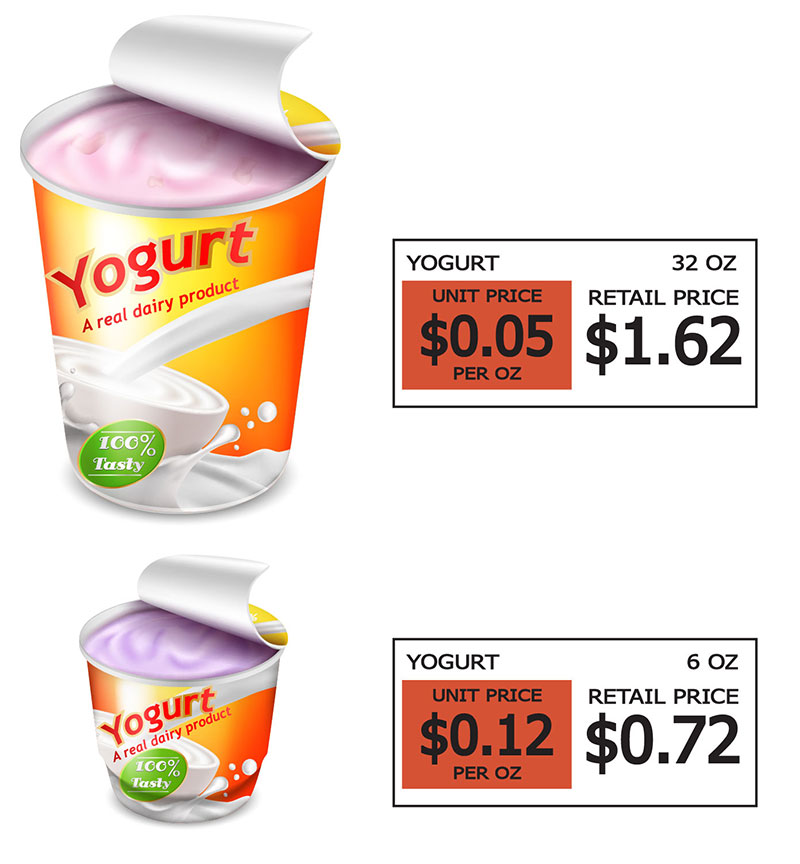
Figure 1. Compare the unit price of the same product in different sizes.
What is Unit Pricing?
The unit price is the cost of an item per pound, ounce, quart, feet, count, or other measure that is commonly used. It permits the consumer to compare the price per unit of items, such as canned peas or packages of dinner napkins. Figure 1 shows an example of two containers of yogurt with different unit prices. Which is the better value, per ounce?
While the retail price of the top container is more, it is a better value, per ounce (Figure 1).
What Does a Unit Pricing Label Look Like?
Unit and retail price will be on the same label, which may be vertically or horizontally divided to display both prices. The unit price will be displayed on the left side or upper portion of the label, depending on the format, as seen in Figure 2. While the space devoted to the unit and retail prices should be equal, the retail price can be the same size or larger than the unit price.
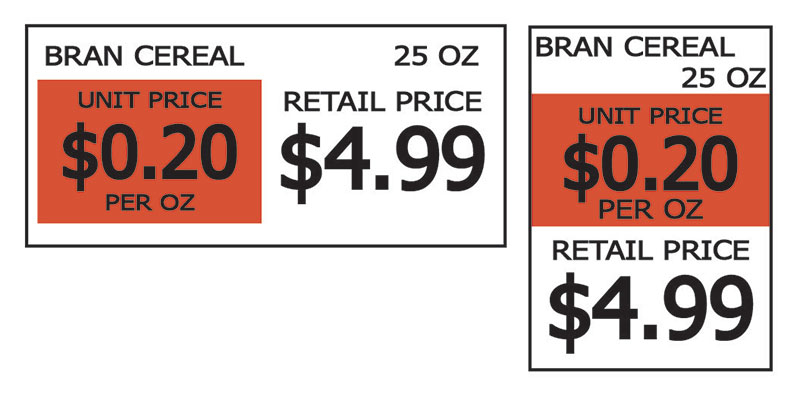
Figure 2. Examples of unit pricing labels.
Note:
- The unit price portion is often on a different color background but is not mandatory.
- If the unit price is $1.00 or more, it is rounded to the nearest cent.
- If the unit price is under $1.00, it can be rounded to the nearest cent or tenth of a cent.
All letters and numbers must be:
- in bold figures
- clear
- easy to read.
The unit price section of the label must also give the unit of measure, e.g., pound, ounce, or count. Unit price shelf labels may also include stock or code information as long as it does not interfere with the consumer information.
Where is Unit Pricing Found?
Unit price labels are often found on the shelf edge (Figure 3, left) but can also be on an individual container (Figure 3, right) or both the shelf edge and the container.
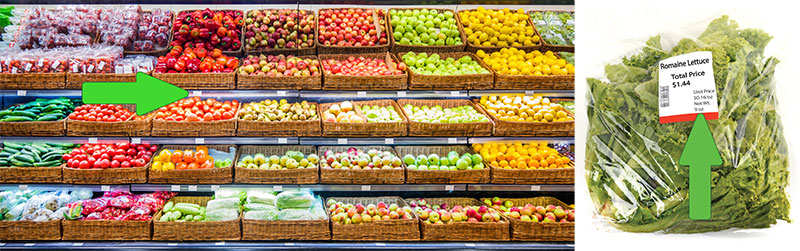
Figure 3. Where to find unit price labels.
Many online retailers list the unit price along with retail price, as shown in the figure below, but it is not mandatory.
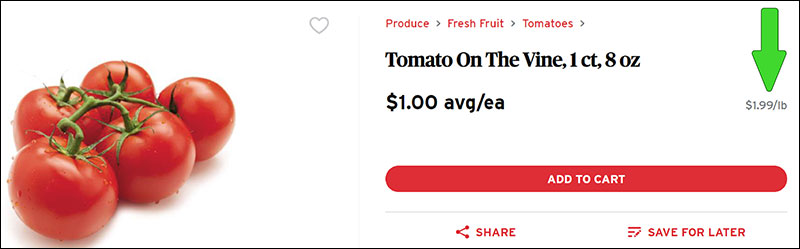
Figure 4. Screen capture of an online shopping cart.
How To Use Unit Pricing
By comparing the unit price of different sizes of a favorite brand OR different brands of the same style product, you can quickly see which costs less per unit. Look at the examples below to determine what choices you would make for your family.
Here are some prices for store brand whole carrots. All items are the same brand but come in different-sized packages (Figure 5).

Figure 5. Compare the unit price of the same product in different sizes.
Use the unit price to compare the items and answer the questions below:
- Which carrots are the best value?
- Which retail price fits into your budget?
- Will your family eat 80 oz of carrots before they spoil?
- Do you have the space to store 80 oz of carrots safely?
Figure 6 below shows prices for the same brand of carrots as above, however, these are different types of carrots. Think about the questions below and decide what you would purchase for your family.

Figure 6. Compare the unit prices of the same food, carrots, in various types (baby carrots, carrot chips, and canned sliced carrots).
- Do you have time to clean and cut the carrots from the first examples?
- What type of carrots do you need?
- Would canned carrots work for your recipe?
Figure 7 shows some examples of the same product, but from different brands and in different-sized packages. Use the unit price to determine which is the best choice for you.
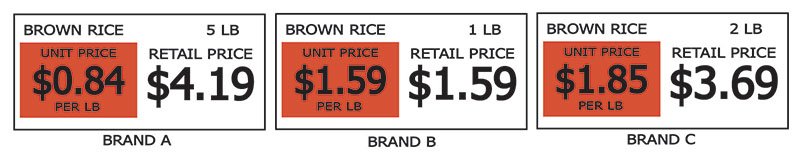
Figure 7. Unit prices of same product (brown rice) from different brands.
Do All Stores Use Unit Pricing?
No. Even though unit pricing is a law in New Jersey, some retail stores are not required to display unit pricing. For example, retail stores having gross receipts of not more than $2 million in the previous year or having 4,000 or fewer square feet of floor space devoted to selling consumer products, are not required to display unit pricing. An owner of more than one retail store need not display unit pricing if the stores meet similar regulations.
Many online retailers list unit prices but it is not mandatory.
What Are Unit Prices and Lists?
Some retail store owners have received permission to provide unit price information in list form. These lists must be easy to read and displayed at or near the commodity.
As with the unit price labels, these lists must be divided into columns and provide information in the same order:
| ITEM | WEIGHT | UNIT PRICE | RETAIL PRICE |
|---|---|---|---|
| OURSTORE ORANGE JUICE | 12 OZ | $0.12 | $1.44 |
| OURSTORE ORANGE JUICE | 52 OZ | $0.06 | $3.12 |
| MYBEST ORANGE JUICE | 12 OZ | $0.19 | $2.29 |
Additional stock or code information may appear on the unit price sign or list.
Is Unit Pricing Required on All Retail Consumer Commodities?
No. These items do not need to carry a unit price label according to NJ law:
- Medicines sold by prescription only.
- Vitamins.
- Alcoholic beverages.
- Fresh meat, fish, or poultry (by law, these foods must be marked individually with the cost per unit measure, usually per pound).
- Commodities offered for sale at a net quantity equal to the approved measure for that commodity, provided the retail price is plainly marked on the can or shelf molding. For example, if the unit of measure for a canned vegetable is one pound, and the can being sold is one pound, no unit price label is needed.
- Commodities sold in one size only and cannot be compared to a similar product.
- Commodities combined for the purpose of a one-price sale. For example, different size lollipops found in a basket at the end of an aisle are sold at the same price.
- Packaged items that include more than one food item (i.e. TV dinner or mixed vegetables).
- In-store baked products.
- Snack items sold in packages that weigh five ounces or less.
- Spices, flavor extracts, imitation flavorings, and bouillon sold in packages of five ounces or less in weight, or in fluid ounces.
- Ice cream, ice milk, frozen yogurt, and frozen desserts.
- Frozen foods.
Some other products may be exempt from unit pricing based on the interpretation of current regulations. If in doubt, call your county Office of Consumer Affairs (PDF).
Unit Pricing Will Not Tell You About The:
- Quality of the food or food product. Quality is shown on some labels in the form of a grade (A, B, or C) or by terms such as "Choice, "Select," or "Prime."
- Nutritional Value of the food. This information appears on the Nutrition Facts Panel on many cans, boxes, and packages.
- Number of Servings per package or can. This information is also found on the Nutrition Facts Panel.
References
- New Jersey Administrative Code, Title 13 § 14 (2022). (PDF)
- New Jersey Division of Consumer Affairs. Unit Pricing (PDF). Unit Pricing Consumer Brief.
- National Institute of Standards and Technology. (2014). Unit Pricing Guide - A Best Practice Approach to Unit Pricing. U.S. Department of Commerce.
Acknowledgement
This fact sheet has been updated from the original version written by Audrey Burkart.
August 2023
Copyright © Rutgers, The State University of New Jersey. All rights reserved.
For more information: extension.rutgers.edu.
Cooperating Agencies: Rutgers, The State University of New Jersey, U.S. Department of Agriculture, and Boards of County Commissioners. Rutgers Cooperative Extension, a unit of the Rutgers New Jersey Agricultural Experiment Station, is an equal opportunity program provider and employer.