Rutgers logo
Cooperative Extension

New Jersey Weed Gallery

The most frequent request we receive is for control recommendations. We cannot provide that information on this web site. Weed control recommendations that are appropriate for New Jersey may not be appropriate for someone living in another state. Recommendations for homeowners are considerably different from recommendations for commercial enterprises that have access to chemicals whose purchase and use require a pesticide applicator's license. There are a lot of variables in the weed control equation and without detailed information it is difficult for us to provide satisfactory recommendations.

We suggest that you contact your Cooperative Extension office in your state to obtain control recommendations appropriate for weeds occurring in your geographic location.

Filter

Currently showing 133 results
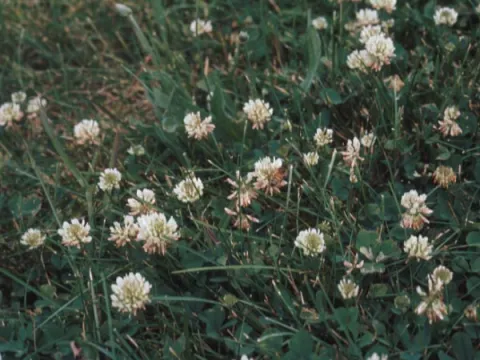
  • White clover was formerly considered a desirable component of turf seed mixtures, but then as more was learned about bee sting allergy, white clover became a weed and is not now used much in turf seed mixtures.

    White Clover
    Photo by Dr. John Meade, weed scientist emeritus, Rutgers NJAES Cooperative Extension

  • Whitlow grass, as the name implies, is a spring plant and is usually the first plant to bloom in the spring. A member of the mustard family it is a small plant. The only leaves it has are arranged in a rosette on the ground. It sends up a seed head with white flowers. Not a serious weed in any cropping situation.
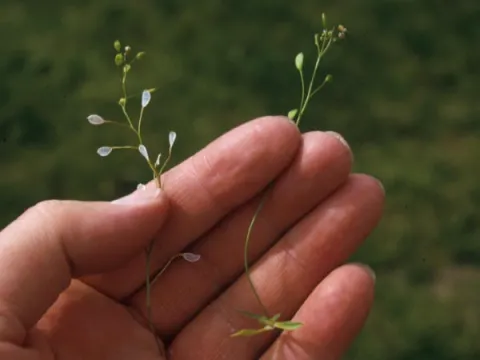
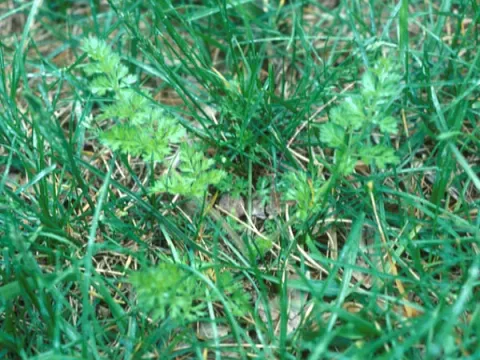
    Whitlowgrass
    Photo by Dr. John Meade, weed scientist emeritus, Rutgers NJAES Cooperative Extension
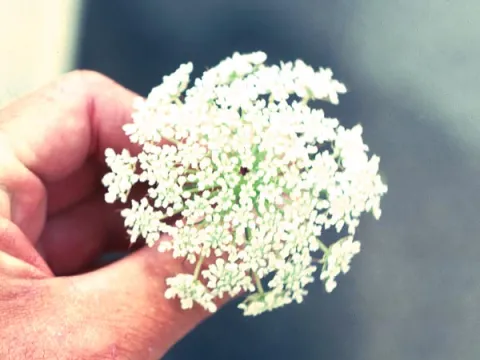
  • Wild carrot is a biennal with a striking white flower. It is the same species as the cultivated carrot but doesn't taste as good. Favors roadsides and other untended areas. It is also called Queen Anne's Lace.

    Wild Carrot
    Photo by Dr. John Meade, weed scientist emeritus, Rutgers NJAES Cooperative Extension
    Wild Carrot Flower
    Photo by Dr. John Meade, weed scientist emeritus, Rutgers NJAES Cooperative Extension
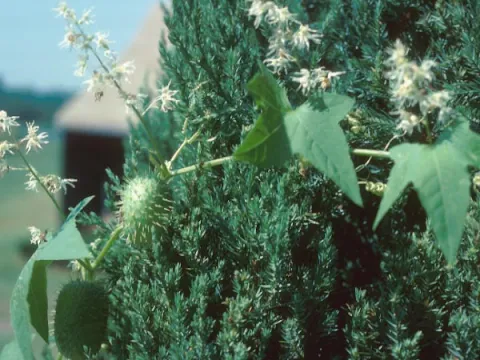
  • Wild cucumber is not too common. The fruit resembles the cultivated cucumber except it is smaller, softer, and has weak spines on it. Not to be confused with the much more troublesome bur cucumber, Sicyos angulatus.

    Wild Cucumber
    Photo by Dr. John Meade, weed scientist emeritus, Rutgers NJAES Cooperative Extension
  • A member of the lily family with a bulbous base.  The leaves are grass-like.  It has spread  become a noxious weed in lawns pastures and many other crops.  The flavor and odor resemble the cultivated garlic but are much stronger so the plant is not usually eaten.
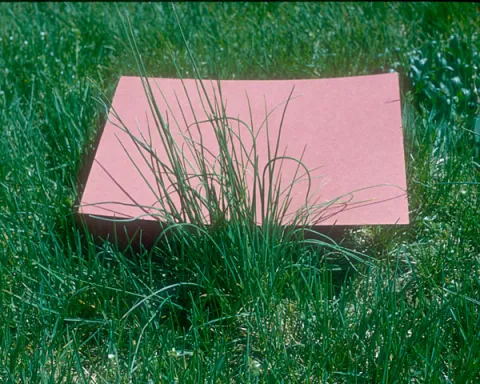
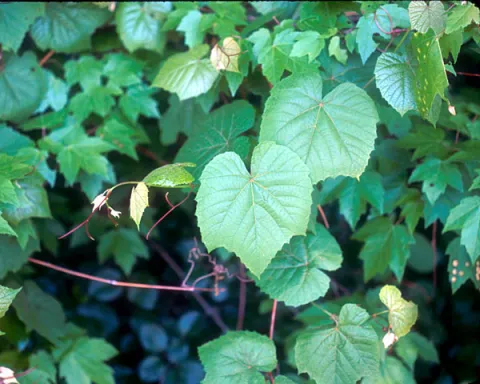
    Wild Garlic
    Photo by Dr. John Meade, weed scientist emeritus, Rutgers NJAES Cooperative Extension
  • Several species are known but most resemble the cultivated grape. It grows well on power lines and can often be seen crossing the roadway on the wires. Most are not edible.

    Wild Grape
    Photo by Dr. John Meade, weed scientist emeritus, Rutgers NJAES Cooperative Extension
  • Wild lettuce is sometimes called compass plant because the leaves appear to line up north and south. It has recently become a problem in the container nursery because of its wind blown seed. It has milky sap. One species has spines and is called prickly lettuce. Some species attain heights of 8-10 feet.
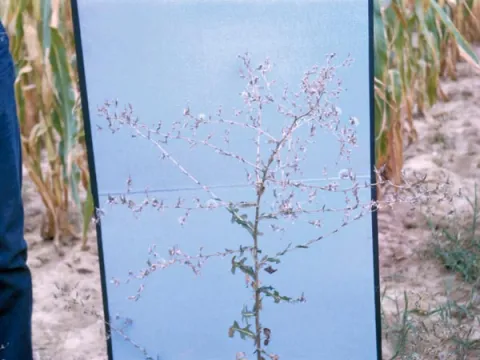
    Wild Lettuce
    Photo by Dr. John Meade, weed scientist emeritus, Rutgers NJAES Cooperative Extension
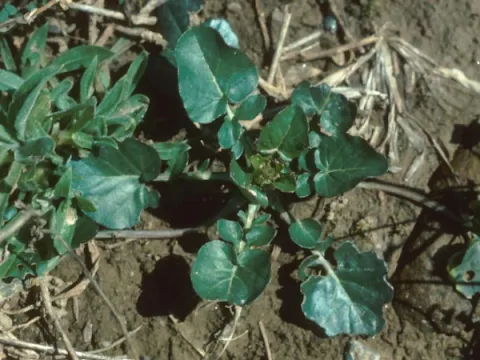
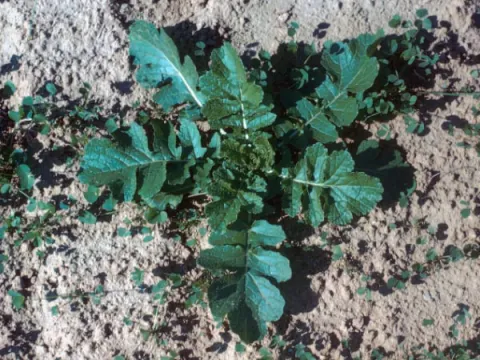
  • Wild Turnip is very similar to rutabaga and the only easy way to tell them apart is to cut the tap root and sniff. Rutabaga is odorless, turnip smells like a cultivated turnip.

    Wild Turnip Rosette
    Photo by Dr. John Meade, weed scientist emeritus, Rutgers NJAES Cooperative Extension
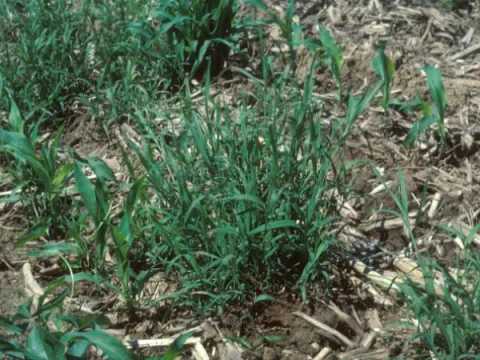
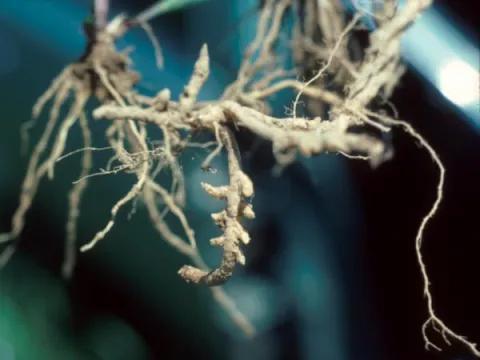
  • Wirestem Muhly is a very robust perennial grass related to nimblewill but much larger. The best identification characteristic is the overlapping scales of the rhizome. A weed problem in Warren and Hunterdon Counties in field crops.

    Wirestem Muhly in Corn
    Photo by Dr. John Meade, weed scientist emeritus, Rutgers NJAES Cooperative Extension
    Wirestem Muhly Stolons
    Photo by Dr. John Meade, weed scientist emeritus, Rutgers NJAES Cooperative Extension
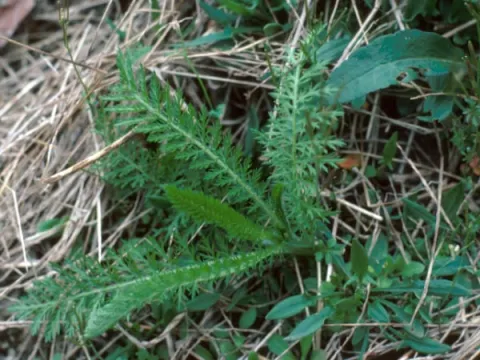
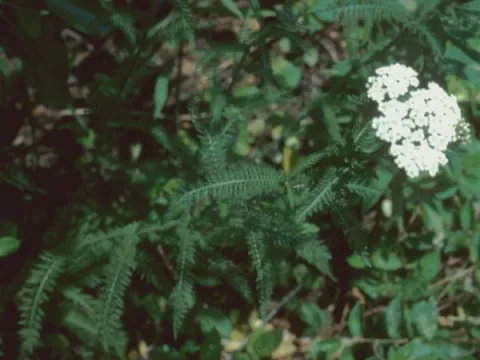
  • Yarrow is an occasional weed of turf areas. It has a rosette leaf similar to wild carrot. The flower appears the second year so it is a true biennial.

    Yarrow
    Photo by Dr. John Meade, weed scientist emeritus, Rutgers NJAES Cooperative Extension
    Yarrow Leaf and Flower
    Photo by Dr. John Meade, weed scientist emeritus, Rutgers NJAES Cooperative Extension
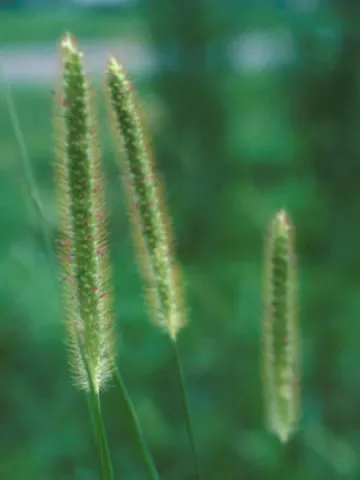
  • Yellow foxtail derives its name from the yellow bristles making up the foxtail seed head. It is an annual and for reasons unknown favors roadsides where populations may get quite dense.

    Yellow Foxtail
    Photo by Dr. John Meade, weed scientist emeritus, Rutgers NJAES Cooperative Extension
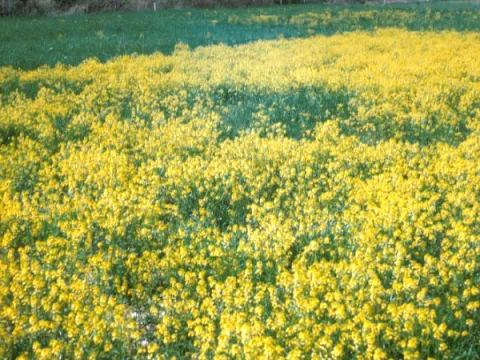
  • Yellow rocket is a yellow flowered biennial mustard. It is a weed of alfalfa and small grains as well as newly seeded turf areas. It is a prolific seeder and in the spring large fields turn yellow with its flowers.

    Yellow Rocket
    Photo by Dr. John Meade, weed scientist emeritus, Rutgers NJAES Cooperative Extension
    Field of Yellow Rocket
    Photo by Dr. John Meade, weed scientist emeritus, Rutgers NJAES Cooperative Extension
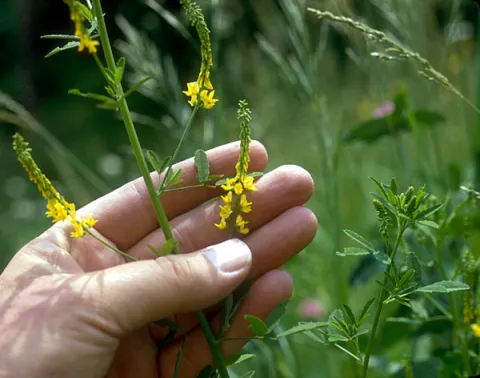
  • A member of the legume family, it was introduced for hay and pasture, but it has escaped and is now a weed of waste places and roadsides. It grows to about four feet tall.

    Yellow Sweet Clover
    Photo by Dr. John Meade, weed scientist emeritus, Rutgers NJAES Cooperative Extension