Photo by Dr. John Meade, weed scientist emeritus, Rutgers NJAES Cooperative Extension

The most frequent request we receive is for control recommendations. We cannot provide that information on this web site. Weed control recommendations that are appropriate for New Jersey may not be appropriate for someone living in another state. Recommendations for homeowners are considerably different from recommendations for commercial enterprises that have access to chemicals whose purchase and use require a pesticide applicator's license. There are a lot of variables in the weed control equation and without detailed information it is difficult for us to provide satisfactory recommendations.
We suggest that you contact your Cooperative Extension office in your state to obtain control recommendations appropriate for weeds occurring in your geographic location.
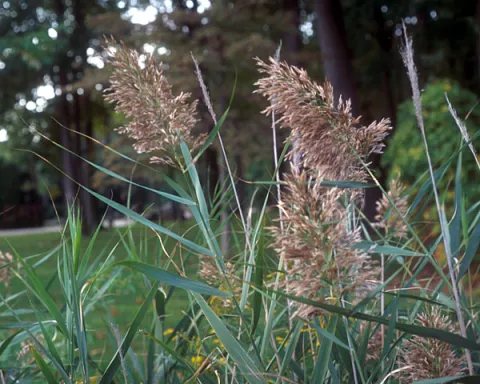
A large grass with stout, almost woody, stems often used for thatch roofs. It is found in wet soils, especially in roadside ditches. It has a much branched flower head. It spreads rapidly and widely by means of rhizomes and stolons. Tolerates salt water.
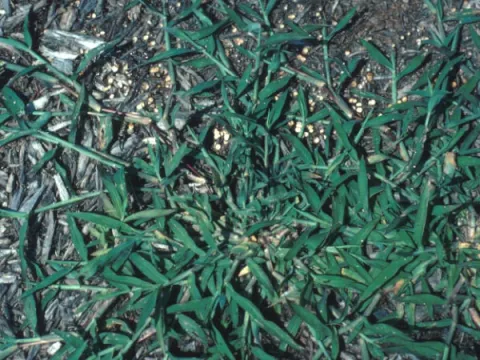
There are two common types of crabgrass--hairy crabgrass (Digitaria sanguinalis) and smooth crabgrass (D. Ischaemum). It doesn't make too much difference which one is present. They look similar and are similar in control. One has hairs on the leaf and the other doesn't. They are both annuals and germinate sometime in May. They are both coarse, unsightly grasses and can grow close to the ground and thus escape the mower. Prolific seed producers. The crabgrass rake can be used to control lighter populations.
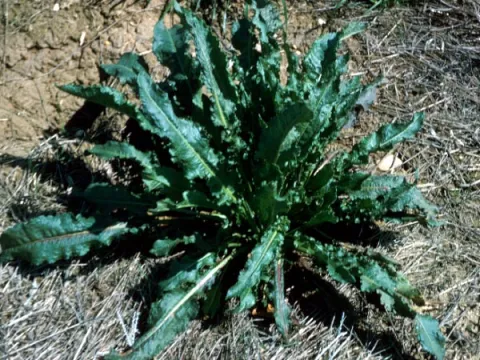
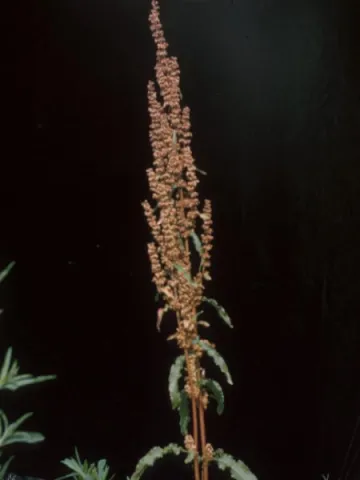
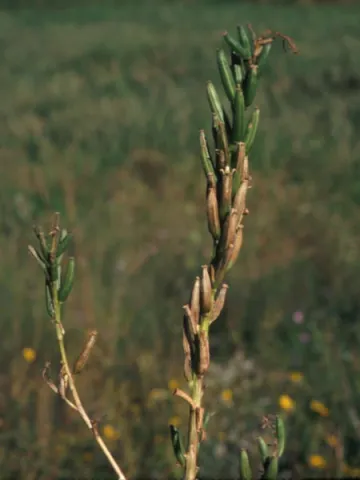
Curled dock is one of our perennial weeds. It forms a rosette the first year and then develops a large tap root and sends up a tall stem. The flowers are inconspicuous but the capsule is rusty brown in the fall and is easily recognized. Normally a weed of pastures and other non-tilled areas. Tillage discourages it. It has in recent years become a problem in alfalfa.
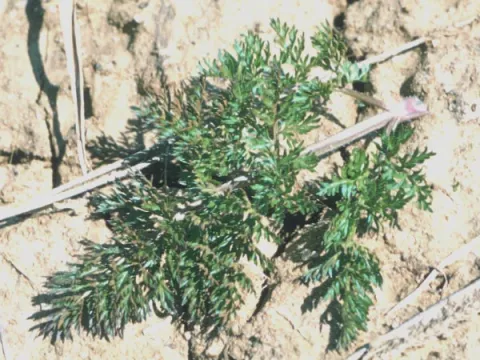
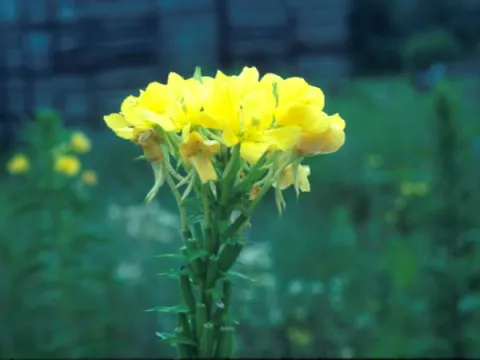
Cut-leaved evening primrose has a flower similar to the evening primrose but the leaf is cut like a dandelion leaf. A problem in South Jersey, especially in cut-flower and vegetable fields. Has 4 petals and a cylindrical capsule one-eighth inch by 1.5 inch.
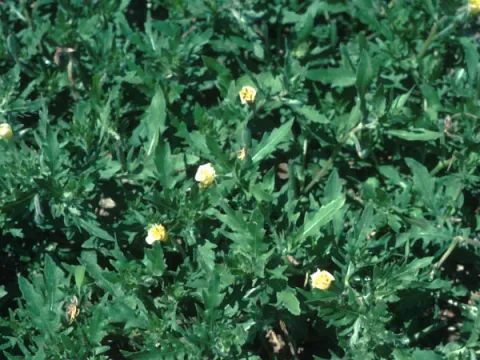
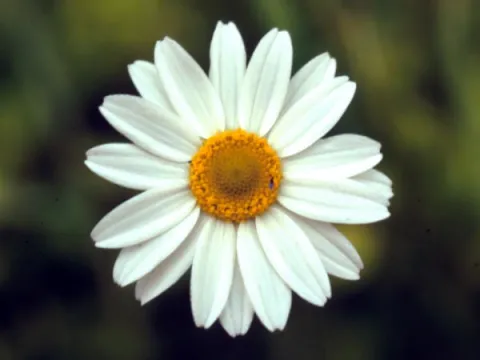
Daisy fleabane is known also as white top. It is a winter annual or biennial. A serious problem in alfalfa, especially that grown for equine consumption. Those folks don't want to see the white and yellow flowers in their hay bales. Also a problem of pastures and similar areas.

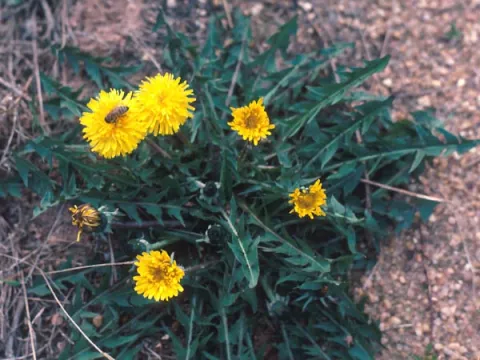
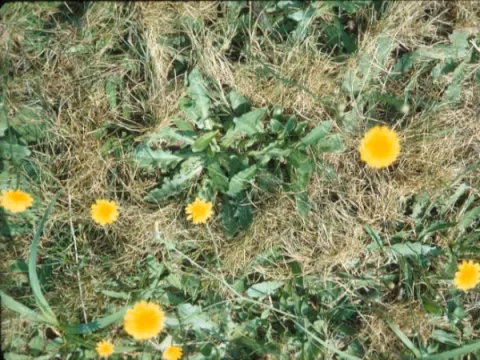
Dandelion, one of our most ubiquitous weeds, is a serious problem in lawns and in many other crops. In tree fruits it lures bees away from the fruit blossoms. It is a weed of alfalfa fields as well. The seed head is quite symmetrical and beautiful. However, the parachute attached to the seed carries it far and wide. A perennial with a large taproot, its leaves are considered a delicacy by some folks both for salad greens and also for boiled greens. Each plant can be removed by use of a dandelion knife but it must go deep into the ground to remove all of the crown buds.
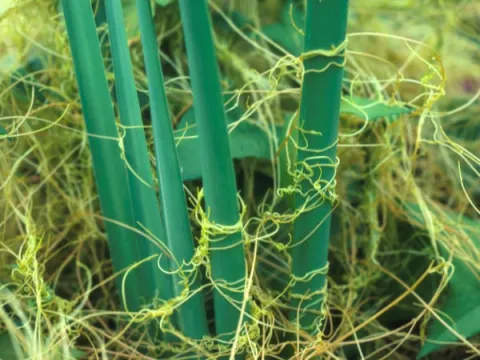
Dodder is our only economically important parasitic plant. It is an annual with a colorless flower which produces very small, light seed. It tolerates wet sites so the seed often gets into irrigation water and is carried to the fields. A problem in ornamental flowers such as petunia and geranium. It is a serious problem in blueberries. Each species has its own host. The dodder plant is yellow because it has no chlorophyll which means it cannot produce its own food. So it penetrates the desirable plant with haustoria and derives its food from the host plant.
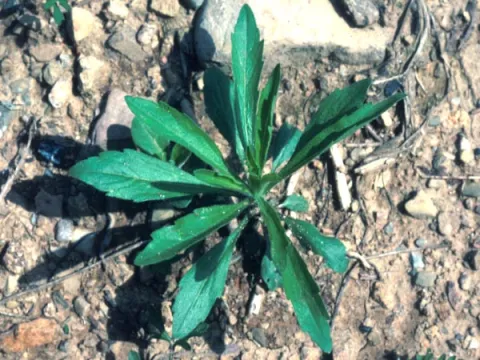
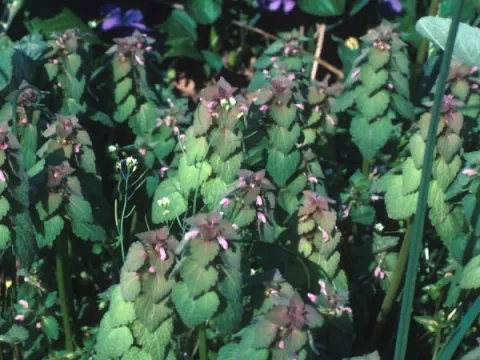
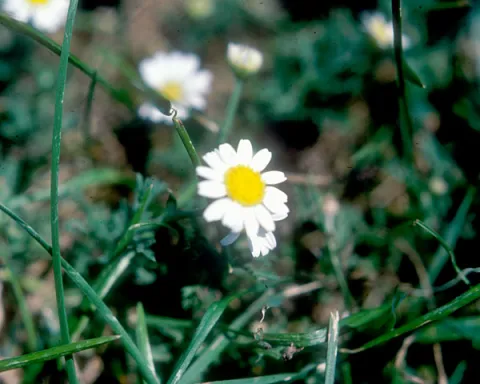
A low growing tap-rooted winter annual. This ill smelling plant flowers early in spring. A weed of waste places and often found in small grains as well as new turf seedings. A closely related plant, Anthemis arvensis is called mayweed because it blooms in early May. It is not ill smelling.
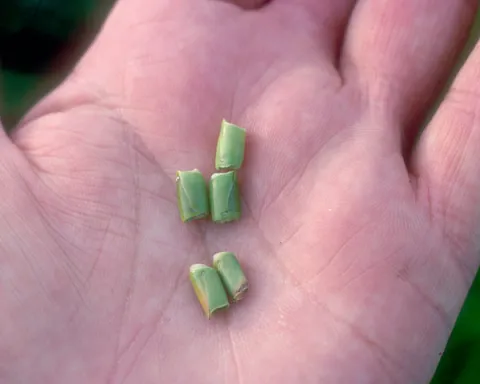
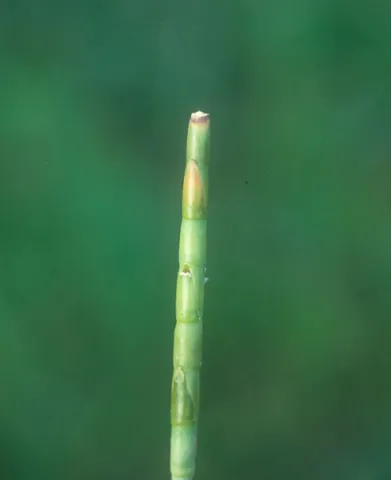
This grass grows to a height of 4 to 6 feet and spreads by means of rhizomes. The leaves are long and up to 4 inches wide. The population is increasing in New Jersey. Found mostly in wet areas such as ditches. The seeds are hard and lined up close together on 4 to 6 inch spikes. It has been considered a progenitor of corn.

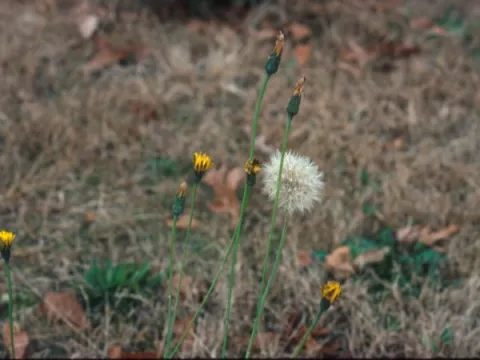
Fall Dandelion is a perennial like its namesake and the flower is very similar. Fall dandelion, however, has a branched flower stalk while dandelion has a single flower on each stalk. Control is more difficult than common dandelion. Flowers later in the year than the common dandelion.
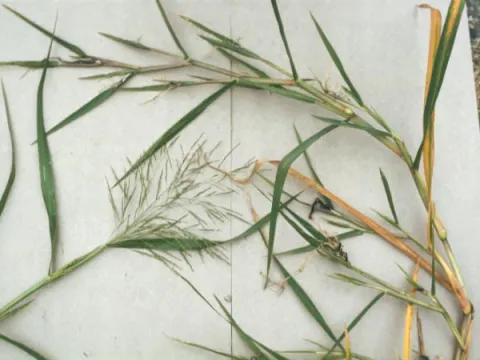
This grass genus has several species that are important weeds. Fall panicum (P. dichotomiflorum) is a serious weed in many croping systems such as alfalfa, corn, soybeans, nurseries and many others. An annual, it grows to 5 feet or so and tillers profusely. Switchgrass (P. virgatum) is adaptable to wet areas and is a problem in cranberry bogs and blueberries. A perennial, it forms large vase shaped clumps. Witchgrass (P. capillare) is a lesser problem and has a much more open flower head. Two other species, not yet found in New Jersey are wild proso millet (P. miliaceum) and Texas panicum (P. texanum). These two are serious problems and hopefully we will not introduce these.
False Dandelion, also called spotted cat's ear, resembles common dandelion very closely but like fall dandelion, the flower stalk is branched. The leaf surfaces are shiny. This one also flowers late in the year. Perennial by virtue of a tap root, it also reproduces by seed.
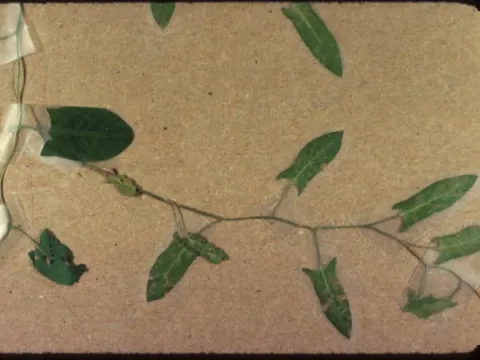
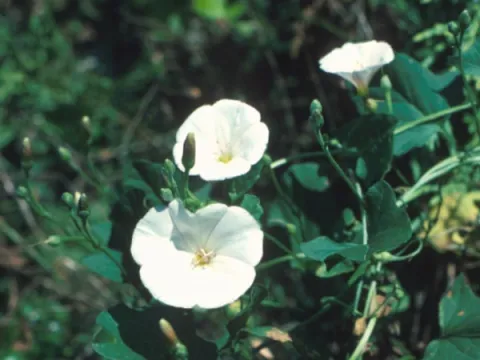
Field bindweed, also called creeping jenny is a vine type weed with an extensive root and rhizome system. It is more prevalent in the west but it is present in New Jersey. The leaf shape is unique with the rounded tip and small lobes at the base. Flower is white or pinkish, tubular and about one-half inch across.
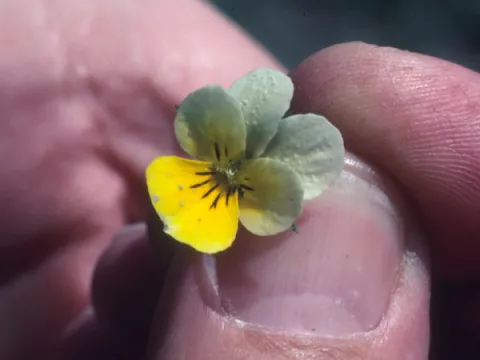
Galinsoga is an annual weed of vegetables. It was a serious problem when the vegetable industry was centered in North Jersey and it relocated right along with the vegetable industry to South Jersey. It is also called gallant soldier and quickweed. The latter because the seed starts to germinate on the way to the ground so that several generations are possible each growing season. Another species, G. ciliata, is called hairy galinsoga.


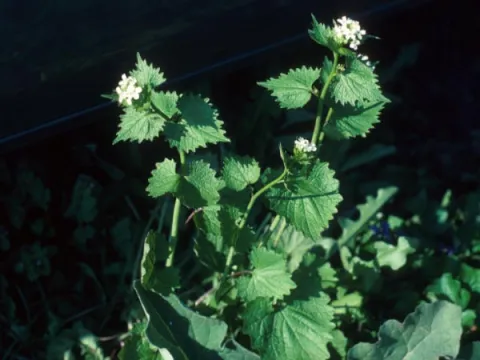
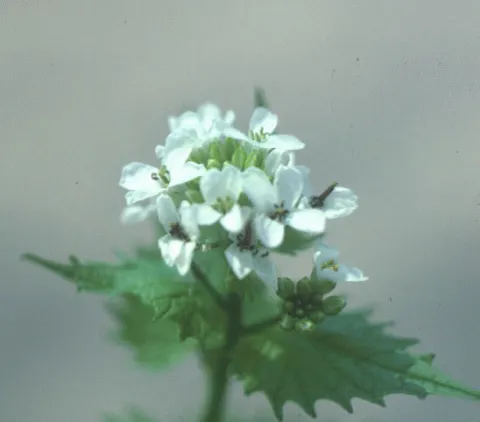
Garlic mustard derives its name from the garlic odor of the leaves when crushed. It has a white flower appearing in early spring. The leaf has a distinctive triangular shape with a squared off base. Definitely on the increase in New Jersey but not yet a problem in cropping systems or other areas.
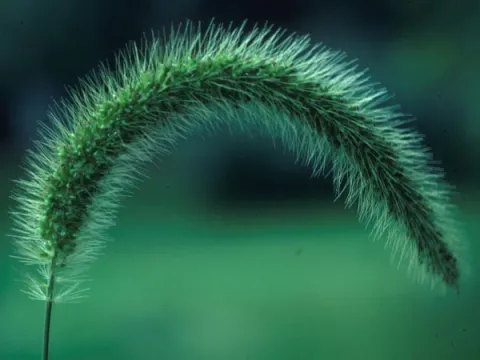
Foxtails are present in New Jersey in several species. Yellow foxtail (S. lutescens) is often present along roadsides while giant foxtail (S. faberii), is a weed of cultivated fields. The seed head is composed of dense bristles which make the genus easy to recognize. The yellow foxtail has yellow bristles while those of giant foxtail are brown. There is a green foxtail but it is scarce in New Jersey.