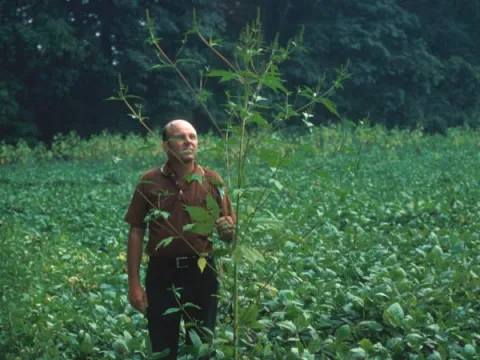
Photo by Dr. John Meade, weed scientist emeritus, Rutgers NJAES Cooperative Extension

The most frequent request we receive is for control recommendations. We cannot provide that information on this web site. Weed control recommendations that are appropriate for New Jersey may not be appropriate for someone living in another state. Recommendations for homeowners are considerably different from recommendations for commercial enterprises that have access to chemicals whose purchase and use require a pesticide applicator's license. There are a lot of variables in the weed control equation and without detailed information it is difficult for us to provide satisfactory recommendations.
We suggest that you contact your Cooperative Extension office in your state to obtain control recommendations appropriate for weeds occurring in your geographic location.
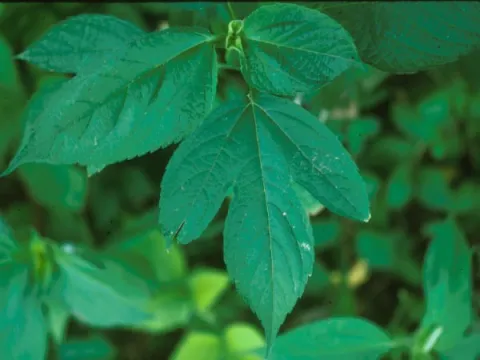
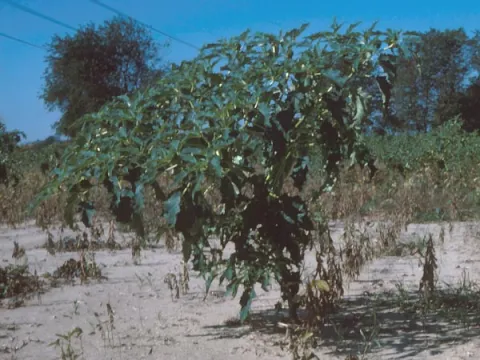
Giant Ragweed is, as its name suggests, a tall plant. It does not resemble the common ragweed. The leaves of giant ragweed are deeply cut with 3 lobes, hence the trifida. It prefers moist soil so is a problem in ditches and other areas with occasional water. Recently it has become a serious problem in soybeans because of marginal land being brought into production. It also is difficult to control with existing soybean herbicides. It has the same potential for causing allergenic reactions as the common ragweed.
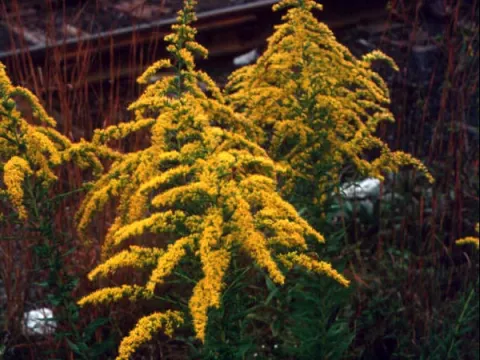
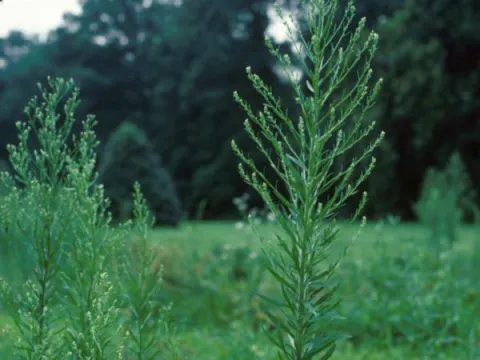
Goldenrod is often falsely accused of causing hayfever but this plant is pollinated by insects and sheds very little pollen. It just happens to bloom at the same time as ragweed, the biggest offender. These perennial weeds are problems in perennial crops such as Christmas trees, blueberries and pastures.
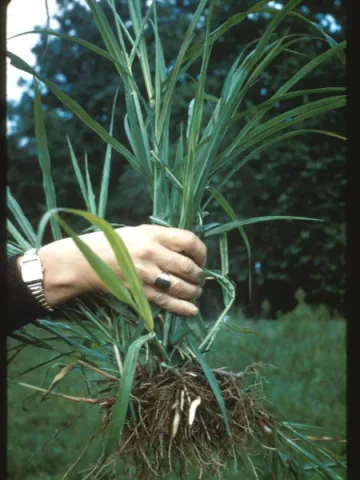
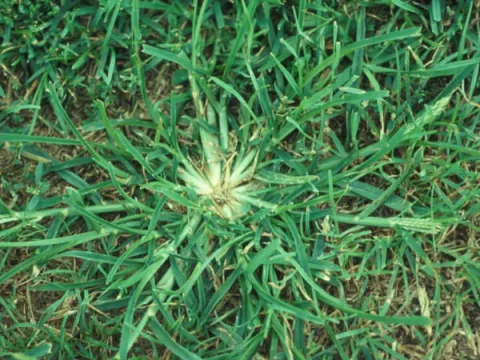
Goosegrass is an annual grass that tolerates compacted soils very well and thus is often found on the sides of paths and on the tee area of golf courses. It responds poorly to most preemergence crabgrass materials. It is most readily identified by the white base of the stem. Since it is a prostrate grass it appears that there is white circle in the center of the plant. It is a tough plant and even after the plant dies in the fall the skeleton remains fairly intact through the winter.
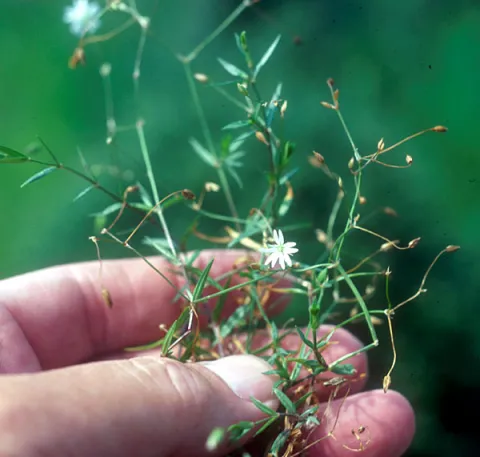
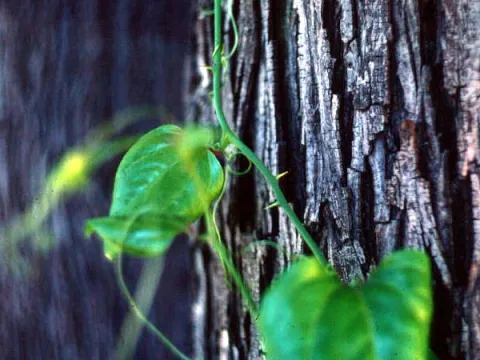
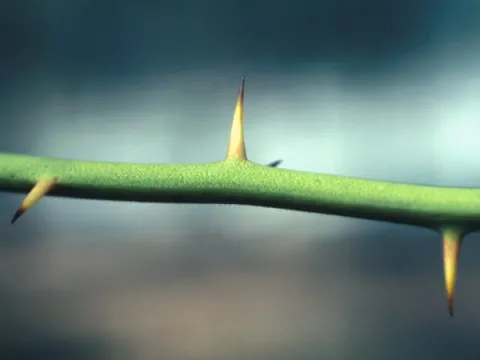
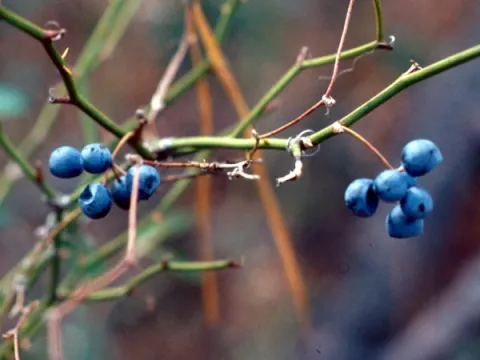
Greenbriar is also called bull briar and cat briar. The green woody stems are armed with long sharp spines which readily tear clothes and flesh. It moves as a vine and will completely cover the edge of a woods or a blueberry field. As it weaves itself together it becomes impenetrable. As a member of the lily family it has a bulb situated deep in the ground. Control is virtually impossible except by continued cutting. Attempts to dig up the bulb have been unsuccessful.
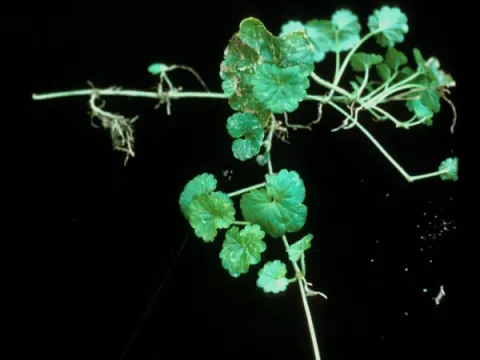
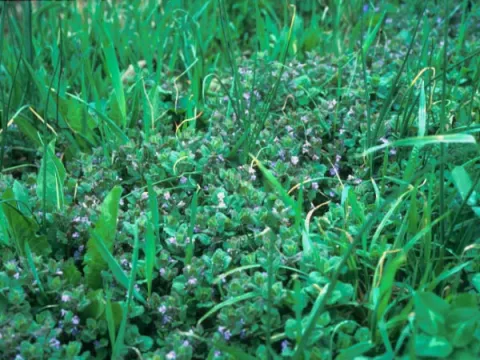
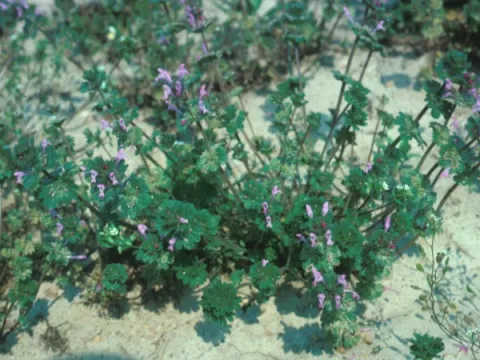
Ground ivy is also is called gill-over-the-ground and creeping charlie. This perennial member of the mint family is a weed problem in turf and ornamentals. It has a blue flower. One of the better identification features is the scalloped edge of the round leaves. Acting as a vine it moves out from underneath trees and shrubs and creeps across the grass area rooting from the nodes as it travels. Herbicides control it in the lawn but it soon reinfests from the tree and shrub areas.
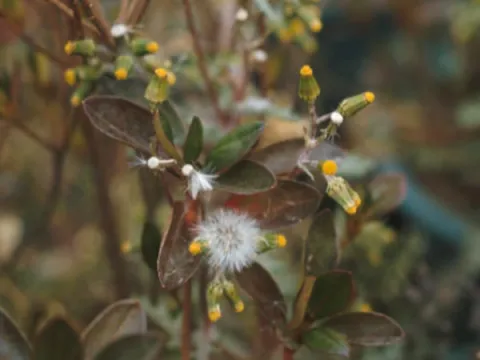
Groundsel has become a serious problem in the nursery areas, especially in containers. A member of the composite family (but has no ray flowers) it forms a dandelion type seed head and the seeds are carried on the wind for some distance. It is an annual but can germinate and set seed all through the year. Another species, golden ragwort (S. aureus) is present throughout the state but is not a weed problem. It has heart-shaped basal leaves and has yellow ray flowers and strongly purple tipped bracts.
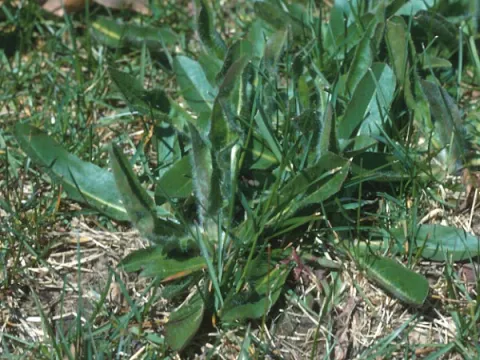
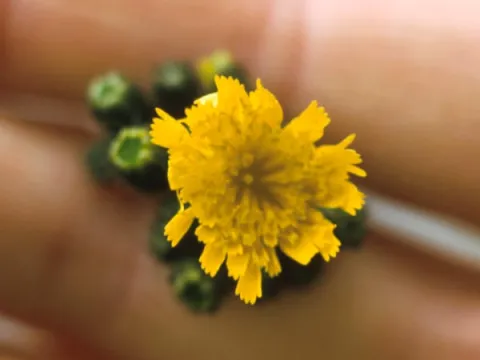
Hawkweed is a pest of turf areas. The flower resembles dandelion. One species, Hieracium pilosella, is rhizomatous and grows in circular patches with flower stems about six inches high. Hawkweeds are an indicator of infertile soil and are not usually a problem in well managed turf. Since they resemble dandelion and are resistant to 2,4-D, we often hear of dandelions being resistant to 2,4-D. Other plants similar in appearance such as hawksbeard (Crepis spp.)and spotted catsear (Hypocharis radicata) are also resistant to 2,4-D.
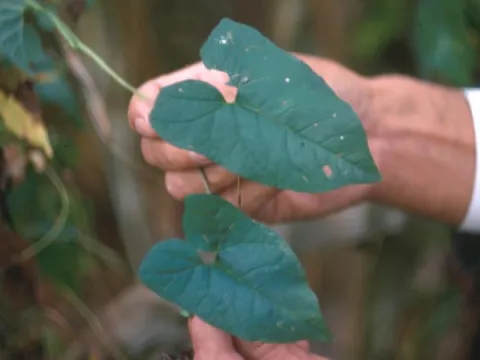
Hemp Dogbane is a perennial weed which is right at home in the no-till situation. It is usually controlled by plowing and cultivation. The stem is woody at maturity and the plant has milky sap. The seed is carried in 2 long thin follicles. The seed has a tuft of silky-white hairs at the apex which allows it to move freely through the air. This plant is a good example of natures fight to maintain the species. Some of the seed capsules open in the fall but others remain closed until spring thus allowing for better chance of survival.
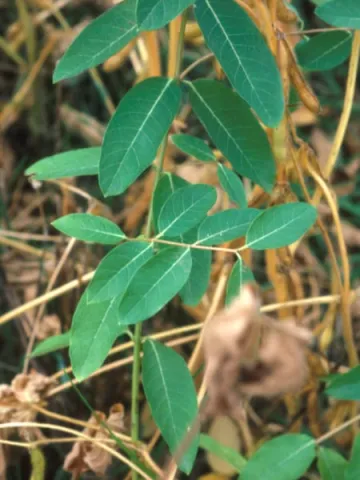
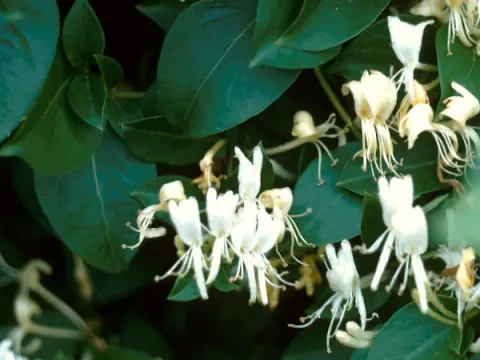
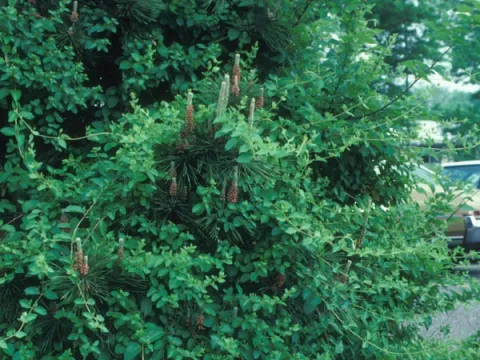
Honeysuckle is not often thought of as a weed but it does get away and will completely cover an ornamental shrub or tree. There are also some shrub honeysuckles but this one is a vine. There is also a species, Trumpet honeysuckle (L. sempervirens), which has a bright red flower. Upper leaves perfoliate.
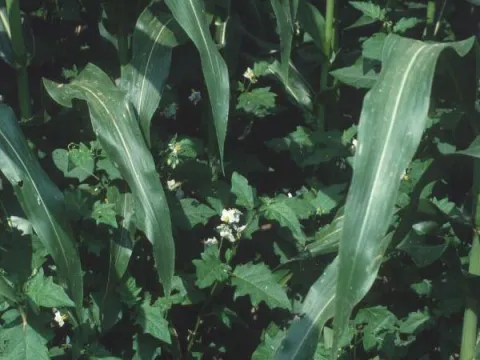
Horsenettle is a serious weed pest in many crop situations in New Jersey. A perennial member of the nightshade family, it moves by means of creeping rootstocks. The stem and the under side of the leaves are armed with stout, sharp spines. The berries are poisonous and retain that toxicity through the winter. They are yellow and have proven attractive to youngsters. It is very difficult or impossible to control with herbicides. A good crop rotation with plowing and discing will help to control it.
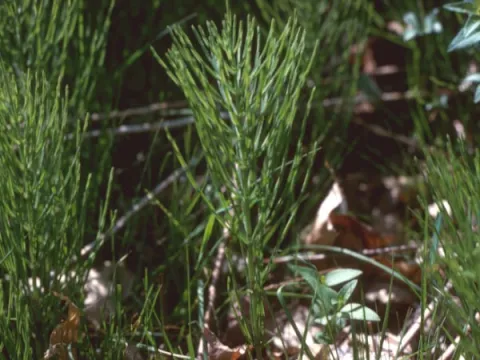
Horsetail is a spore forming plant rather than a seed plant. It must have wet areas to become established but once in place it can tolerate very dry conditions. It seems to be quite toxic to horses and should be eliminated from pastures. At the present time no one is sure how to do that. The leaves are needle-like and are whorled (several at one node circling the stem).
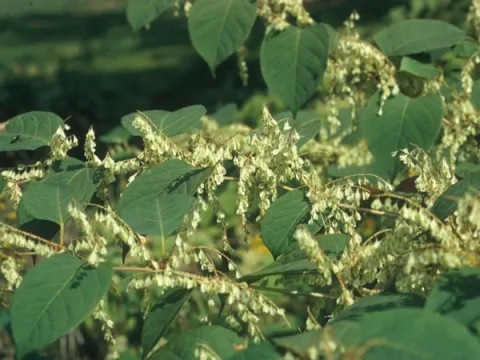
Japanese Knotweed is also called Japanese bamboo and Mexican bamboo. The bamboo comes about because the stem becomes woody and has enlarged nodes similar to those of a bamboo fishing pole. Once introduced it spreads rapidly by rhizomes and is extremely competitive. It also is extremely strong in that it can push through macadem. There is a related plant, sakhalin knotweed (Polygonum sachalinense), which has much larger leaves but is much less of a problem.
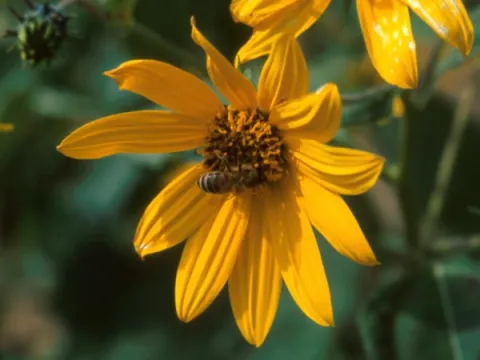
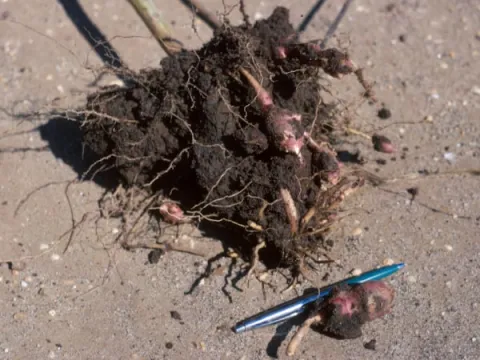
Jerusalem Artichoke is closely related to sunflower and resembles it. The flower has fewer parts but is yellow. The roots have tubers which are high in inulin starch. The plant was investigated at one time as a source of alcohol. It becomes a formidable enemy in corn and soybean fields.
Jimsonweed was at one time a feared plant in soybeans but excellent control methods have reduced it to an oddity. It has a very large leaf with a spiny capsule which contains several hundred seeds. As the capsule matures it splits at the top and the plant tips it over so that all of the seeds fall out. It is a potent hallucinogen but it is also very toxic and several people have become seriously ill or died from the seeds. The only weed in New Jersey which has a price on its head. If the owner doesn't control this plant, the sheriff will and bill the property owner.
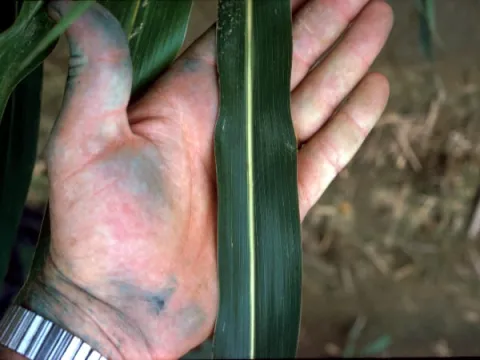
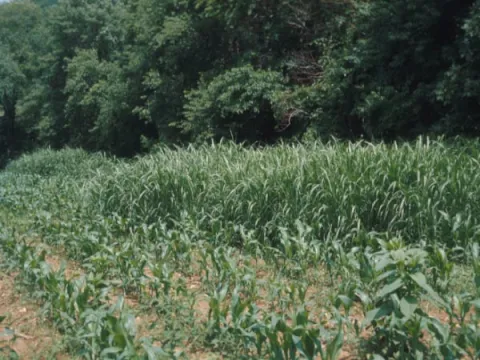
Johnson grass is a serious pest in many parts of the state. Normally thought of as a southern plant it is present as far north as Warren County. An actively moving plant by virtue of rhizomes it will keep moving through a field until controlled. It grows to a height of about 10 feet and has a large seedhead similar to sudan grass.