Rutgers logo
Cooperative Extension

New Jersey Weed Gallery

The most frequent request we receive is for control recommendations. We cannot provide that information on this web site. Weed control recommendations that are appropriate for New Jersey may not be appropriate for someone living in another state. Recommendations for homeowners are considerably different from recommendations for commercial enterprises that have access to chemicals whose purchase and use require a pesticide applicator's license. There are a lot of variables in the weed control equation and without detailed information it is difficult for us to provide satisfactory recommendations.

We suggest that you contact your Cooperative Extension office in your state to obtain control recommendations appropriate for weeds occurring in your geographic location.

Filter

Currently showing 133 results
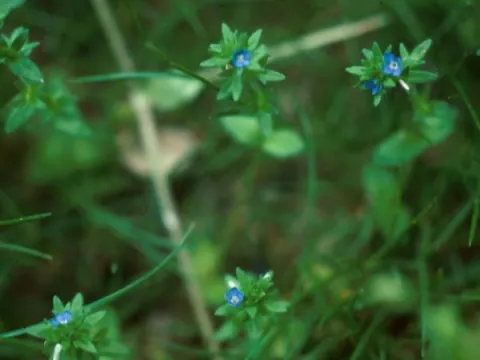
  • There are several species of speedwell, with some annuals and some perennials. They are a serious problem in turf, pastures, and alfafa. They all have 4-petaled flowers varying in color from pale violet to deep blue. The capsule is a distinctive heart shape.

    Speedwell
    Photo by Dr. John Meade, weed scientist emeritus, Rutgers NJAES Cooperative Extension

    Speedwell Deep-Blue Flower
    Photo by Dr. John Meade, weed scientist emeritus, Rutgers NJAES Cooperative Extension
    Speedwell Heart-Shaped Capsule
    Photo by Dr. John Meade, weed scientist emeritus, Rutgers NJAES Cooperative Extension
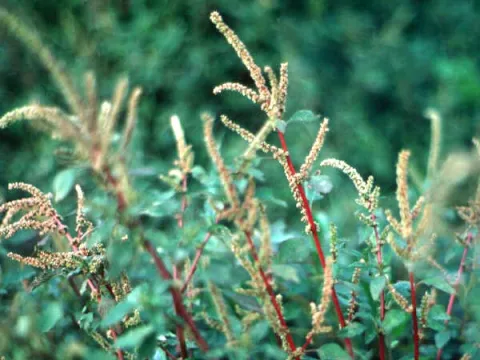
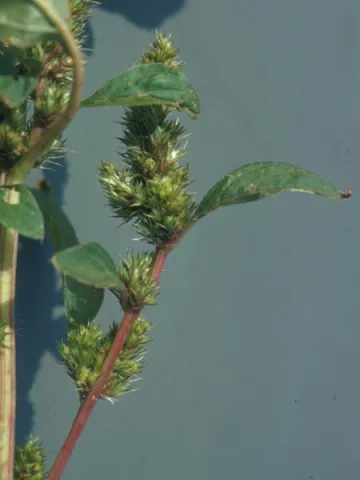
  • There are many species of pigweed and they are weed pests in several cropping systems. Amaranthus spinosus, spiny amaranth, has sharp, strong spines on the stem. A. graecizans breaks off at the ground line and being round shaped is blown around by the wind.

    Spiny Pigweed
    Photo by Dr. John Meade, weed scientist emeritus, Rutgers NJAES Cooperative Extension
    Spiny Pigweed Close-Up
    Photo by Dr. John Meade, weed scientist emeritus, Rutgers NJAES Cooperative Extension
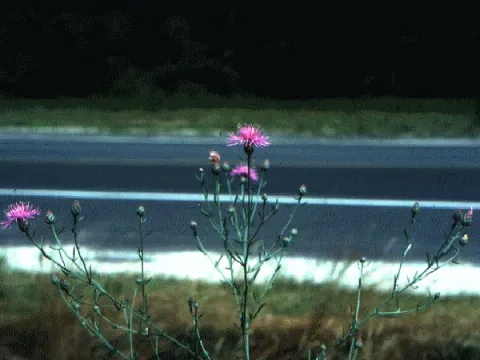
  • Spotted knapweed is a serious weed of rangelands in the far west but in New Jersey it is a roadside weed. It flowers late and furnishes local color in the summer time. It has been on the increase in recent years.

    Spotted Knapweed
    Photo by Dr. John Meade, weed scientist emeritus, Rutgers NJAES Cooperative Extension
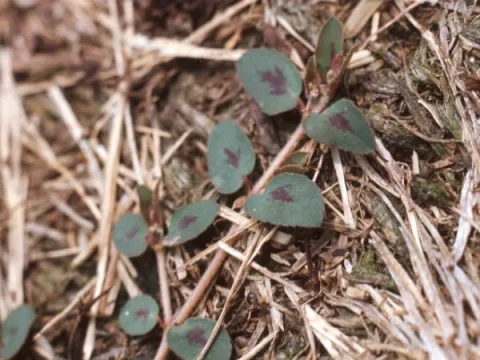
  • Spotted spurge is a weed of lawns. It has red spots on the leaf and is prostrate. The sap is milky and is said to be irritating. An annual, it germinates later than most broadleaf annuals. Two related species do not have the spot but are prostrate and have the milky sap.

    Spotted Spurge
    Photo by Dr. John Meade, weed scientist emeritus, Rutgers NJAES Cooperative Extension
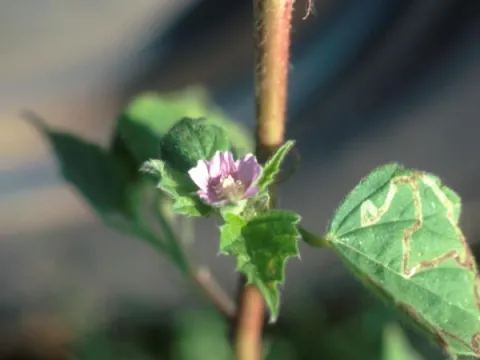
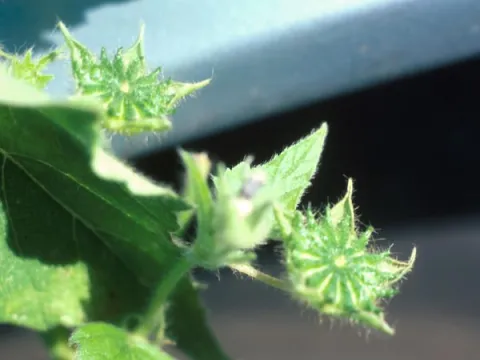
  • Spurred Anoda is a recent introduction to New Jersey. It is a weed of the south but apparently came into the state (mostly southern New Jersey) with soybean seeds. It is closely related to velvetleaf and common mallow.

    Spurred Anoda Flower
    Photo by Dr. John Meade, weed scientist emeritus, Rutgers NJAES Cooperative Extension
    Spurred Anoda Fruit
    Photo by Dr. John Meade, weed scientist emeritus, Rutgers NJAES Cooperative Extension
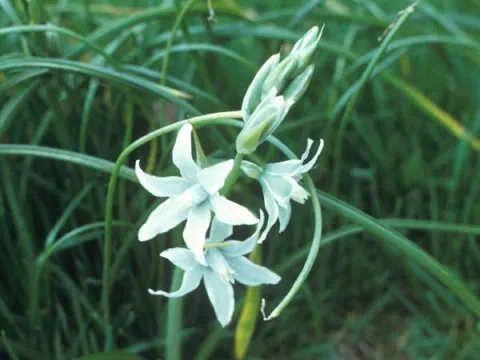
  • Star-of-Bethlehem is an attractive ornamental but has escaped and is often found in large patches. The leaves resemble wild garlic but the bulb has no odor. The early spring flower is quite pretty but the bulb is poisonous and has caused the death of animals and children. Frost heaving brings the bulb to the surface.

    Star-of-Bethlehem
    Photo by Dr. John Meade, weed scientist emeritus, Rutgers NJAES Cooperative Extension
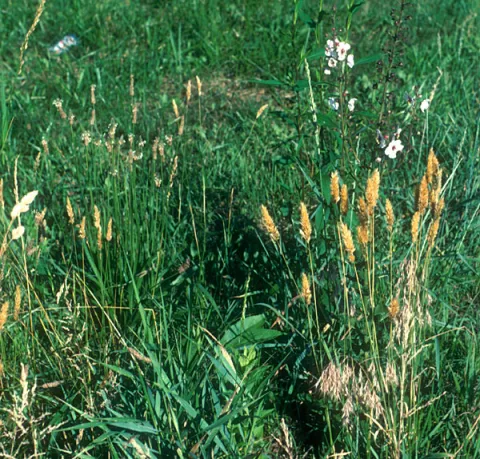
  • One of the very early flowering grasses with a sweet scent.  It was included in pasture mixes and is responsible for the smell of new mown hay.  Memorialized in the song about the Wabash river fields.  Now a plant of roadsides, probably from seeds included in the seed mix.

    Sweet Vernal Grass
    Photo by Dr. John Meade, weed scientist emeritus, Rutgers NJAES Cooperative Extension
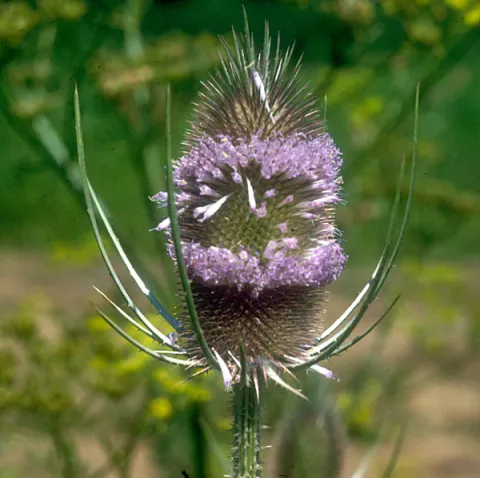
  • A prickly stemmed plant, it grows to about four feet tall. The striking flower head is commonly used in dried flower arrangements once the flowers have dropped off.

    Teasel
    Photo by Dr. John Meade, weed scientist emeritus, Rutgers NJAES Cooperative Extension
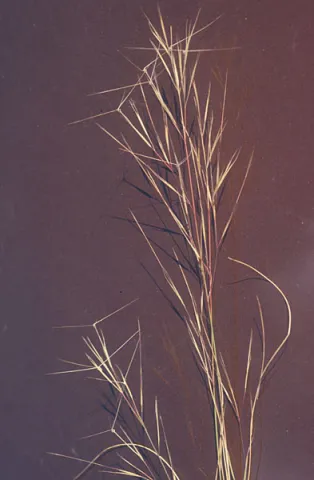
  • A group of grasses characterized by the three awns bent in a right angle. Of interest because the awn twists and embeds the seed in the soil.

    Three Awn Grass
    Photo by Dr. John Meade, weed scientist emeritus, Rutgers NJAES Cooperative Extension
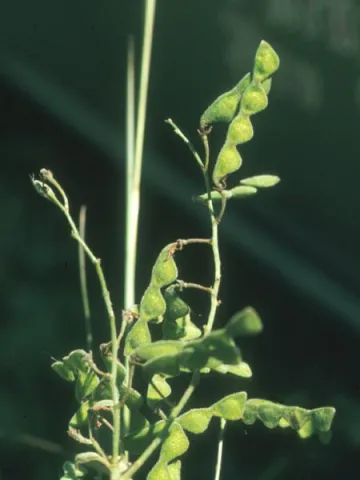
  • There are 17 species of tick trefoil in New Jersey and they all share the flat, triangular seed that sticks like a tick. Flower is typical legume and varies from white through violet to blue.

    Tick Trefoil Seed Pod
    Photo by Dr. John Meade, weed scientist emeritus, Rutgers NJAES Cooperative Extension
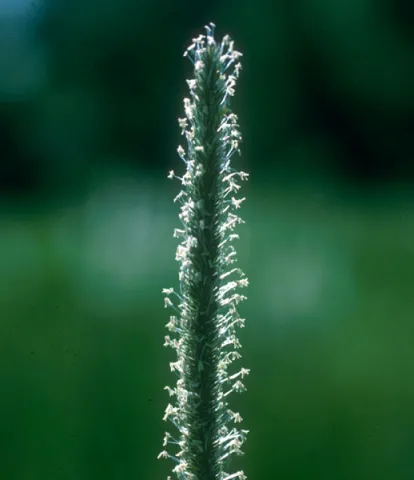
  • Originally introduced as a forage grass, it has found its way into lawns and nurseries. It is usually 2 to 4 feet tall with a bulbous base. Most preferred by horses.

    Timothy
    Photo by Dr. John Meade, weed scientist emeritus, Rutgers NJAES Cooperative Extension
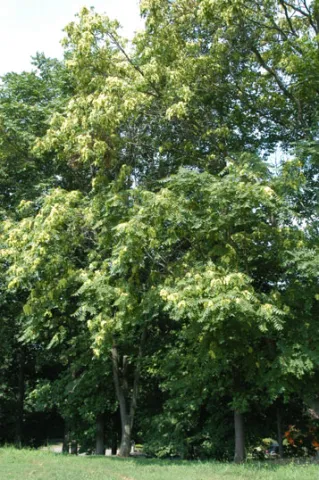
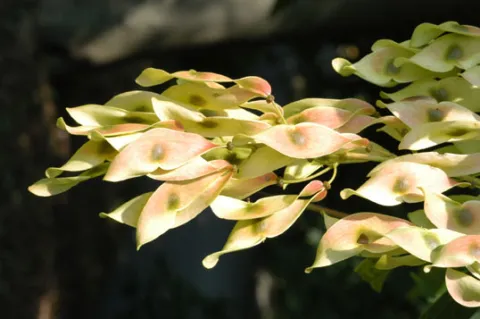
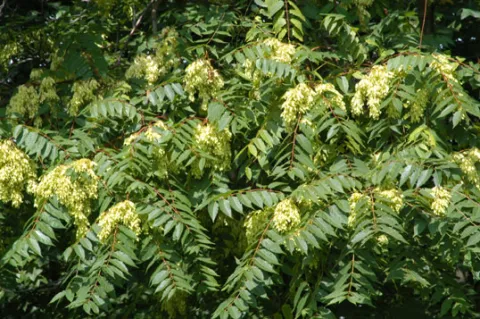
  • This fast-growing, weedy tree with malodorous flowers gained its fame from the book A Tree Grows in Brooklyn, where it survived on a Brooklyn fire escape.  When in flower, the tree stands out because of its many colorful flowers.  The leaves are quite large, with many leaflets. The fruit is a samara.  When small, it resembles staghorn sumac, but tree of heaven has one or more notches near the base of the leaflet.

    Tree of Heaven
    Photo by Gary HuntzingerRutgers NJAES Cooperative Extension
    Tree of Heaven Fruit
    Photo by Gary HuntzingerRutgers NJAES Cooperative Extension
    Tree of Heaven Leaflet
    Photo by Gary HuntzingerRutgers NJAES Cooperative Extension
    Tree of Heaven Leaves and Fruits
    Photo by Gary HuntzingerRutgers NJAES Cooperative Extension
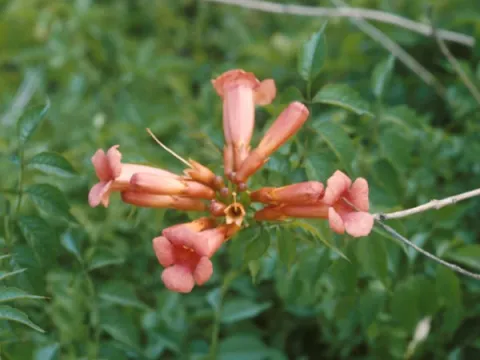
  • Trumpet creeper is a fast spreading vine which is sold as an ornamental but soon escapes to become a high climbing problem. The large trumpet shaped, red or orange flowers are striking.

    Trumpetcreeper
    Photo by Dr. John Meade, weed scientist emeritus, Rutgers NJAES Cooperative Extension
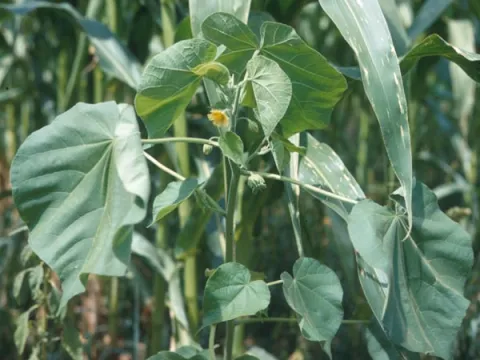
  • Velvetleaf is very aptly named because the large leaves are velvety-hairy. A leading weed problem in corn, soybeans, and other cultivated crops. A member of the mallow family, the pie-shaped seed capsule is unique.

    Velvetleaf
    Photo by Dr. John Meade, weed scientist emeritus, Rutgers NJAES Cooperative Extension
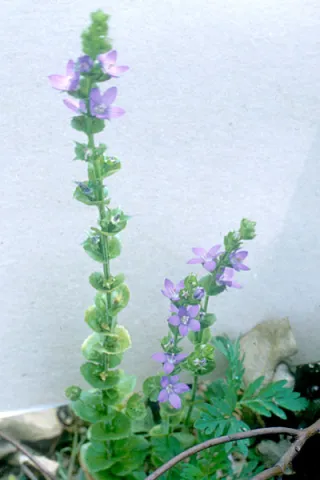
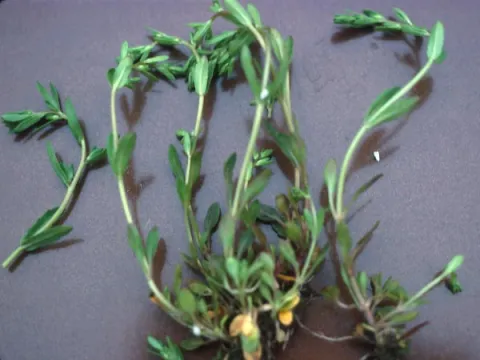
  • An indicator of infertile soils, it grows to about eight inches tall. The pale blue flowers are borne in clasping leaves.

    Venus Looking Glass
    Photo by Dr. John Meade, weed scientist emeritus, Rutgers NJAES Cooperative Extension
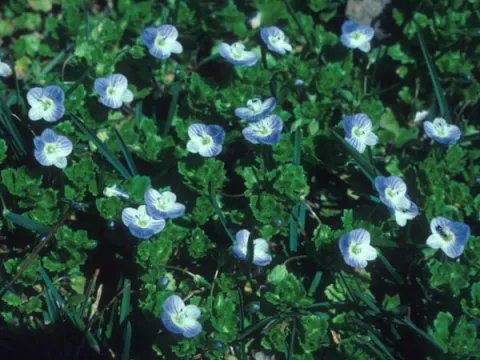
  • There are several species with some annuals and some perennials. They are a serious problem in turf, pastures, and alfafa. They all have 4-petaled flowers varying in color from pale violet to deep blue. The capsule is a distinctive heart shape.
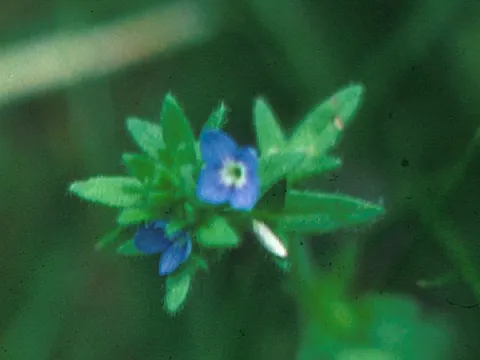
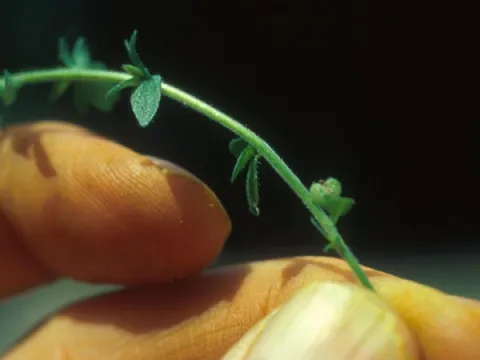
    Veronica
    Photo by Dr. John Meade, weed scientist emeritus, Rutgers NJAES Cooperative Extension
    Veronica Flower
    Photo by Dr. John Meade, weed scientist emeritus, Rutgers NJAES Cooperative Extension
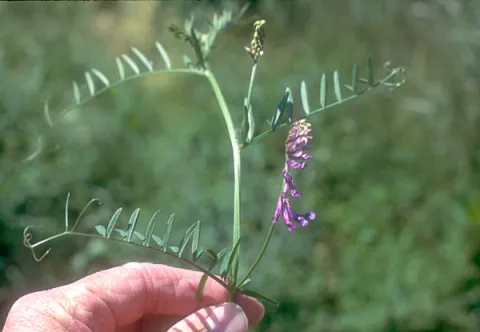
  • There are several species of vetch. Originally introduced from Europe as a forage plants they have escaped and are now serious weed problems in many crops. They are high climbing vines.

    Vetch
    Photo by Dr. John Meade, weed scientist emeritus, Rutgers NJAES Cooperative Extension
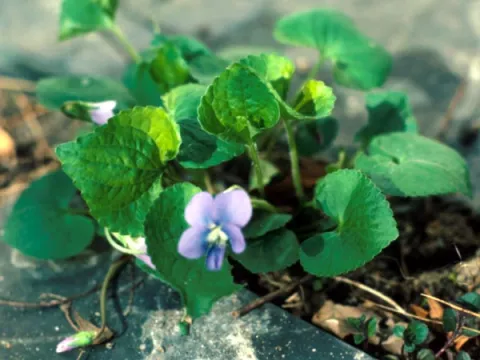
  • There are several species of Violet. It invades lawns and becomes a weed problem there. Flower usually blue but some species have white petals. Flowers and sets seeds under ground as well as above.

    Violet
    Photo by Dr. John Meade, weed scientist emeritus, Rutgers NJAES Cooperative Extension
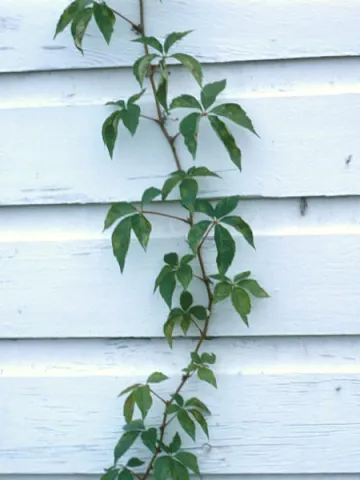
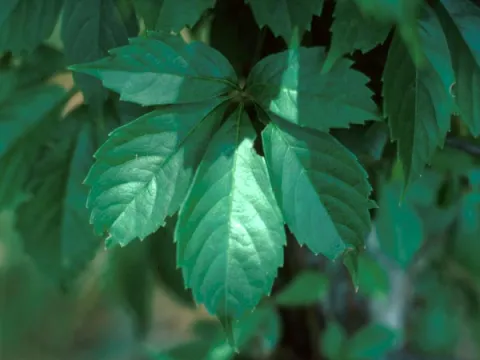
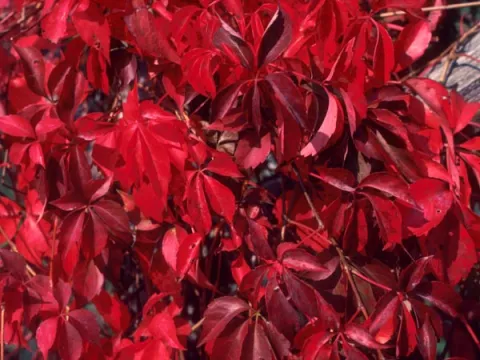
  • Virginia Creeper is a vine climbing by means of holdfasts. Flowers are inconspicuous, fruits are blue, and fall foliage is a striking red color. Has been suspected of causing skin irritation in a few people.

    Virginia Creeper Vine
    Photo by Dr. John Meade, weed scientist emeritus, Rutgers NJAES Cooperative Extension
    Virginia Creeper Leaf
    Photo by Dr. John Meade, weed scientist emeritus, Rutgers NJAES Cooperative Extension
    Virginia Creeper in Autumn
    Photo by Dr. John Meade, weed scientist emeritus, Rutgers NJAES Cooperative Extension
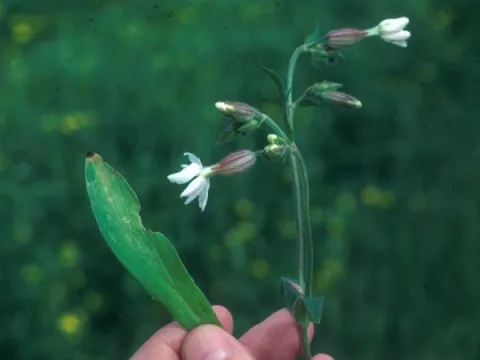
  • White campion is a member of the pink family. It has white petals that are deeply notched. An occasional weed problem in crops such as alfalfa.

    White Campion
    Photo by Dr. John Meade, weed scientist emeritus, Rutgers NJAES Cooperative Extension